Shopify’s Data Returns; But What Happens To The Privacy Lawyers?
Shopify is growing its advertising and data business; the privacy train is slowing down; Roku is striking deals to make its data more accessible.
Roku acquired subscription streaming service Frndly TV for $185M and reported Q1 revenue over $1 billion. But its Q2 outlook missed expectations due to tariffs dinging manufacturing revenue.
FreeWheel thinks the best way to simplify streaming video is by fostering more direct connections between buyers and sellers.
Shutterfly’s recent CTV campaign tested a custom algorithm that relies on search data to find geographic regions with the most prospects. It performed better than targeting deterministic IDs.
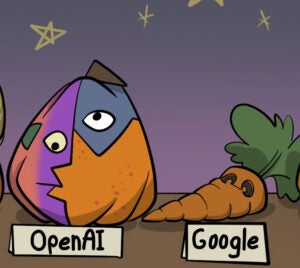
Enjoy this weekly comic strip from AdExchanger.com that highlights the digital advertising ecosystem …
Roku reported $4.1 billion in revenue for 2024, an 18% jump year over year. Its platform business in particular, which includes ad sales and streaming distribution, reached $3.5 billion last year, also an 18% jump compared to 2023 (or 15% excluding political ad revenue).
Three years after launching its own data clean room, Roku is trying to bring something new to the table. On Monday, the company announced the launch of a new offering, the Roku Data Cloud, which allows marketers access to more granular streaming TV data via ad tech and agency API partners.
As the new year begins, expect CTV growth to continue blasting along with a vengeance. Experts are “bullish” on the channel and believe that many of 2024’s biggest CTV trends will continue well into 2025.
Despite CEO Jeff Green’s denials, the rumors turned out to be true: The Trade Desk has spent the last three years quietly building its streaming OS, called Ventura, to compete with the likes of Roku, Amazon’s Fire TV and Google’s Android.
A significant amount of the ad inventory distributed to CTV audiences is actually sold via linear. This is especially prevalent with FAST networks, which currently account for 20%-25% of ad-supported streaming.
Is there a secret society of socialists within programmatic? Probably not. Plus, rumor has it that The Trade Desk is building its own smart TV OS.
In today’s newsletter: Google Demand Gen is the industry’s latest over-attribution controversy; data from third-party brokers might not be worth it; and The Trade Desk launches a CTV operating system.
Roku could start running ads every time you pause a blu-ray. Plus, the kickbacks required to play in the retail media market might eventually shut out all but the biggest brands.
The SSP revised its full year outlook down by $10 million, due to a DSP partner adopting first-price auctions and weakness in key ad verticals. But it highlighted mobile in-app as a new key revenue stream.
Although the full revenue impact of Magnite’s exclusive SSP partnership with Netflix hasn’t hit yet, simply announcing the deal “created significant momentum for our business,” Magnite President and CEO Michael Barrett told investors.
The average CTV platform now authorizes 30 SSPs to sell its inventory. And one of the most noticeable effects of increased SSP saturation in CTV has been higher costs due to SSP reselling.
In today’s newsletter: What the surge in political ad spend on CTV looks like for the end user; Mars Wrigley tries to make gum stick online; and Google neglects Fitbit after mining it for data.
Roku unveils what it’s calling the Roku Exchange, a more direct path between Roku’s ad supply and programmatic demand.
In today’s newsletter: How changes in streaming ad inventory could impact upfront CPMs; video cracks 50% of engagement on Meta’s platform for the first time; and Apple is in talks to launch Apple TV+ in China.
What is Google’s true motive in launching the Chrome Privacy Sandbox? An optimist might give Google credit for not dropping the hammer like Apple did. But it’s hard not to be a little cynical about Google’s goals, according to Samantha Jacobson, chief strategy officer at The Trade Desk.
In today’s newsletter: Roku and The Trade Desk expand their partnership; Instagram changes its content recommendation system; and the European Commission investigates Meta for potential Digital Services Act violations.
If anyone asks what the main theme of Roku’s Q1 earnings call was on Thursday, say: “programmatic.”
In today’s newsletter: The European Data Protection Board outlaws Meta’s “Pay or OK” model; Walmart sharpens its conquesting tools; and Roku seeks more ad supply.
In today’s newsletter: Yum Brands feasts on cross-brand customer data; YouTube’s focus has shifted away from services to software and APIs; and Walmart Connect announces updates to its DSP, including allowing conquesting in sponsored search listings.
Total ad spend from deals transacted through Magnite’s platform topped $5 billion for the full year, representing nearly 20% YOY growth, while full-year CTV ad spend was also up 20%.
In today’s newsletter: Ad tech data can compromise Americans; Reddit has a hard road ahead revenue wise; CTV ad-buying startup tvScientific raises a funding round.
In today’s newsletter: Meta’s growing “other” revenue; charting the depths of Reddit and Google’s new partnership; and TikTok’s ecommerce biz doubles down on influencers.
Roku had a promising Q4, with steady revenue growth thanks to more active accounts and new ad offerings. But ARPU was down, and investors had a skeptical response.
In today’s newsletter: Netflix is the only profitable streaming service; Meta’s automated support software frustrates advertisers; and the US Consumer Product Safety Commission may designate Amazon a “distributor of goods.”
Here’s today’s AdExchanger.com news round-up… Want it by email? Sign up here. Board Games The LG Ads board of directors has three new members. Or, more accurately, two previous board members – Alphonso co-founders Ashish Chordia and Lampros Kalampoukas, who were fired as part of an orchestrated corporate coup in late December 2022 – have […]