
How Publishers Are Testing Amazon’s Prebid Adapter For Incremental Yield
Amazon opened up its Prebid adapter for beta testing on January 21. Publishers are preparing to test, and we spoke with Raptive and Unwind Media to learn how.

Amazon opened up its Prebid adapter for beta testing on January 21. Publishers are preparing to test, and we spoke with Raptive and Unwind Media to learn how.
Prebid’s future is up for grabs as the open-source project grows apart from the IAB Tech Lab, the industry’s self-appointed standards authority.

To get to the heart of the TID debate, you have to understand the definition of a healthy marketplace and how our tendency to limit transparency for the other side of the supply chain is holding us back.

GAM’s dinner with ad agencies sparked speculation that Google is preparing to spin off its bundled SSP and ad server as a remedy to its ad tech monopoly. But Google says it’s just part of the trend of SSPs going direct to buyers.

With over $200 billion in programmatic spending on the table next year, maximizing yield is the name of the game for publishers in 2026. Capturing that opportunity demands maximum optionality across demand paths and signals. And with AI reshaping the landscape (referrals from ChatGPT to news publishers saw a 25x increase from the first half of 2024 to the first half of 2025, while traditional search traffic heads in the other direction) it is more important than ever for publishers to optimize their monetizable inventory.

Amazon is integrating into Prebid. What does this mean for publishers? Plus, are Amazon and Google diverging in their product focus?

After adopting OpenPath, Freestar pubs now see 3x higher inventory fill rate from The Trade Desk demand and 27% higher programmatic revenue from these buyers.
The IAB Tech Lab is proposing that ad auctions move to a Trusted Server from the browser. Why its prototype attracted controversy. Plus, should data privacy be viewed as a badge of honor, or a baseline standard?

Forrester released its first SSP wave since 2014 last week, and there’s a surprise. The research firm ranked Google – whose sell-side ad tech platform is facing federal antitrust charges – as a mere challenger.

But beyond making his parents proud, participating as a witness in a historical antitrust trial was gratifying for another reason, says Kevel CEO James Avery. “I never thought I’d have a chance to really say my piece like this.”

A lot has already been said and cited during the Google ad tech antitrust trial, with more to come. Here are a few of the most notable quotables from the first two weeks.
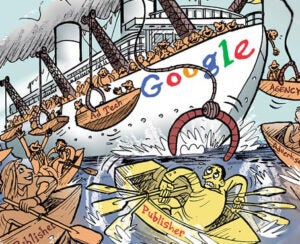
Publishers were encouraged to see the DOJ highlight Google’s stranglehold on the ad server market and its attempts to weaken header bidding.

Someone will eventually need to make a Netflix-style documentary about the Google ad tech antitrust trial happening in Virginia. (And can we call it “You’ve Been Ad Served?”)
Index Exchange CEO Andrew Casale, fresh off the witness stand for US v. Google, and AdExchanger’s courtroom reporter, Allison Schiff, join us to analyze the ad tech trial of the century.
Day three of the Google ad tech-focused antitrust trial in Virginia was like a guided tour of arcane auction mechanics.
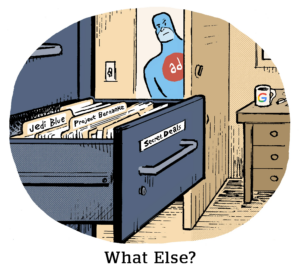
What do Hercule Poirot, Ben Bernanke, Star Wars and C.S. Lewis have in common? If you’re an ad tech nerd, you’ll know the answer immediately.
Just two weeks before Google’s antitrust trial, we discuss revelations from a cache of documents released in advance of the trial – plus, a primer on what’s ahead as header bidding goes to the stand.

Starting last week and into this week, hundreds of court-filed documents have been unsealed in the lead-up to the Google ad tech antitrust trial – and it’s a bonanza.

Ranker saw a 5% increase in demand from a new fully automated Prebid wrapper optimization feature in Magnite’s Demand Manager.

Future believes its new monetization offering can succeed where other publishers have struggled with selling ad tech and consulting to third-parties.

Programmatic auctions are creating so many carbon copies of themselves that it threatens to topple the entire structure of programmatic.

Here are the pros and cons of client-side and server-side header bidding, and some typical use cases for each.

Why are publishers accepting this reality – in which The Trade Desk is now bidding below floors and, in many cases, bypassing the sell-side vendor ecosystem altogether with OpenPath – without batting an eyelash?

The new version of header bidding software makes it easier to identify specific ad transactions, gives publishers more granular control over how they express user consent to downstream partners, and enables testing of Google’s Privacy Sandbox.

A weekly comic strip from AdExchanger.com that highlights the digital advertising ecosystem…

Ready, set … sue. On Tuesday, the antitrust division of the Department of Justice formally sued Google over its alleged (ahem) monopolization of the digital advertising market.

SSPs had traditionally been among the first in the ad tech ecosystem to build profitable businesses. But their future in the programmatic tech stack is uncertain because they’ve evolved from publisher-centric technologies to demand aggregation businesses, often competing with their biggest customers: buy-side platforms or DSPs.
My Code, a publisher network that specializes in multicultural media, manages display and video inventory across nearly 800 sites under its umbrella. Because of the complexity of programmatic sales across such a diverse portfolio of sites, including a mix of owned and third-party clients, My Code has relied on PubMatic’s OpenWrap unified bidding solution for the past two years.

As technology and industry self-regulation converge to make supply and demand path optimization more seamless and efficient, we need a better name to describe optimization across the advertising ecosystem, writes Stephen Johnston, CTO of PubWise. “I’d like to submit for your consideration a new term: advertising logistics.”

What happens when your main monetization partner starts flagging your content as spam? Freecycle turned to header bidding to reduce its reliance on Google AdSense, but the company’s one-person engineering team had trouble managing the header-bidding system and the constant stream of Prebid updates on top of web development duties. So, after a 70% drop in ad revenue, Freecycle handed its digital ad business over to PubWise’s managed service.