
Why Omnicom Is Being More Cautious About Generative AI Than Other Holdcos
While other holding companies are touting their AI roadmaps, Omnicom is focusing more on a different shiny object: retail and commerce media.

While other holding companies are touting their AI roadmaps, Omnicom is focusing more on a different shiny object: retail and commerce media.
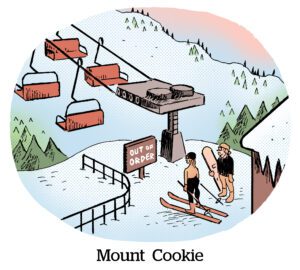
In short, does the Privacy Sandbox work? In the Tech Lab’s view: No. But whether these APIs work or not is a deceptively slippery question, because it depends on your definition of “work.”

In today’s newsletter: Nielsen sues VideoAmp alleging patent infringement; Rembrand’s virtual product placements hit social media; and the MOW, CMA and publishers cry foul over the Chrome Privacy Sandbox’s Related Website Sets.

In today’s newsletter: Netflix is the only profitable streaming service; Meta’s automated support software frustrates advertisers; and the US Consumer Product Safety Commission may designate Amazon a “distributor of goods.”

Are the big players building a more privacy-friendly advertising ecosystem in the right way? Or are they just cementing their control?

In today’s newsletter: The CMA comes out with an updated evaluation of Chrome’s Privacy Sandbox proposals; the IAB talks Privacy Sandbox with Google; and Temu may be a shell company, but its ad spend keeps skyrocketing.

Google has always been the internet waystation. People arrive to be shuttled someplace else. Increasingly, though, Google is the destination.

Here’s today’s AdExchanger.com news round-up… Want it by email? Sign up here. The Arc Of History The Browser Company is backed by tech elite like Instacart CEO Fidji Simo, Medium founder Ev Williams, Zoom founder and CEO Eric Yuan and LinkedIn co-founder Reid Hoffman. TBC makes a browser called Arc, and this week it launched […]

Here’s today’s AdExchanger.com news round-up… Want it by email? Sign up here. Prime Time Ads have arrived on Prime Video. But audiences have just about had it with streaming services that nickel-and-dime them, The Wall Street Journal reports. Instead of forking over an additional $3 per month to avoid ads, many have canceled their Amazon […]

Here’s today’s AdExchanger.com news round-up… Want it by email? Sign up here. Reg-U-Later Apple has a history of not quite breaching antitrust rulings, but blithely flaunting orders. In 2022, for example, a Dutch court ruled Apple must allow payment alternatives. Apple paid 5 million euros per week in noncompliance fines over months. It eventually acquiesced […]

Although Optable participated in the W3C Privacy Sandbox working groups and has been testing Sandbox API integrations for the past eight months, its early access program represents its first foray into running real campaigns.

To better service clients – and help with its own bottom line – Havas Media Network is pushing into specialty services.
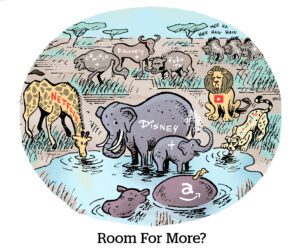
Here’s today’s AdExchanger.com news round-up… Want it by email? Sign up here. Ring Airer Netflix is paying more than $5 billion for the rights to livestream “WWE Raw,” Variety reports. The 10-year deal is effective starting next January and represents Netflix’s biggest push into live content. Following a live sports debut with its “Netflix Cup” […]

Crunchtime The EU’s Digital Markets Act has teeth – and now it’s biting, TechCrunch reports. The DMA regulates anti-competitive practices within “gatekeeper platforms” that have an annual turnover of at least 7.5 billion euros. Meta, Apple, Alphabet, Amazon, Microsoft and ByteDance all tick that box. Gatekeepers have until March to ensure their operations in the EU […]

Here’s today’s AdExchanger.com news round-up… Want it by email? Sign up here. Commerce Copycats The Wild Man Drinking Company (which makes a novelty item called the Krak’in used for shotgunning beers) filed a patent-infringement lawsuit against Temu last week (H/t @Sean Frank, CEO of the wallet brand Ridge). Why’s that interesting? Temu frames itself as […]

Here’s today’s AdExchanger.com news round-up… Want it by email? Sign up here. Don’t Look For Me The FTC isn’t slowing its crackdown on location data brokers. On Thursday, it issued a complaint against InMarket for failing to obtain informed consent from users on its own apps and third-party apps that use InMarket’s SDK before collecting […]
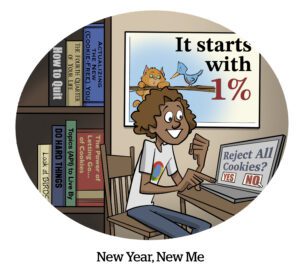
Raptive and others aren’t convinced that the insights gleaned from Chrome’s current state, with some 30 million users sans cookies, will reflect the final state of targeted advertising on the web.

Here’s today’s AdExchanger.com news round-up… Want it by email? Sign up here. Pining For AI Google laid off nearly 1,000 employees last week – but the hits keep coming. It’s also scrapping hundreds of jobs in its ad sales division, Business Insider reports. The headcount reduction is a byproduct of restructuring its ad sales team, […]

Two of Salesforce’s new AI-powered tools are nearly ready for prime time: one for segment creation and another to help retailers coordinate the pricing of promotions to different audiences across channels.

Here’s today’s AdExchanger.com news round-up… Want it by email? Sign up here. AdExchanger is taking the day off for Martin Luther King Jr. Day. Our daily news roundup will return on Tues., Jan. 16. The Clean Slate Disney has been talking up its data clean room at CES. It now has 140 demand customers, and […]

GroupM’s integration with Google allows its Choreograph campaign planning and insights platform to compile data derived from Google – including signals from Search, YouTube and Google Analytics – in one interface.

In a blog post on Wednesday, Google’s senior director of product management, Victor Wong, defended the Privacy Sandbox APIs and laid out in very direct terms the flaws Google sees in common criticisms of its sandbox proposals.
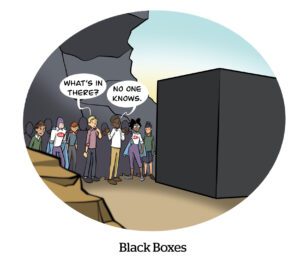
Here’s today’s AdExchanger.com news round-up… Want it by email? Sign up here. The New Creative Controls Does “alt_copy_copy2_brand_red_hold” mean anything to you? That’s the way most creative units and product ads are titled, and any associated metadata would likely be the brand’s name and the banner ad size. Meh. But a generative AI bot could […]

Here’s today’s AdExchanger.com news round-up… Want it by email? Sign up here. Panel Discussion Bad news for Nielsen: Another panel has entered the arena. Samba TV is teaming up with HyphaMetrics to launch a panel for measuring video viewership across linear, streaming and other digital formats, Ad Age reports. HyphaMetrics plans to use Samba TV’s […]
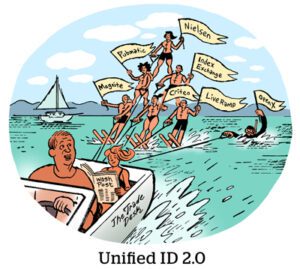
Here’s today’s AdExchanger.com news round-up… Want it by email? Sign up here. Tough Cookies Some industry observers (including AdExchanger) have deliberated on The Trade Desk’s apparent withdrawal from – and direct antagonism with – the Chrome Privacy Sandbox. Bill Simmons, TTD’s VP of product, penned a column in December for The Current, which is The […]
Enjoy this weekly comic strip from AdExchanger.com that highlights the digital advertising ecosystem …
Here’s today’s AdExchanger.com news round-up… Want it by email? Sign up here. Take Initiative Meet yet another TV ad standards initiative. GroupM announced the Ad Innovation Accelerator on Thursday, which it hopes could lead to more nonstandard streaming ad formats – and technical standards for those formats to make sure they can run on any […]

Here’s today’s AdExchanger.com news round-up… Want it by email? Sign up here. Pod One Out Podcast advertising is in a tough spot. Although ad sellers are cautiously optimistic about 2024, as more listeners tune in and programmatic audio grows (albeit slowly), podcast advertising overall has been stuck in first gear for years, Digiday reports. What […]

Agencies will keep testing cookie alternatives, devising first-party data strategies and exploring commerce media in 2024.

Publisher frustrations with the algorithm-driven internet are boiling over – and the rise of generative AI-powered search, which rarely links to the stories it scrapes, will cause irreparable damage.