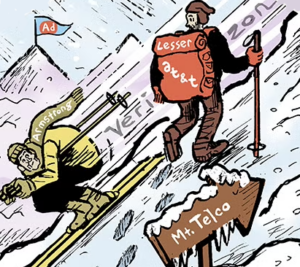

In late April, Google said it would limit the portability of the DoubleClick ID outside of its ad server DoubleClick Campaign Manager (DCM), effectively killing independent attribution (at least to the extent that it was possible).
Marketers who want access to the DoubleClick ID, which ties together data across Google’s properties, will have to use it inside Ads Data Hub (ADH), where Google will handle measurement and attribution.
Since the announcement, agencies and marketers have scrambled to understand how this change affects their independent attribution strategies – and buy-side ad servers have sniffed out an opportunity.
Marketers began calling Victor Wong, CEO of dynamic creative ad server Thunder, shortly after Google revealed the limitations it would place on the DoubleClick ID. They had three concerns: losing their ability to track ads independently, having to bring their customer data inside of Google’s walls and relying on Google for measurement.
“We’re hearing a lot of desire for an alternative tracking solution,” he said. “That’s data people are worried about losing, because that’s informing downstream applications.”
Independent ad server Sizmek also has received more requests from marketers since Google’s announcement. Large marketers are particularly concerned about handing their customer IDs to Google, especially those in categories with competing products, said Joshua Koran, managing director of Sizmek’s DMP. Others have spent years building sophisticated attribution and measurement strategies that they aren’t keen to give up.

“Marketers are looking for increased openness, transparency and accountability of their vendors,” Koran said. “They don’t want to have to trust the person they buy media from to tell them how well that media worked.”
But despite giving marketers many reasons to want to switch ad servers and maintain their targeting and attribution strategies, Google has a compelling case to bring attribution and measurement deeper inside its garden walls.
Google’s tiny hooks
Just because buyers are testing alternative ad servers doesn’t mean they’ll switch off DCM.
“You will inevitably see people start to test other things, if nothing else just to compare,” said Nigel Gilbert, chief market strategist, EMEA at AppNexus. “Where that goes long-term, that’s hard to say.”
For agencies, losing access to the DoubleClick ID will affect workflow and their ability to target across devices, but most have invested heavily in applications around DCM and fear switching ad servers will be too disruptive.
“They’re already looking to mitigate risk,” Gilbert said.
Aside from the pain of switching ad servers, losing access to the DoubleClick ID and Google’s cross-device data is enough to keep some marketers from going the independent route, said Eric Berry, CEO and co-founder at TripleLift.
“That data is super valuable,” he said. “It’s the only ID that goes across all of Google’s properties. A marketer would kill for it.”
Marketers can bring their own customer IDs inside ADH or license one from a provider like LiveRamp. But they won’t be able to measure across Google’s properties, which – aside from Facebook – have the only deterministic sources of cross-device data in the market.
“The LiveRamp ID has the most traction in the industry as an independent system,” Berry said, “but it only works in a world where Google and Facebook are less powerful than they are.”
Thunder offers a cross-device ID through publisher partnerships, and Sizmek has a proprietary ID graph and is in the process of integrating Tapad’s. But their data is probabilistic and it’s not available at the same scale as Google’s, Gilbert said.
“One of the biggest challenges isn’t that other people don’t have cross-device identity,” he said. “It’s that they don’t have it at the same scale. It’s hard to compete against that.”
Sizmek is betting that if it delivers on performance goals, marketers won’t care how the underlying data is sourced. In other words, “It’s less about how the sausage is made than how well it tastes,” Koran said. “If our probabilistic graph is delivering in excess of its cost, then they’re more than happy to continue using it.”
But for smaller marketers as well as those in categories like CPG and auto who lack customer data, it may be easier and more effective – and worth the risk – to just go all-in with Google.
“I don’t see in the foreseeable future any huge limitations or risks to them about working with Google,” Gilbert said.
At the end of the day, staying within Google’s product suite has the same advantages for buyers that it always had. While losing the DoubleClick ID use outside Google’s ecosystem annoys them, it doesn’t create a sufficient enough reason to move to a competing product, Berry said.
“You still have the same products that someone would’ve chosen Google over you for before, but now you can’t do multitouch attribution,” he said. “Ultimately it only strengthens their position. More and more advertisers will begrudgingly use [ADH].”
And while agencies haven’t yet decided how they’ll handle the changes to DCM, most marketers aren’t clear on alternatives in the market or how deeply this change will affect their strategies.
“I don’t think they have enough awareness about what opportunities are there,” Gilbert said.