

 Ad tech partnerships are fast and frequent, as vendors move to establish a presence in disciplines where they were formerly lacking, or to bolster their inventory pool.
Certainly, these integrations are easier with the emergence of standards like openRTB, but there’s still more to it.
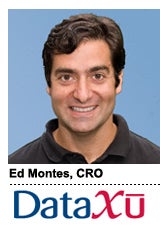
“Now that everyone can support openRTB, you have to do a better job of vetting,” said DataXu Chief Revenue Officer Ed Montes. “The new question is: ‘Will the supply fit into my strategy?’”
In recent months, DataXu has signed a number of inventory sources to its DSP (DX platform), including Centro Brand Exchange, iBillBoard LiveIntent, WideOrbit and Sonobi.
“We’re not interested in integrating with a hundred different partners that are providing undifferentiated products or services,” said Montes. “We are looking for market leaders.”
Step one, he said, is a vetting process to ensure quality sourcing.
“While I want to satisfy clients and connect to anyone and everyone, it may not be the best decision for our business strategy,” Montes said. “Fraud throws things into question.”

DataXu started its fraud-free guarantee program on January 1. The company offers a 97% antifraud guarantee, which allows a 3% room for error. DataXu uses proprietary software on top of DoubleVerify’s detection tech to defend itself against fraud. DataXu clients can also opt to tack on third-party fraud detection solutions.
“We know that we won’t be 100% clean,” said Montes. “The challenge of administering it is that once you put skin in the game, RFPs are at stake,” he explained.
If fraud exceeds 3%, DataXu rebates its clients. “We have rebated our clients just about every month since the fraud guarantee has been in place,” Montes said. “Luckily, the amount has been very minimal.”
According to COO Justin Kennedy, Sonobi was drawn to internal initiatives at DataXu to attack fraud issues within programmatic. Sonobi offers buy-side and sell-side functionality around header integrations, and its technology acts as a traffic cop prior to the ad server, allowing publishers to dictate which ads go to which site visitors.
In addition to offering deal ID and antifraud guarantees, Kennedy said DataXu demonstrated a shared strategic vision about the future of online advertising.
“We fit together with DataXu very well in terms of wanting to rise above what the standard is for programmatic,” Kennedy said.
“Programmatic media doesn’t have to be restricted to remnant inventory and all the negative connotations that come with it,” he added. “It was that way because of the limitations of technology. But new programmatic tech has allowed the wall between direct sales and programmatic to be broken down.”









