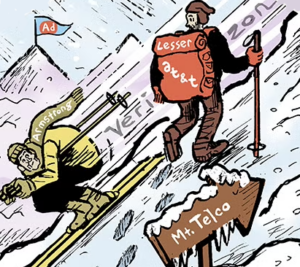

Google’s decision last Friday to limit portability of the DoubleClick ID outside of Google’s ecosystem was done in the name of consumer privacy.
But the change will also stunt advertisers’ ability to do cross-platform reach and frequency measurement – unless they’re using Google’s Ads Data Hub.
While agency execs support changes to protect consumer privacy, they’re aware that Google’s move will further close off its ecosystem.
“This is the most high-profile change to impact US-based advertising businesses, but likely not the last,” said Justin Scarborough, programmatic media director at programmatic agency PMG. “It pushes marketers who choose to use Google further within their walls, which will benefit Google in the long run.”
AdExchanger asked agencies the question: Is it realistic for you to work within the Google stack entirely, and if not, what other options do you have?
- Carol Chung, head of programmatic, Digitas
- Justin Scarborough, programmatic director, PMG
- Vladimir Golinder, director of media technology, 360i
- Rick Watrall, chief analytics officer, Horizon Media
- Rachel Glasser, global chief privacy officer, Wunderman

Carol Chung, head of programmatic, Digitas
The change does create more of a reason to adopt the Google stack more broadly. However, our clients’ desire to own their data is still critical.
If we were in a world where we had to rely more heavily on Google data within Google’s walls, we would want to know how policies take shape or change. What access will clients have to what they put in? What are they able to get out? How they are able to extract data for analysis? And what becomes automated?
Justin Scarborough, programmatic media director, PMG
We support the decision under GDPR, but this change will make it much harder for companies who have built products off of Google’s data graph to provide value outside of Google’s walls. Attribution, frequency capping, independent auditing and third-party data mapping may struggle if they are not integrated and approved in Ads Data Hub.
Google has released a short list of tracking vendors that will be approved through Ads Data Hub, but it’s hard to know how other vendors are using these IDs. That will play out in the coming months.
We work with other DSPs and ad servers that provide log-level information and cookie IDs. This announcement doesn’t change our approach to independently managing which technology fits our clients’ needs across a range of vendors and partners.
Vladimir Golinder, head of media technology, 360i
We support shifts that protect consumer privacy. We’re deepening our partnership with Google so we’re able to create a better digital ecosystem and influence change.
It’s possible to work within a single stack. Google has an array of platforms for marketers, but as an industry, we aren’t completely beholden to them. It’s not about having too much or too little within Google’s walls, but what’s right for the client.
If it makes sense to be all-in on Google, then great. It offers a turnkey solution. We’re all for consolidation until it prevents us from moving business forward. Our clients have varying needs and we can recommend other technologies to create advantages.
Rick Watrall, chief analytics officer, Horizon Media
There are a number of technical impacts that will require advertisers and agencies to adjust how they work with Google. This will definitely put a squeeze on Google’s ad server competitors. If anything, GDPR is a gift that will help their businesses. In the DSP space, we see stronger competition.
We feel the most comfortable with attribution methods that we’ve built ourselves or have had the opportunity to approve. For any company, even one as well regarded and as prominent as Google, measuring itself is never a smart option. The ad measurement space is primed for large-scale transformation and some measurement partners may become obsolete if the backbone of their approach relies on the DoubleClick ID.
Rachel Glasser, global chief privacy officer, Wunderman
Google’s scale helps their competitive advantage. There are other ad servers and DSPs to work with, but these may not have achieved the scale that DoubleClick has.
It could be more difficult for brands to create bespoke and innovative solutions if they are limited to working with one partner. What makes ad tech so interesting is the innovation and choice in partners for certain executions to meet different goals and capabilities. On the flip side, if changes in the regulatory environment require such shifts, we may view this as positive with respect to a responsible and clean ecosystem.
It is realistic to work entirely within the Google Stack, but is it the right solution for every marketer? I would be hard-pressed to say that every brand’s solution can be found within the entire Google stack.