

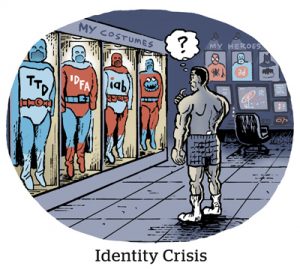
 It’s a bird! It’s a plane? It’s … another industry advertising ID.
The European Unified ID (EUID) was launched on Monday as a joint effort between LiveRamp and The Trade Desk.
As the name suggests, the EUID is essentially a UK and EU-focused version of Unified ID 2.0, The Trade Desk-backed open-source identifier that’s been tested in North America, but hasn’t found a company or trade group willing to take on its administration in Europe (where an inevitable GDPR suit is lurking).
The EUID identity set will be based on LiveRamp’s Authenticated Traffic Solution, a tool publishers use to collect emails from site visitors and then license the data for advertising.
The industry has been held back for years over what Trade Desk CEO and Founder Jeff Green called “infighting” between independent programmatic companies, rather than a spirit of open collaboration. Green made his remarks on Monday, speaking at LiveRamp’s RampUp conference in San Francisco.
“There’s always been a fear among the open internet and what was once called the Lumascape, where everyone’s afraid of the other logos on the screen,” he said.

As the latest incarnation of UID2, EUID can trace its ancestry through a long line of advertising IDs that failed due to competitive tensions across the open programmatic ecosystem. The initial Unified ID initiative, which later became UID2, was itself constructed upon the haunted graveyards of Digitrust and the Advertising ID Consortium.
LiveRamp and The Trade Desk are the common thread tying all of these ad ID efforts together. The Advertising ID Consortium disintegrated partly because The Trade Desk’s Unified ID picked up more traction and also partly because LiveRamp’s IdentityLink, now called RampID, was the only way to target IDs using the consortium’s data.
As part of its backing of EUID, LiveRamp gets a native RampID integration, meaning that both RampIDs and/or EUIDs can be purchased using The Trade Desk (or any other DSPs that potentially join the program).
“We want to be known as the company that works with everyone,” LiveRamp CEO Scott Howe told AdExchanger last month.
LiveRamp’s ambition, he said, is to be talked about “in the same breath” as Amazon Web Services or the Google Cloud Platform – both data infrastructure services that aren’t part of the competitive ad tech battleground.
The EUID initiative keeps the dream alive for addressable open web programmatic in Europe, particularly if the IAB Europe’s Transparency and Consent Framework is knocked out of commission. The TCF was ruled illegal last month and is in a probationary period as the IAB Europe works with the Belgian data protection authority on an update.
Although it’s uncomfortable for DSPs, SSPs and ad tech vendors to be riding alongside their direct competition, it’s necessary for progress. Not to mention that the real threat comes from the huge tech platforms hoovering up addressable advertising signal as privacy laws and policies target third-party vendors.
But what about all those companies that couldn’t see past the competitive tensions and declined to join The Trade Desk or LiveRamp in former industry ID efforts? Well, a lot of them don’t even exist anymore.
“The biggest surprise is there’s a lot less competition than was forecasted,” Green said. “A number of companies viewed as formidable competitors back then haven’t weathered the storm.”








