

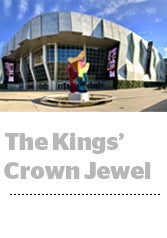
 The NBA’s Sacramento Kings are entering the second season in the Golden 1 Center, the centerpiece of the team’s new data-driven fan experience.
“We tend to think of the stadium as a platform,” said Ryan Montoya, CTO of the Kings organization. “Everything plugs into an operating system, and the data can be shared throughout the organization as soon as possible.”
The benefits of automation and data connectivity should be apparent from the moment fans approach the stadium, Montoya said.
Wait times to enter the stadium are displayed live in the team’s app based on where ticket lines begin, with the data pulled from about 300 beacons around the stadium and the venue’s Wi-Fi network. Then fans hit the automated turnstiles, which scan tickets and point people to their seat without an attendant stopping the line to tear paper tickets or give directions.
And it isn’t just about saving fans a few minutes here or there or funneling fans from outside the stadium into the venue, where they could be buying food or merchandise.
“You can imagine with sports we do a lot of sponsor activations,” Montoya said.
Most of those are “old-school executions,” like a deal last year where fans would receive a coupon for a free burger from Jack in the Box if the opponent’s free throw percentage was held under 80% (thus incentivizing fans to distract the away team).

The strategy itself isn’t new – sport franchises have been turning game tickets into coupons for decades to reward fans. But those tickets typically end up on the stadium floor or in the trash, along with the team’s ability to demonstrate ROI for the sponsor, Montoya said.
And ushers handing out 20,000 paper coupons is both an immense hassle and adds to the bottleneck at stadium exits.
The Kings are moving to an automated process with an assist from Urban Airship, a mobile push notification and engagement company, which helps distribute sponsor offers through the app, SMS text or email.
“Every sponsor is looking for ways to maximize the relationship through a digital imprint,” Montoya said.
“Push notifications are a good way to do that,” since the team can guarantee the sponsor’s message went to intended recipients regardless of whether the deal was eventually claimed.
Phase two for the Kings’ work with Urban Airship this season includes linking those push notification deals to a mobile wallet or payment service.
Jack in the Box isn’t likely to see fans buy and collect burgers through the team’s app and mobile wallets, but connecting to mobile payments will make the stadium a more effective real-time marketing platform, Montoya said. Deals can be targeted based on time and location, like someone walking by a food vendor at the end of the quarter.
Food and beverage brands pay top dollar for exclusive stadium sales rights, and they often package venue vendor contracts into broader team sponsorships. Real-time targeting and push notifications mean brands could try to amplify those premium deals by buying up the first dibs on fans, similar to how Amazon extracts value from its platform as vendors bid to be seen first by shoppers.
The team doesn’t connect data gleaned within the stadium to its own marketing channels without user opt-ins, Montoya said. That means the team doesn’t segment regular attendees into buckets to target for season ticket packages, for instance, or for sponsor retargeting purposes.
But as more people download the app and fill out profiles, the team does retain more data and is slowly adding personalization features, like welcome messages to return fans or remembering food and merchandise preferences, he said. “We do like to remind people we’re trying to make more informed decisions than other teams.”








