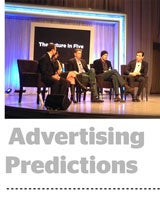
 Are Twitter and Pinterest on their way out and is there room for other social networks? These were among the topics that advertising and marketing executives tackled on a panel discussion on day two of Ad Age’s Digital Conference.
The panelists included Bob Lord, CEO of AOL Platforms; Scott Galloway of L2ThinkTank; Kelly Mooney, CEO of digital marketing agency Resource and Bryan Wiener, chairman of the digital agency 360i.
In terms of which platforms will remain relevant, Wiener argued that it depends on whether a platform is “great for consumers or great for marketers.” Twitter, Facebook, Instagram and Pinterest offer various opportunities for marketers to reach consumers, according to Wiener.
And whereas many of the major platforms are focused on what’s happening in real time or the recent present, Wiener noted that Pinterest is particularly interesting to marketers due to its focus on “aspiration.”
“Pinterest provides inspiration and aspiration, which is extremely powerful from a marketing perspective, so I think their revenue per user a year from now is going to be far greater than other social platforms,” Wiener said.

Other panelists disagreed. Galloway described Pinterest as a “fantastic platform” but other platforms are bypassing it. “I think Pinterest is going to decline,” Galloway said. “And it could be sold in the next 12 months.”
Mooney argued that Pinterest has not moved fast enough in adding commerce capabilities. “There’s all this inspiration [on Pinterest], but very little in terms of, then what?” she said.
The panelists also discussed whether there is room for another social network or marketing platform. According to Galloway, there are “too many ways to spend money and clients are done with spreading themselves across so many platforms.”
As a result, “you’re going to see a consolidation in the market,” he continued. “I think Twitter is on the margin and it’s going to be YouTube, Facebook and Instagram on top and the rest will fight for crumbs.”
Lord took an opposing viewpoint and argued that marketers want more options in platforms. “I think we’re going to see more players instead of fewer players show up in the ecosystem,” Lord said. “You’re going to have people putting money into more platforms just because they don’t want to consolidate to a few players.”
The chances that a platform will be successful depend on two characteristics, according to Galloway. “The litmus test for a platform’s future is this: Was it born on mobile and is it visual in nature?” he said. Mooney added that a seamless connection with commerce is another important quality for platforms.
Moderator Alex Kantrowitz of Ad Age asked the panelists whether advertisers will be more likely to “place their dollars directly with social networks or find a happy balance between buying social ads and display media?”
Galloway commented on Facebook’s transition from allowing brands to reach users organically by building communities on the social network’s platform to requiring brands to purchase ads.
“Facebook is a media platform that’s no different from Yahoo or AOL,” Galloway said. “Facebook has acknowledged that social marketing is BS and brands are reacting by using it like any other media platform.”
Wiener countered with the argument that brands should not abandon the communities they built on Facebook “because then all you’re doing then is optimizing the bottom of the funnel.”
It’s very difficult, Wiener added, to differentiate products and services without an emotional connection with consumers. “How do you create an emotional connection with a standardized ad and sophisticated data targeting that’s interruptive?” he asked. “I think marketers will have to move to other platforms for that purpose [social marketing]. Facebook is an important platform, but I agree it’s more like a demand platform.”
The issue of allocating budgets for spontaneous vs. long-term campaigns was also discussed. Kantrowitz asked Lord if there was a discrepancy between encouraging advertisers to spend more on unplanned ads (such as Oreo’s “dunk in the dark” SuperBowl ad) while also asking them to invest in upfronts. “How do you deal with the tension there?” Kantrowitz asked.
Lord’s response was that upfront buys for television are sometimes confused with the upfront buys for programmatic technology.
“The upfront commitments that we’re asking for are for technology commitments and not necessarily for an episode or ad placement,” he said. “We’re asking you to commit to our platform ecosystem [so that] I can develop for you on your behalf, and the buying will be automated and will be optimized as appropriate.”