TransUnion has agreed to plunk down $3.1 billion in cash to acquire identity resolution provider Neustar from private equity firm Golden Gate Capital.
Neustar was taken private and acquired by a group of investors led by Golden Gate in late 2016 in a deal valued at $2.9 billion – which would make Neustar’s sale to TransUnion, announced Monday, a bargain of sorts.
Then again, the TransUnion acquisition excludes Neustar’s security business, which will become a Golden Gate and GIC portfolio company. GIC is an investment management company that invested in Neustar at the time of the Golden Gate acquisition in 2016.
TransUnion’s acquisition of Neustar, expected to close next quarter, will be the credit bureau’s largest acquisition to date and marks its fourth acquisition in the past two-and-a-half years.
TransUnion bought marketing tech platform TruSignal in May 2019, cross-channel marketing company Signal in August 2020 and OTT measurement and data management provider Tru Optik in October of last year.
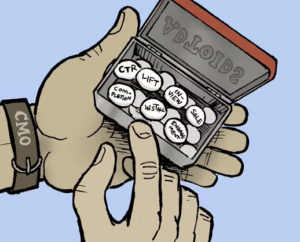
The theme that ties it all together: identity, of course. [Ad tech Twitter has a slightly more cynical take.]

TransUnion’s vision over the past few years, and the rationale behind its acquisition spree, is to become a go-to provider of identity solutions, said Matt Spiegel, EVP of marketing solutions and head of the media and entertainment vertical at TransUnion.
“The world of identity has gotten more complex, but identity is a main ingredient to the customer experiences that everyone wants,” Spiegel said. “We’re building a set of solutions providing marketers, media companies and all those that support them with the identity infrastructure and tools to connect the dots on identity.”
Neustar is like a cherry on top of that vision, but also a foundational piece that will allow TransUnion to further expand beyond its historical credit solution offerings.
For example, TransUnion will use Neustar’s OneID platform to more quickly and accurately connect identity across its digital identity product suite, which includes the TruAudience household identity graph (formerly Tru Optik), a device risk identification and anti-fraud system and TransUnion’s people and business search database.
OneID was built off the technology Neustar acquired from caller ID infrastructure and data company TARGUSinfo way back in 2011. It provided the basis for Neustar’s audience and targeting solution and helped Neustar connect identities across its products.
“OneID will help us innovate on top of what we’ve already been doing with our TruAudience suite,” Spiegel said.
Which is all well and good. But any ambition in the identity and digital marketing space has to come along with a hyper-awareness of privacy concerns and potential regulatory scrutiny.
Spiegel is adamant that no consumer credit data is ever used to populate the TruAudience identity graph, and that the data is only used for permitted purposes, such as fraud mitigation, for example.
“Our work as a credit reporting agency is a separate and highly regulated thing – it’s two different worlds,” he said. “But with everything we do, we take privacy and consent very seriously.”
In addition to OneID, TransUnion was also attracted to Neustar’s measurement technology. Neustar has made big investments of its own in measurement over the years, including its $450 million acquisition of marketing analytics provider MarketShare in 2015.
More recently, Neustar has also been a vocal proponent at the World Wide Web Consortium of the need to solve for privacy-safe measurement in the absence of third-party cookies. Most of the discussion to date has been focused on targeting alternatives.
“Marketers are clamoring to know if their investment is making a difference, and Neustar has market-leading capabilities in that area,” Spiegel said. “Together we can be ready for the next wave of innovation that marketers are after.”
It’s unclear whether the Neustar name will remain or be subsumed into the TransUnion brand. A decision about company branding will come down the line.
Neustar’s current headcount stands at around 1,700 employees.