One of the great myths of programmatic advertising is the illusion of algorithms replacing humans. In truth, the programmatic industry relies heavily on human relationships and handshake agreements.
Nowhere is this more evident than with deal ID-based advertising.
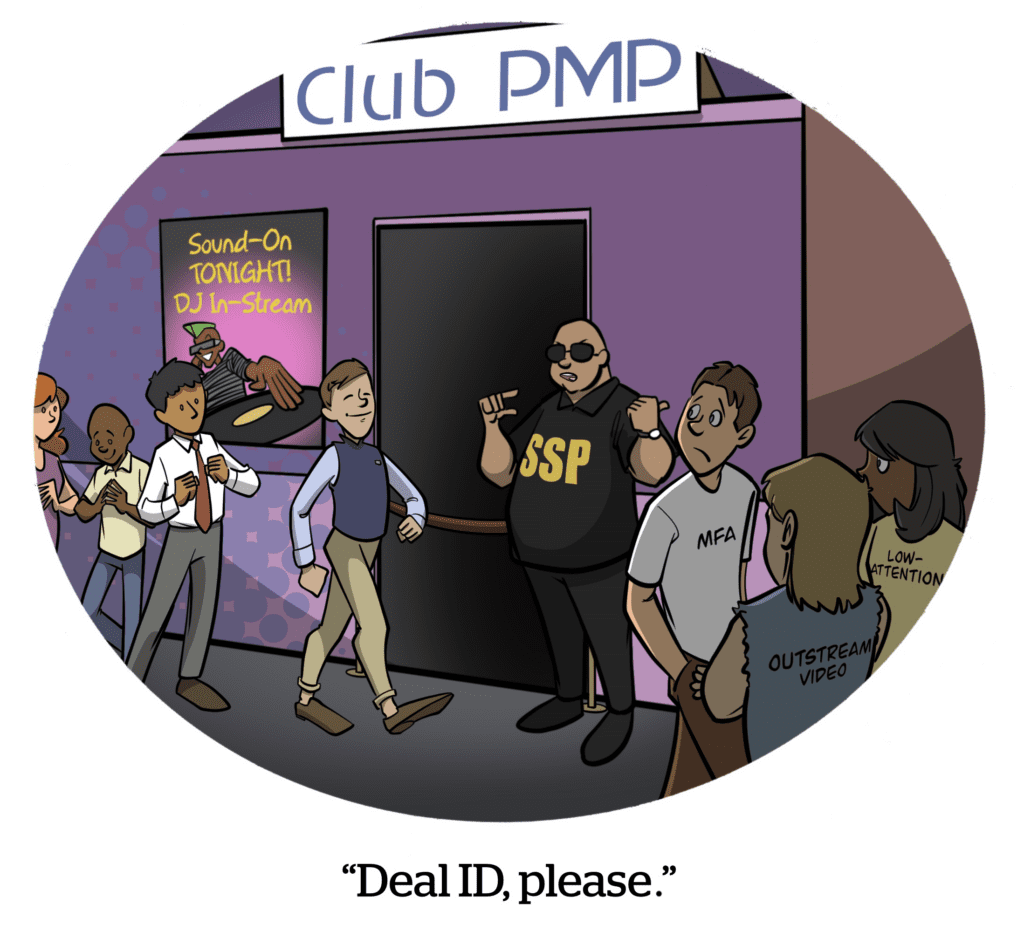
When programmatic campaigns run through private marketplace (PMP) deals or curation services, they typically come with deal IDs – think of them as digital handshakes. But, the truth is, most of those deals are hammered out by individuals negotiating terms over phone calls, Slack channels and email threads, none of which are represented in the deal ID itself.

On Tuesday, The Trade Desk and PubMatic announced a new API-based integration for managing deal ID campaigns built atop TTD’s Price Discovery and Provisioning (PDP) API, which was announced earlier this year.
Will Doherty, TTD’s SVP of inventory development, told AdExchanger he expects all of TTD’s sell-side partners, whether connecting directly or via an SSP, will eventually use the PDP API as their standard for transacting deals via The Trade Desk.
Do we really need a price discovery API?
PubMatic is the first supply-side platform to adopt the PDP API specs and establish a commercial product.
Doherty noted that this approach will likely become the default method for running deal-based campaigns since, as of now, most deal IDs “never scale.” A mere one in 10 achieve what Doherty called “meaningful scale.”
PubMatic, likewise, sees only a small fraction of deal-based campaigns scale seamlessly, according to CRO Kyle Dozeman, and it can take days or even weeks of troubleshooting to achieve liftoff. But the “vast majority” of those deals simply never materialize beyond a verbal agreement by phone or email, he said.
In other words, overall, most PMPs and deal IDs are built on promises and dreams.
With the PDP API, The Trade Desk is implementing what it calls “commitment deals.”
When people talk about advertising “commitments,” Doherty said, what they often really mean is an attempt. They might promise to try and get a certain budget, pacing or targeting plan, but if the budget or inventory never materializes, the deal simply doesn’t happen. Not much of a commitment.
A commitment deal between TTD and PubMatic, by contrast, will be “a real commitment, where both the buyer and seller have teeth in the transaction,” Doherty said. Because the budget and other contractual campaign parameters are built into the deal from the start, an advertiser’s commitment carries real weight.
TTD will “lock it in into our system,” Doherty said, “and we can then ensure that it delivers in full.”
Deal IDs everywhere
The Trade Desk is motivated to clean up programmatic deal IDs in part because many of its most promising growth channels depend on them.
Some media is “more PMP-centric than others,” Doherty said.
CTV and streaming audio campaigns, for example, over-index to deal-based bidding, while curation services, including TTD’s own SP500+ publisher network, also use deal IDs.
For these campaigns, the deals themselves “are almost always based on verbal or email-based conversations with the seller,” Dozeman said. “The aspects of that deal are not captured anywhere within the actual supply chain.”
It can take days – sometimes even weeks – to track down all of the email threads and people involved in those transactions, leaving plenty of unanswered questions in the interim. Was the campaign pacing too low for the brand’s standards? Is the bid rate too low for the publisher? Were the brand’s blocklists and suitability standards properly applied?
But these things are easily solvable, Doherty said – basic, even.
Not that creating the PDP API itself was simple. It’s a “real technical lift” to develop API tools and a new UI, Dozeman said. But the concept behind the API is straightforward, which is to give people a way to input critical contractual info that would otherwise be stuck in threads and message channels, but might as well be sitting in a fax machine if it can’t be integrated into the workflow.
For PubMatic, Dozeman said, taking on the technical lift now will help spare its publisher and developer clients from bigger headaches later on.
“We view that as an opportunity,” he said.