NBCU Later
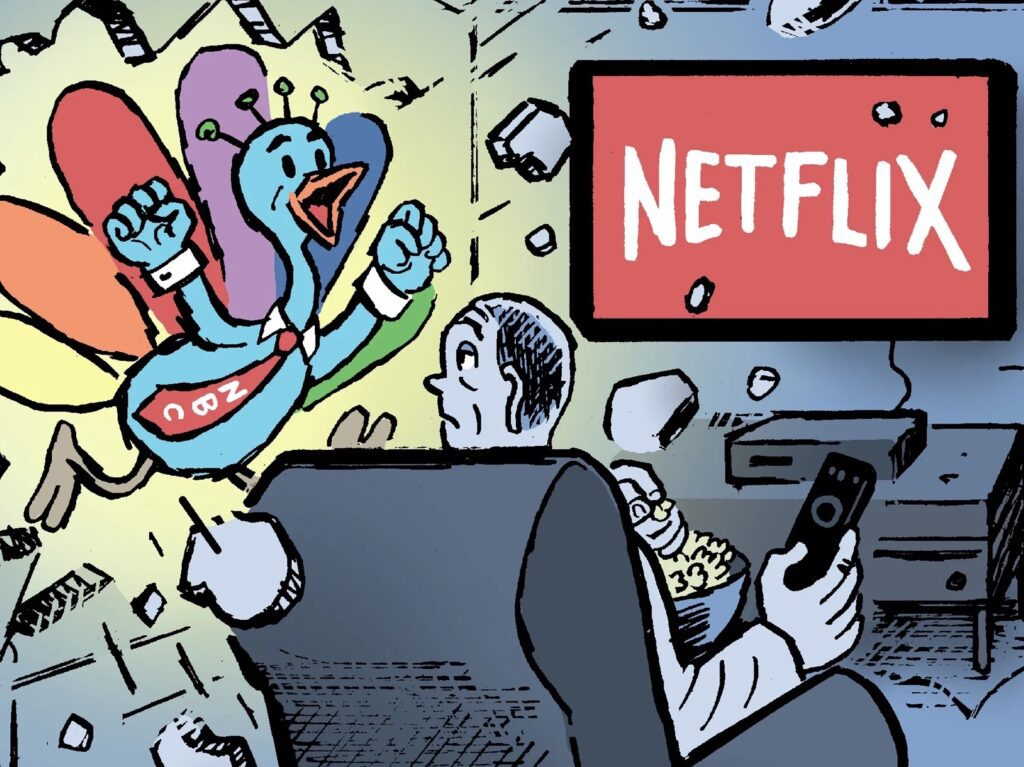
Comcast is separating NBCUniversal and Sky from its broadband and wireless business. Which tracks, considering Comcast already spun its cable business into a standalone publicly traded company called Versant Media earlier this year.
Meanwhile, Sky announced plans last week to acquire the broadcast unit of European pay-TV company ITV.
As the rest of the media industry consolidates, Comcast is doing the opposite. TV ad competition is heating up as Fox gobbles up Roku and Paramount Skydance inches closer to its acquisition of Warner Bros. Discovery. To stand out from the crowd, Comcast wants different horses in each race: cable, streaming and broadband.
“This is the right move to put each company in the strongest position to fully monetize its assets,” said Comcast CEO Brian Roberts during Monday’s investor call.
Comcast is also not the first telco to cut bait on a media and ad business. Recall that Verizon at one point wanted to combine a world-leading set of ad tech and internet media properties with television-esque ambitions that never materialized. AT&T likewise bought AppNexus and promptly spat it back out.
But there are still some messy arrangements for Comcast to disentangle. The CTV ad tech leader FreeWheel, for instance, lives within Comcast but is an NBCU asset. Its fate was not discussed on the investor call.
Nom Nom Omnicom
Omnicom has barely digested IPG. But CEO John Wren is still hungry.
“What I knew that nobody else knew was there was too much supply in the industry, and I was gonna buy somebody,” Wren tells Adweek of Omnicom’s pre-IPG merger desire.
Setting aside that everyone expected holdco consolidation due to agency oversupply, Wren is right that the market was overdue for some M&A. And he says there are still “plenty” of new services to consider for acquisitions.
Omnicom has trimmed its agency group in anticipation of future deals. Numerous agency businesses were sunset, and some 10,000 employees laid off. Or, as Wren puts it, “If I’m 200 pounds lighter, I’ll move a little bit faster.”
Those cuts aren’t completed exactly, Wren adds, though “the wholesale slaughter of people” (his words) is over for now.
Plus, there are still random appendages to spin out. One company Omnicom owns sells cheese in European grocery stores; another makes mud flaps for delivery trucks.
Other divestitures are more strategic. In some smaller markets, Omnicom is selling off media agencies to a minority stake. That way, there’s still a relationship when the holdco needs an in-market partner, but Omnicom doesn’t shoulder overall costs.
And Whatnot
Livestreamed social shopping has an alchemy-like mythical appeal. The big social networks bet the farm on becoming true shopper marketplaces, but to limited success.
Meta dropped out. (It owns plenty of farms so it can afford to lose some.) TikTok remains on a hard uphill trajectory. Amazon tried to reverse engineer social platforms for shopping, but to no avail.
So, while social commerce has taken off in Asia – China, especially – it’s still a tough business in the US.
The latest attempt comes from a startup called Whatnot, which hosts auctions for all sorts of stuff, from apparel to collectibles. It also doubles as a live-chatting social network.
Whatnot transacted $8 billion in 2025, doubling the year before, reports The Wall Street Journal. It’s grown from small indie sellers to now featuring Shopify sellers. And some of the platform’s shoppers are more like viewers, watching livestreams for tens of hours per week.
But Whatnot has no ad platform. Instead, its sellers are keen price-managers and carefully balance between selling items at advantageous rates and bringing in new buyers.
“People don’t want to hear an advertisement,” one Whatnot coin and currency seller tells the Journal. “People want human stories they can follow.”
But Wait! There’s More!
TV advertisers, take note: A record number of romance novels are being adapted for streaming. [Deadline]
Alphabet (meaning, Google) is finally joining the Dow Jones market, replacing Verizon. [Business Insider]
Sen. Mark Warner to unveil AI Agent Bill. As in, a law pertaining to agentic tech, not a legislative chatbot named “Bill.” [The information]
Meta is ramping up AI moderation of content and advertising as a cost-cutting move. [FT] In a completely unrelated story, Ford is rehiring hundreds of quality control professionals after it found the AI it used to replace them wasn’t up to the job. [BBC]
Why selling AI as a replacement for people can be a brand liability. [Search Engine Journal]
TIDAL cracks down on AI music by cutting off monetization. [TechCrunch]
The Supreme Court rules that President Trump did have authority to fire FTC commissioner Rebecca Slaughter, overturning a 90-year-old precedent that protected members of independent regulatory agencies. [SCOTUSblog]
A general tech reporter’s account of attending ad tech’s biggest annual gathering, the Cannes Lions, for the first time. [404 Media]
You’re Hired!
Spotify hires Elijah Frazier as programmatic product marketing manager. [post]
Here’s today’s AdExchanger.com news round-up… Want it by email? Sign up here.