
More Better Ads
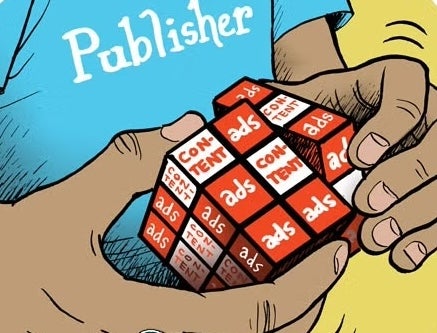
For all the talk of “enshittification” on the web thanks to advertising, evidence suggests that increased ad loads don’t always repel consumers.
That was the argument put forth by US District Judge James Boasberg when he dismissed the FTC’s antitrust case against Meta last month.
While that argument might feel counterintuitive, there is some truth to it, writes Eric Seufert at Mobile Dev Memo.
The FTC had argued that Meta demonstrated its monopolistic control by steadily increasing the ad load on Instagram without any loss in consumer engagement. After all, if Facebook and Instagram had stronger competitors, Meta wouldn’t be able to ramp up its ad load because users could flee.
But, according to Judge Boasberg, user behavior doesn’t change dramatically when there are fewer ads. In fact, showing Facebook users no ads at all results in people spending just 7% more time on the platform – which, in Boasberg’s view, proves that user preference for fewer ads is “slight.”
Boasberg added that less than 0.1% of EU users signed up for Meta’s paid ad-free experience, which begs the question of whether people are willing to pay much at all to avoid ads.
According to Seufert, consumers may not mind more ads – so long as ad quality and targeting effectiveness also improve over time.

AdsGPT
Just last year, during an interview at Harvard Business School, OpenAI Sam Altman described advertising as “uniquely unsettling” and a “last resort for us as a business model,” Engadget reports.
But, just last month, he first more-than-hinted that ChatGPT will include ads someday. (Another big hint came over the summer when Altman hired Fidji Simo, who previously built out Facebook’s ad network and then Instacart’s ad business as its CEO.)
And here’s another sign: Altman recently observed to Ben Thompson of Stratechery that Instagram successfully made the leap from ad-free to oversaturated by brands, and yet people actually enjoy many Instagram ads.
But now we have an even clearer signal that ChatGPT will no doubt introduce advertising – and it showed up in the latest beta Android release.
As first noted by Tibor Blaho, lead engineer for AIPRM, a Chrome extension that makes it easier to interact with AI platforms, the new Android beta code “includes new references to an ‘ads feature’ with ‘bazaar content’, ‘search ad’ and ‘search ads carousel.’”
Well then. Bring on the AI adshittification, we guess.
Good Boy, Sparky
Many agencies and SaaS tech vendors have introduced AI chatbot products with human names, and sometimes even an AI-generated picture and backstory. Others have defaulted to referring to their chatbots as a “copilot.”
But the biggest retailers seem to be going with a more puppyish persona for their AI-based shopping chatbots. Amazon has Rufus, and Walmart’s shopper bot, which was introduced to its app in June, is called Sparky. It’s built on OpenAI’s ChatGPT model.
Which is all a lead-up to the news that Walmart is considering – and has for some months been testing – new ad units in its AI chatbot feature, The Wall Street Journal reports.
A Sponsored Prompt unit shows a click-to-buy ad below the organic result of a search although, to date, clicks on the new Sparky ads have been few and far between. That’s according to advertisers who have tested the sponsored sub-prompts.
However, brands are eager to continue testing and observing any generative AI prompt ads they can, says Simon Poulton, EVP of innovation at performance agency Tinuiti, so they’ll take whatever Sparky brings them.
But Wait! There’s More!
Now that its merger with IPG is affirmed, Omnicom may have to kill its darlings to succeed. [Adweek]
USA Today Co., Vox Media, The Arena Group and BuzzFeed join the RSL Collective’s AI content licensing framework. [Digiday]
Shopping on TikTok is a lot like QVC. [NYT]
How Black Friday became “a month of margin-killing madness” – and why brands keep falling into the discount trap. [The Drum]
Thanks for reading AdExchanger’s Daily News Roundup. Want it by email? Sign up here.









