
Charter Makes Its Linear Inventory Programmatic
Charter’s full linear footprint is going programmatic, the result of a partnership between Spectrum Reach, the ad sales division of Charter, and supply-side platform Beachfront.

Charter’s full linear footprint is going programmatic, the result of a partnership between Spectrum Reach, the ad sales division of Charter, and supply-side platform Beachfront.

Dish is making its linear TV inventory addressable. Advertisers will be able to buy addressable TV programmatically on Dish alongside buys on Sling TV, Dish’s streaming service.

Programmers that held upfronts came bearing gifts for advertisers, most of which were packaged as improvements to ad targeting and/or buying.

Startup Telly announced it’s giving away 500,000 smart TVs completely for free to the first 500,000 folks who sign up on its website. Signups for the TVs include an agreement that customer data can be used for targeted advertising.

AppLovin has added CTV supply from streaming video distribution platform Wurl, which it acquired last March, to its mobile user acquisition platform, AppDiscovery. AppLovin’s marketer clients can now buy CTV inventory on a cost-per-install basis.

This year, TV upfront spend will likely be softer, and buyers will be slower to make long-term commitments. Consider it a plateau.
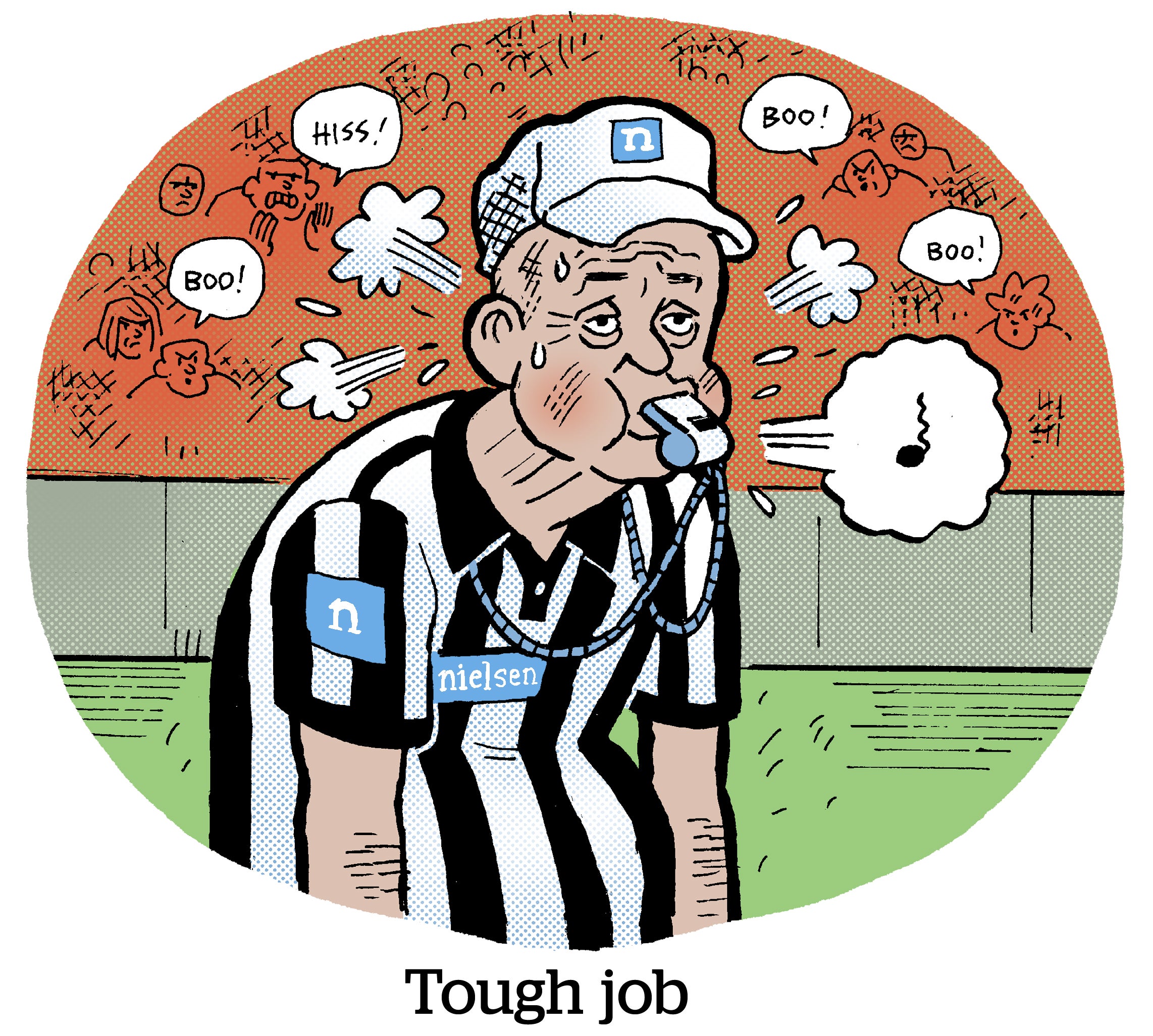
Nielsen is reverting back to its panel-based C3 and C7 ratings that track average commercial time over three or seven days. The currency switch-up just weeks ahead of the upfronts has only added to the industry’s mounting frustrations with Nielsen.

Affinity Solutions has a new platform that lets advertisers create audiences with purchase and viewing data, and plan campaigns based on competitor ads.

The MRC reinstating its accreditation of Nielsen’s national ratings might improve the measurement giant’s standing in the TV currency race.

Nielsen has re-earned its accreditation from the Media Rating Council for national TV ratings. But will Nielsen be able to regain the industry’s trust before it’s too late?

Comcast-owned ad buying platform AudienceXpress upgraded its targeting chops, including more data for audience segmentation and new conquesting capabilities.

The corporate drama continues at LG Ads. Alphonso’s founders – including several who were unceremoniously booted from the company in December – along with a group of minority shareholders are suing South Korean electronics manufacturer LG and Zenith, its US R&D subsidiary, over alleged board malfeasance. LG acquired TV data measurement provider Alphonso in January […]

Ampersand – a local TV sales consortium co-owned by cable companies Comcast, Charter and Cox – rolled out new audience segments for brands to target sports fans based on the type of sports they enjoy watching.

This year, NBCUniversal hosted its competitors on stage at One23, the broadcaster’s annual developer conference. Why? One word: measurement.

Netflix President of Advertising Jeremi Gorman was hired September 26. Less than two months later, on November 12, Netflix launched its ad-supported tier in 12 countries. For now, Basic with Ads is focused on the basics, including ad tech and measurement partnerships and the rudiments of brand safety. But Netflix is “ripping through all the […]

National broadcasters, including Warner Bros. Discovery, Fox and NBCU, are forming a joint industry committee to create a standard for multiple cross-platform video currencies in time for the 2024 upfronts. Notably absent from that initial list: Nielsen.

The leadership team is out at LG Ads Solutions. As of Friday, at least two of Alphonso’s top brass were pushed out, including CEO Raghu Kodige and Alphonso co-founder and executive chairman Ashish Chordia. What gives?

Smart TV manufacturer VIZIO announced a census-representative panel built using automatic content recognition data from Inscape, VIZIO’s ACR data subsidiary. VIZIO has access to ACR data from roughly 21 million smart TVs, and Innovid is one of the first measurement providers to use VIZIO’s so-called “National Representative Panel.”

Catalina Crunch started off in 2017 as a purely direct-to-consumer (DTC) brand advertising ketogenic (“keto”) snack products on search and social, including Facebook and Instagram. But, as product demand and Facebook CPMs concurrently rose, a DTC-only biz wasn’t enough to scale the business.

Most people have already heard of Pizza Hut. But high awareness isn’t enough to generate new and consistent sales. Which is why well-known brands like Pizza Hut are looking to new channels, including CTV, to drive incremental sales by reaching younger and, hopefully, incremental audiences who could eventually turn into repeat customers.

The future of TV is addressable, meaning one-to-one ad targeting to a device, across not just CTV but also linear inventory. Yet still, addressable TV remains a small piece of media buying, which the industry addressed at Paramount’s Addressable Now summit in New York City on Tuesday.
Video SSP Beachfront and Canoe Ventures expanded their ad-serving partnership across several more programmers. The two companies integrated their tech stacks in 2019 so broadcasters or streamers that work with Canoe can channel inventory more effectively to Beachfront’s programmatic pipes. Now, six more programmers, including Kabillion, Afro TV and TV One, are using the integrated solution.
VideoAmp released a tool that allows publishers and advertisers to compare audience viewership second by second throughout the duration of a program. The purpose is to help buyers target their ads more effectively. Advertisers have been demanding discrete program insights for targeting and measurement planning, Jonathan Bohm, VP of product at VideoAmp, tells AdExchanger.

Streaming has a Hispanic underrepresentation problem. Hispanic Americans account for nearly 20% of the US population, but Latino actors were cast in only 5.5% of the roles in digital programming during the 2019-2020 broadcast season. The representation gap is even wider in streaming TV than it is in broadcast, where Latino actors accounted for 6.3% of all roles.

At the Next TV Summit in New York City on Tuesday, legacy TV companies and the technology providers that serve them pushed back against an early eulogy for broadcast television. As old players reinvent themselves and new ones join the scene, TV distribution is coming full circle — broadcasters are focused on getting their network signals to stream on mobile devices and connected TV (CTV).

Live television is back in style. And according to Magnite, there’s a surge in demand for linear addressable inventory from programmatic buyers. The net result is that SSPs are squeezing linear addressability into their tech stacks. Magnite, for one, ran a test campaign that points to programmatic addressable’s incremental reach potential.

Advanced TV platform Cadent announced a partnership with data provider Tunnl with an eye on what’s known as issue advocacy segments, which are different from general political ad segments. Issue advocacy campaigns go beyond political affiliation and aim to reach people based on the “hot button” issues that voters are concerned with, such as climate change or reproductive rights.

TV ad tech and identity resolution company Blockgraph – jointly owned by Comcast, Charter and Paramount – announced a partnership with FullThrottle, which focuses on household-level data as opposed to user data like third-party cookies, to expand its pool of anonymized advertising IDs.
Ampersand released a self-service option for TV marketers to monitor incremental reach across multiple screens. The capability was already available as a managed service, but advertisers have been demanding more control and transparency over the buying process, said Andrew Matero, Ampersand’s VP of platform – and effective incremental reach calls for considering much more than just streaming.

If the NewFronts is where buyers flirt with newer media channels and streaming services, the upfronts, which wrapped up this week, is where things start to get serious, as legacy broadcasters showcase their new content in the hopes that advertisers will put a ring on it – but this year, pretty much all of the major programmers had streaming on the brain.