Agentic systems and the scarecrow from “The Wizard of Oz” have more in common than you might think: They’re both in dire need of a brain.
At least, Innovid thinks so.
Last year, Mediaocean-owned Innovid, which, these days, describes itself as an omnichannel ad platform, came out with an orchestration layer to connect fragmented data and tech across the advertising ecosystem.

On Thursday, it launched NIVO AI, which effectively serves as the “brain” behind that orchestration, according to Grant Parker, the company’s president. NIVO connects multiple agents across different specializations – from predictive creative scoring to campaign reporting – through natural language prompts.
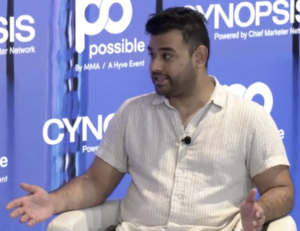
Optimum was one of NIVO’s early adopters and has been using the tool to “draft and power” the creative on new campaigns, CMO Ajinkya (Jinx) Joglekar told AdExchanger.
What’s in a name?
Anyone who hasn’t had to manually power the creative for a campaign should consider themselves “blessed,” Joglekar quipped. It’s a “very manual process” that involves going row by row on a spreadsheet designating each creative’s title, specs, tagging and so forth – and that’s before manually uploading it into the various platforms for execution.
NIVO eliminates the need for a spreadsheet altogether, said Joglekar, by automating the process through natural language prompts with a familiar interface that looks similar to ChatGPT.
The familiarity was the whole point of NIVO, according to Parker, down to the name. “NIVO” comes from a mashup of letters shared by “innovation” and “Innovid.” (Innovid is pioneering the tool, though it will eventually expand to Prisma, Mediaocean’s billing management arm, and Protected, its verification unit.) The team wanted the new tool to be a humanized “persona” that people could refer to by name, Parker added, like Claude or Siri.
Innovid wanted users to see NIVO as a “humanistic brain” that people can easily talk to, said Parker.
The agent connection
Connecting the creative, delivery and measurement agents develops a “real-time feedback loop” that can personalize and optimize creative at a scale that Optimum hasn’t been able to reach in the past, said Joglekar.
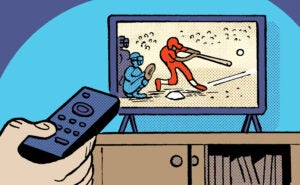
For instance, if one person is an avid Rangers fan and another usually has the news on, Optimum can track signals like geography and watch history to create unique ad mixes for each of them. Some of the signals are less obvious, Joglekar said, and instead come from historical analysis of which signals often correlate with one another. Optimum might be able to deduce someone is a Rangers fan based on personal traits and other TV show preferences, rather than just a history of watching hockey games, for example.
The Rangers fan might be targeted for Optimum’s local channel offering if they live in New York or the NHL Network offering if they’re watching from somewhere else.
The news fanatic, on the other hand, could see ads for Fox News, CNN and other news channels available through Optimum.
“All of a sudden,” said Joglekar, “you can start to merchandise differently,” down to what he described as the “sub-segment level.”
NIVO has reduced Optimum’s campaign execution time by about 80%, said Joglekar, which means Optimum’s ads can have more urgency, like targeting sports fans with messaging to watch a game happening that night.
At its core, Parker said, NIVO’s goal is to resolve the bottleneck of content creation by giving that content a better path to delivery. It’s like having a self-driving car, he said, but no highways. “What we feel like we’ve done,” he said, is “build the highways.”