
Here’s today’s AdExchanger.com news round-up… Want it by email? Sign up here.
The Vibe Wars
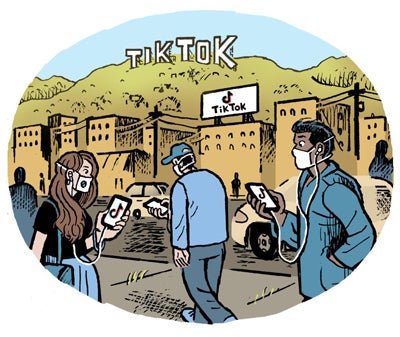
TikTok has launched an ad product called Branded Mission, which identifies potential influencers and puts paid media behind content even if it isn’t part of a campaign.
“Turn top-performing videos into ads,” is how TikTok puts it in a release. In a nutshell, that means giving the TikTok community a “creative hand” in the ads that are part of a brand campaign and also helps brands discover emerging creators broadly across TikTok. It’s a two-way street.
This TikTok news is part of a cold war being waged between the social platforms to secure their creative dominance.
Snapchat, for instance, reshaped ad creative with the shift to vertical video. The Pixy, Snap’s new drone that captures pictures while hovering around you (it’s basically an automated selfie stick married to a drone), is yet another example of a content creation play. Pixy-filmed media has an unmistakable Snapchat vibe, even if it’s later pushed to other platforms.
Facebookagram has tightened up its ad platform this year, too, by requiring creative to be made within its system. Meta is tired of advertisers repurposing TikTok posts, just without the watermark. It’s a moral blow for Instagram when ads and viral content were originally (and quite obviously) made by and for TikTokers.

Whale Watching
Is Facebook over? Maybe, judging by its most popular content, writes Ryan Broderick in his Garbage Day newsletter.
According to the Q4 2021 Widely Viewed Content Report, published by Meta’s Transparency Center, Facebook’s most-viewed content in 2021 included a dropshipping scam page operating out of the husk of a defunct publisher, junky viral posts from content farms in Sri Lanka and Vietnam, a video of a nurse baselessly testifying to the US Senate that NYC hospitals were using COVID-19 as cover for human experiments and a video of a woman shoving people at a Minnesota Vikings game.
Many of these posts featured videos sourced from Instagram, YouTube and TikTok. That’s the effect of the algorithm’s most recent pivot to video in action. But it’s also a sign that Facebook cannibalizes content from more popular social platforms – the most popular of which included outside links that sent users to YouTube, TikTok and GoFundMe.
In all, the report reaffirmed Broderick’s comparison of Facebook to “the rotting carcass of a beached whale – dead, but too big to do anything with, and … a huge, thriving biome for various parasites.”
No More Cloud Cover
Microsoft reversed a policy making its software more expensive on rival clouds, ZDNet reports.
The news isn’t directly related to advertising, but it is part of a trend of concessions from US Big Tech firms. Over time, these compromises strengthen the case to force tech giants to relinquish revenue and their clawlike hold on markets.
Google threatened to ditch its business in Australia – and foretold of terrible consequences – if the government forced it to pay publishers in order to cite content in news searches. A year later, those dire forecasts look pretty silly.
In January, a Dutch court knocked down Apple’s App Store policy requiring apps to use its payment processing. Apple pretty much spat in the court’s face and has been paying weekly $5 million fines rather than make any changes. But Apple is fighting for that precedent because to compromise undermines its argument in courts around the world that allowing payment alternatives would be a system-busting change.
This isn’t theoretical, either. Apple won an appeal on this exact bogus argument after a US court ruled it must allow developers to steer users to payment options.
But as courts do win antitrust concessions here and there, it reveals to regulators and rivals how Big Tech rather cynically uses privacy or security as air cover for grabbing market share.
But Wait, There’s More!
Why are agencies always “partnering” with platforms? [Marketing Brew]
Do you have a development deal with Audible yet? [THR]
Origin, an initiative to build a cross-media measurement platform spearheaded by UK advertising trade body ISBA, has entered its build phase. [VideoWeek]
ICCL, an Irish privacy advocacy group, reports on the scale of RTB data in the US and Europe. [release]
Forbes COO Jessica Sibley on the future of publisher revenue. [The Rebooting]
Gary Vaynerchuk is taking on media barter’s sketchy reputation with his newest advertising business. [Insider]
Eric Seufert: Do advertisers care about bots? [Mobile Dev Memo]
Popular Science owner Recurrent Ventures raises $300 million in funding round led by Blackstone. [The Wall Street Journal]
You’re Hired!
Emodo promotes industry vet Jeremy Lockhorn to VP and head of global innovation. [release]







