

Here’s today’s AdExchanger.com news round-up… Want it by email? Sign up here.
Double Dutch
Salesforce and Oracle got a holiday gift from the Court of Amsterdam in the Netherlands last week, which dismissed a lawsuit brought against them by The Privacy Collective (TPC), a data privacy advocacy group.
TPC alleged that the companies breached the GDPR because their respective DMP appended cookie-based data to audience IDs. Clients could then use those IDs for targeted advertising – amounting to a consumer data breach. The court didn’t rule on the validity of TPC’s argument, because it rejected the group’s standing to bring the case in the first place.
Although TPC signed up more than 75,000 supporters for the class-action suit, it collected the signatures via a button on its site along with the copy: “Support the taking to court by TPC of two tech companies for bringing in and selling data from millions of Dutch people, without permission.”
The court said that isn’t a strong enough basis to argue in defense of Dutch citizens. The group only collected emails for some users, and since the group is privacy-focused, it doesn’t record names or have any way to follow up with supporters or even prove that they’re Dutch. Read the decision with translation.

Whose Gram?
Instagram chief Adam Mosseri said in June that the app will prioritize users who “make a living” creating content. That’s a boon for influencer types and for big brand advertisers – but not so much for the ecommerce startups that once were Instagram’s bread and butter.
The old Instagram model was based on organic reach. A startup might take off after Miley Cyrus or some other celebrity touted its product or on the heels of a hot writeup in BuzzFeed.
“Small businesses are the heartbeat of Facebook and Instagram,” an Instagram spokesperson told the Financial Times.
Once upon a time, perhaps. But is that still the case?
Take Instagram’s full business account features, for instance, which are now reserved for brands with at least 10,000 followers.
But even small businesses that clear the 10,000 follower bar, like Trippy Tuesday, aren’t getting as much value from Instagram as in the past. Trippy Tuesday, which makes candles and jewelry, has slipped from 90% Instagram customer traffic to a mere 70%, and its organic reach is evaporating as it loses out to big paid advertisers on one front and TikTok-style content on the other.
Reach Out And Touch Faith
Evangelism, meet Big Data.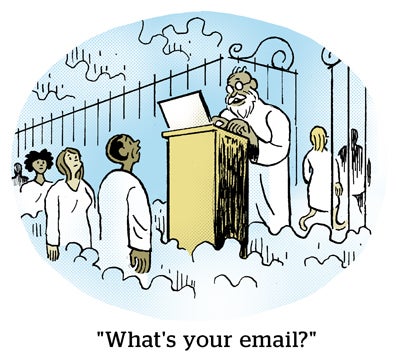
Following the lead of consumer businesses and political campaigns, American churches are turning to ad tech to grow their congregations.
Data mining startups like Gloo use personal info to help churches target ads to individuals likely to attend their services, The Wall Street Journal reports.
Who’s the best target for a church? The down-and-outs. People experiencing a crisis, like a failing marriage, a loved one’s death, financial problems, drug addiction or depression are all ideal candidates.
Gloo also creates web pages that connect people in crisis with local churches. These are promoted via Google ads tied to search results for terms such as “loneliness,” “marital problems” and “grief.”
And Gloo promises to help churches tailor their messages to their existing congregations and for specific geos. A report generated for one client predicted that within a five-mile radius, 25% of marriages may end in divorce and 26% of people are likely to be or become addicted to opioids.
Gloo says its customer base includes 10% of US-based churches and that its data set includes 245 million user profiles. Premium members pay $1,500 a year for its service.
Faith-based data gathering has become an attractive option for investors with the rise of religious apps and services like Gloo. The WSJ reported that faith-based apps netted $175.3 million in venture funding in 2021.
Goal!
Gambling is set to trigger a multibillion dollar uptick in advertising spend, Adweek reports.
Online sports betting, now legal in 17 states, is an increasingly attractive outlet. According to the data measurement firm EDO, gambling-related advertising spend on TV increased fivefold between 2018 and 2021.
But marketing expenses add up quickly for betting firms whose margins are heavily taxed.
Fantasy sports betting companies like DraftKings and FanDuel are spending googobs to attract sign-ups. Sports betting firms shelled out $1.2 billion in 2021 on marketing designed to sign up new customers, up from $500 million the year before, a top sports marketing investor tells The Information.
Still, sports betting online remains in its infancy, and betting firms are figuring out how to balance upfront investments against attracting the right audiences with the right programming, says EDO CEO Kevin Krim. But one thing’s a sure bet: a top predictor of success for these firms will be audience-based performance advertising.
But Wait, There’s More!
2021 was the year online media platforms came for your ears. [The Verge]
Google was granted a patent for its method to authorize cookie-free data transfers. [MediaPost]
A former Tumblr iOS engineer details how the Apple App Review process is a bad faith mess. [blog]
US court dismisses suit claiming LinkedIn overcharged advertisers due to video metric errors. [Reuters]
Roku expands its TV Ready Certification program for hardware and speaker makers. [release]
Streaming wars drive media groups to spend more than $100 billion on new content. [FT]
Google, Microsoft and Oracle use cash reserves as investment stakes to lure cloud customers. [WSJ]
Decibel Ads CEO Jeremy Sonne on click-based vs. non-click ad channels. [tweet]









