P&G R&D
Procter & Gamble is putting its strategy to the test.
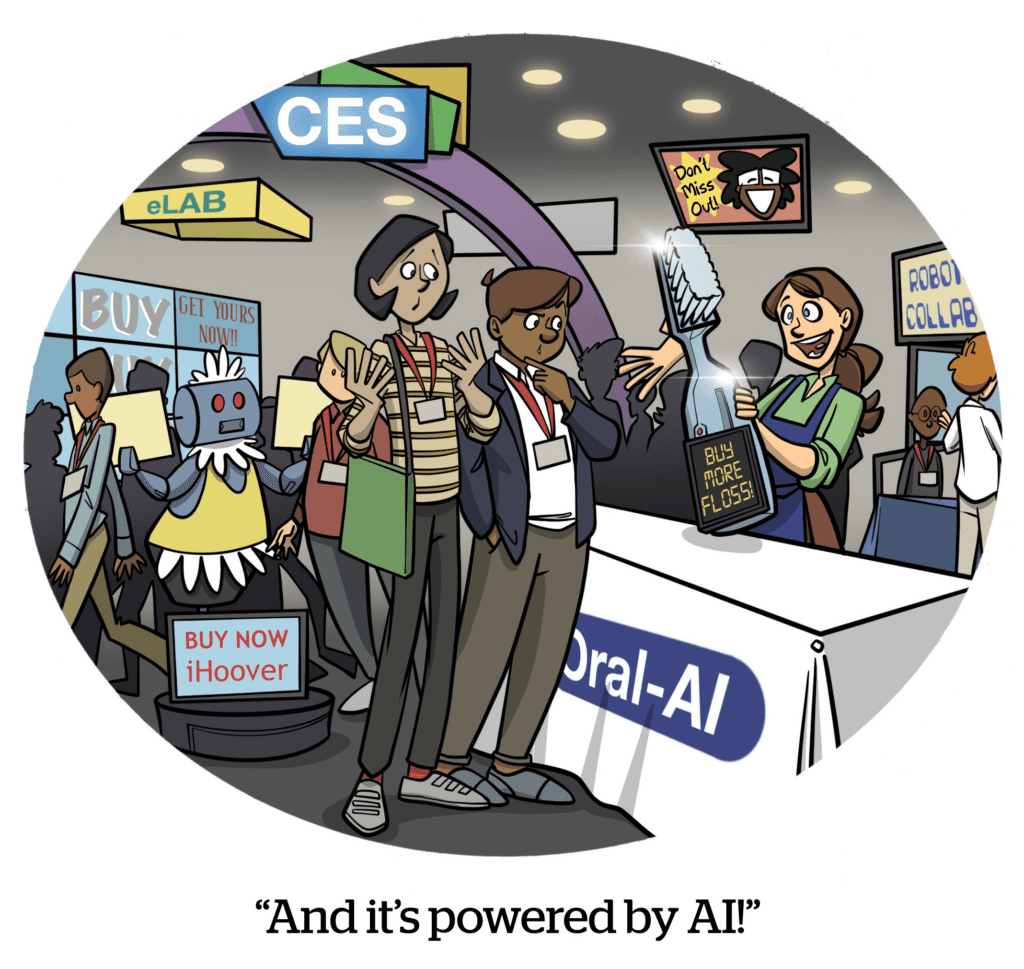
The company is spending less on ads and promos while investing more in innovation and R&D – scalloped toilet paper, laundry detergent tiles, a toothbrush with built-in AI, crotch deodorant, all the normal stuff.

The strategy is being tested because, as CFO Andre Schulten told investors on Friday, “the competitive aggressiveness has increased.”
When he says “aggressiveness,” Schulten means P&G’s competitors are selling at heavy discounts.
While crotch deodorant and scalloped TP won’t win Nobel prizes, they’re part of a plan to “drive consumer trial and delight,” as he put it. Others in those categories attempt the same through “promotional activity” (i.e., ads and discounts).
P&G plans to increase prices by about 2% on average and hold the line on price, rather than discount to match competitors.
“This plan takes longer. It’s not as easy as throwing promotion funding out there,” Schulten said. “But, again, we believe that is the way to both create value for our consumers and for our retail partners.”
Open Your AIs
One way to tell that OpenAI is truly gearing up for advertising is its mass recruitment of Meta alums, The Information reports. The most notable hire is CEO of Applications Fidji Simo, previously CEO of Instacart and a leader of Facebook’s ad buildout.
Many hundreds joined OpenAI from Meta, which apparently discomfits those who started at OpenAI when it was a research lab.
It was only May last year that OpenAI CEO Sam Altman described the theoretical introduction of advertising as “uniquely unsettling” and a “last resort.” This month, in a podcast with Andreessen Horowitz, a venture fund best known for its early investment in Facebook, Altman said he finds ads “somewhat distasteful but not a nonstarter.”
Not a full convert.
But, internally, there are signs of change. The research group, which develops OpenAI’s core AI models, is pointedly independent – as in, not under Simo’s leadership. However, some researchers have bristled at a recent change. OpenAI’s post-training, which is how its models learn from and incorporate preferences and responses given by a person, now prioritizes engagement metrics.
That’s new for OpenAI. But sounds a lot like some other San Francisco app startup you’ve heard of.
Oreo Goes To The Bot Shop
Mondelez is using generative AI to cut back on its ad agency commitments, Reuters reports.
The snack company invested more than $40 million to develop a tool for generating ad creative, which it expects will save its brands 30% to 50% on marketing production.
Mondelez already uses the tool to generate short animations for Chips Ahoy and Milka chocolate social media ads. The generative AI creative can also change depending on who’s being targeted.
Working with an ad agency to generate similar animations might cost “in the hundreds of thousands,” according to Mondelez’s Jon Halvorson.
Starting next month, Oreo will use the tool for retail media placements on Amazon and Walmart. But it won’t just be in social or online shopper feeds. Mondelez expects to use the tech to generate TV ad creative for next year’s holiday shopping season and the 2027 Super Bowl.
While Mondelez is bullish about the tech, humans still have final say over creative.
The company also won’t feature human characters in AI-generated ads. Which is probably smart, considering widely panned campaigns by Coca-Cola and Toys “R” Us featuring uncanny AI-generated humans.
But Wait! There’s More!
Between misinformed social media influencers, unsafe products and federal cutbacks, infant sleep educators are fighting an uphill battle. [Consumer Reports]
Retail and ecommerce sites aren’t seeing much in terms of sales from ChatGPT traffic. [Digiday]
Snap is looking to raise $1 billion to invest in AR glasses. [Sources]
Brands are paying more for ads that do less. [Adweek]
President Trump says he’s ending trade negotiations with Canada over an ad. Funded by Ontario’s government, it shows former US President Ronald Reagan criticizing tariffs and trade wars. Ontario Premier Doug Ford plans to spend $53.5 million to air the ads on US TV networks. [Bloomberg]
Spotify defending its airing of ICE recruitment ads on its platform – which prompted some users to cancel their subscriptions – is the latest controversy in a bad PR year for the company. [Thred]