Jam City is jamming, despite COVID-19.
The LA-based casual mobile game studio plans to hire artists, producers, data analysts and people focused on creative strategy.
Gaming is one of the few verticals that’s growing during the ongoing health crisis. People started playing more games when stay-at-home orders were announced in March, and the behavior has persisted, even into the summer months.
But Jam City, whose titles include Panda Pop, Emoji Blitz, Cookie Jam and Harry Potter: Hogwarts Mystery, made the commitment to invest in data-driven creative before the pandemic took hold. And it’s sticking to that plan, said Brian Sapp, Jam City’s VP of user acquisition marketing.
“Creative has been and continues to be the biggest lever we can pull on the marketing side to affect overall performance,” he said. “Every function of our business is data-driven, including creative, and the decisions we make are helped by quality analysis.”
Sapp spoke with AdExchanger.

AdExchanger: How would you describe Jam City’s approach to monetization in a nutshell?
BRIAN SAPP: I oversee both the ads business and the UA business, and when I’m thinking about either one, it’s always how can we be LTV [lifetime value] additive? That’s a phrase I use more than anything. We ask: Is what we’re doing increasing our LTV, is it user-friendly and is it user opt-in?
We’re very careful about that. We want the ad revenue part of the business to help us spend more on UA [user acquisition] and for our UA to be more profitable. Often these things aren’t aligned, and they really need to be in order to maximize the business.
Have you noticed any pandemic-related engagement trends beyond the obvious ones?
The impact of the pandemic and work-from-home has been so big you’d think it would have repercussions on everything, including how people are playing games. But, by and large, the impacts I’ve seen have been mostly related to the top of the funnel and to the ad monetization business as we saw brand advertisers pull out.
I’m sure Fortnite’s usage has gone way up, because it’s such a social app. But in our casual gaming space, beyond an increase in the appetite to download, I can’t say I’ve seen any noticeable difference in how players are playing within the app. Once you’ve downloaded one of our games, you play it in a similar manner regardless of what’s happening in the world.
What’s been the impact on ad monetization?
We saw a big uptick at the top of the funnel, both in organics and how people converted on the UA side. Since then, things have started to revert to pre-pandemic levels with respect to CPMs and organics as stay-at-home orders were lifted.
The CPM drops helped us on the UA side, but ad revenue was down during the same period due to brands pulling out.
Have ad prices recovered?
They dropped fairly fast in March, within a week or two of work-from-home orders. The climb back happened over the course of the following two-and-a-half, three months as brands started to return and more digital marketers filled the vacuum.
Efficiency is always important, but it’s even more important now that the economy is so bad. How big of a challenge is dealing with fragmented data sources when you’re trying to do efficient UA?
It’s an age-old challenge that’s been around since the ecosystem started growing in 2011, 2012. In the early days there were very few ad networks, but as more cropped up, it became really challenging to track all of the data and marry it. On the UA side, it’s cost and ad network data combined with deeper funnel metrics and in-game data, and on the ad monetization side, it’s ad revenue for all of the different ad networks.
There are third-party tools that help developers wrangle this data. For example, we use a tool from App Annie called Ascend to aggregate all of our ad network revenue and reporting data in one place and ingest it via their API.
But it’s still a big challenge, and even more so for indie developers and smaller studios that might not have robust infrastructure.
For the last couple of years, Jam City has been working to foster more communication between your monetization, creative and media-buying teams. How’s it going?
Marketing roles used to be very siloed. A creative person wouldn’t look at the data, a media buyer wouldn’t know about how the creative is performing, and product marketing was just worried about go-to-market plans.
But you really need to hire individuals who understand all three of these things and can collaborate. Pushing this forward has helped us tremendously in terms of the effectiveness of our creative, and it gives us the ability to focus on the metrics that matter.
What are the metrics that matter?
At the top of the funnel it’s IPM [installs per mille], CTR and conversion rate. On the media-buying side, it’s CPI, ROAS and CPM. There are a lot of signals, and you need to know which ones make an impact. You do that by looking at the whole and understanding the balance between the higher-level metrics and the sub-metrics that help drive them.
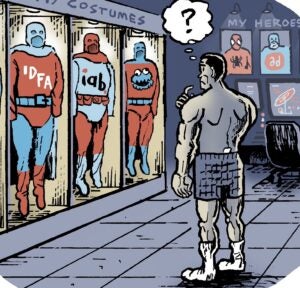
What do you think of Apple’s little IDFA bombshell and how does it affect you?
Apple is prioritizing user privacy, and I think that’s a good thing. But this is a big change for the industry. It doesn’t change the direction we’ve been going in, though. When we think of the future of the market, we focus on not being siloed and on being able to understand the creative, who the audience is, how to speak to them and where they are. And so media buyers need to think even more about strategy, which becomes very important in a post-IDFA world.
This interview has been edited and condensed.