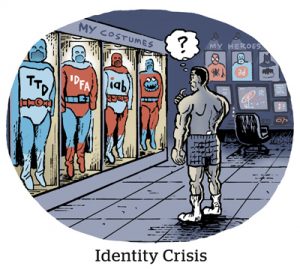
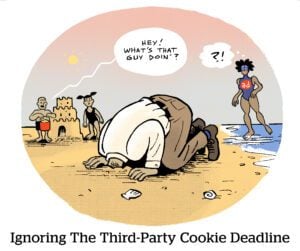
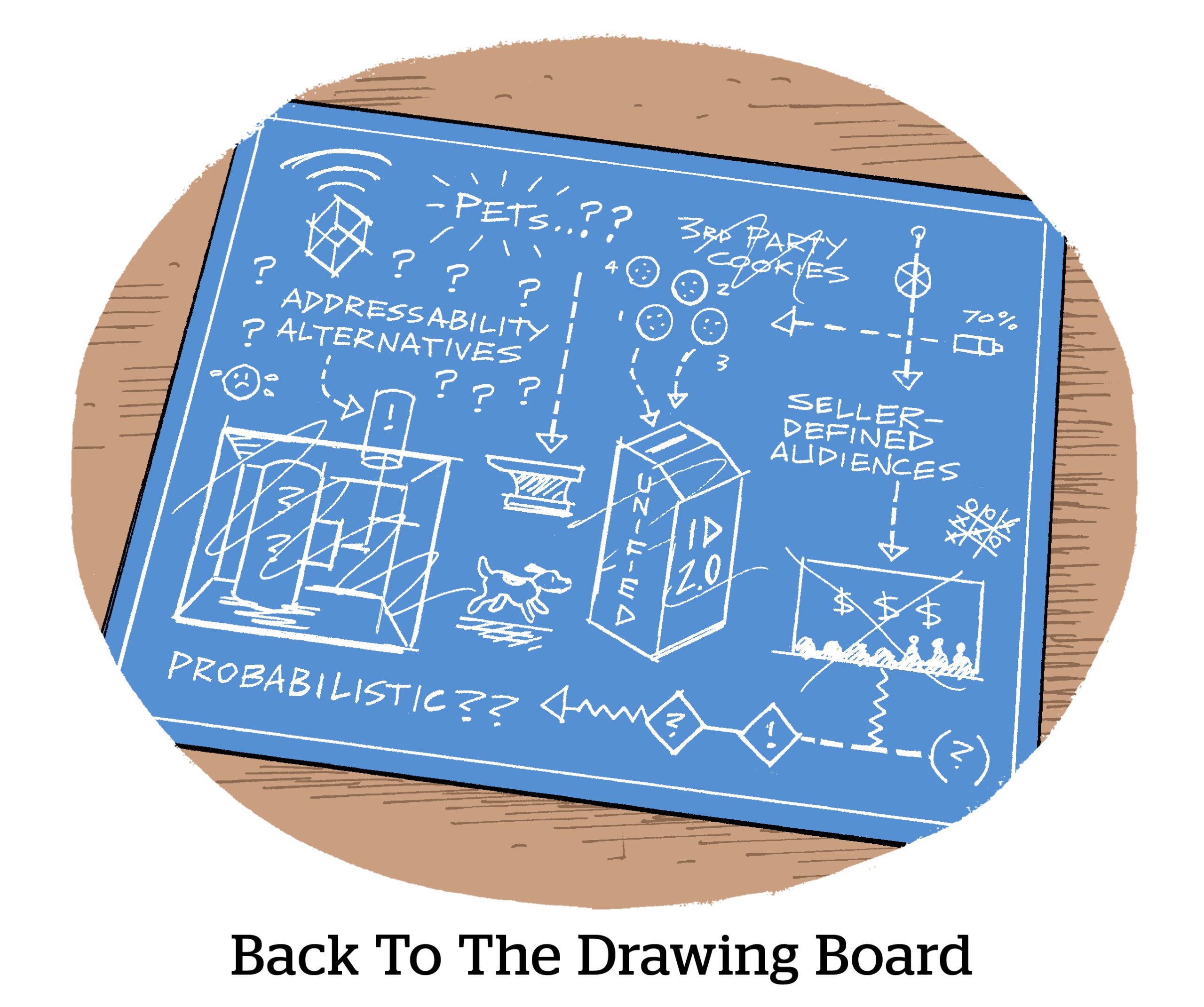
Comic: Cookies n' Chrome
A weekly comic strip from AdExchanger.com that highlights the digital advertising ecosystem…
In the context of TV advertising, clean rooms offer privacy-compliant software that enables advertisers and publishers to match user-level data without actually sharing any personal information or raw data with one another.
Something ostensibly “good” (consumer privacy protection) could also be an antitrust violation. Weird world. Which is why data protection authorities and their antitrust counterparts must collaborate and compare notes.
A significant number of solutions that claim to be cookieless, including unified IDs and cohort-based targeting, still rely on IDs. These solutions will find it extremely difficult to achieve the scalability required to become a true successor to cookie-based advertising.
The more time the marketplace has to evaluate the Privacy Sandbox – and, particularly, the Topics platform – the worse those platforms will look.
Despite their perilous position, some companies still aren’t preparing for the end of third-party cookies. But the lack of testing isn’t because they aren’t concerned.
Dotdash Meredith bet on contextual with its launch of D/Cipher, but it remains to be seen whether it can turn its revenue numbers around.
Here’s today’s AdExchanger.com news round-up… Want it by email? Sign up here. No Alternative Third-party cookies are not the future of digital advertising in the EU (or anywhere for that matter). But it looks like alternative IDs may not be either. European publishers are pushing back against alternative IDs that use publisher data to build […]
Amazon accounts for more than 40% of retail media’s multibillion-dollar total addressable market. But that doesn’t mean there isn’t a big opportunity to scale retailer audiences across the open internet, says Criteo CEO Megan Clarken.
In Q1 2024, Chrome will deprecate cookies for 1% of a randomly selected group of Chrome users and slowly expand deprecation to more users throughout the year.
One-third of Publicis Group’s revenue comes from its data and tech business, which includes Epsilon and Publicis Sapient. Maintaining a differentiated revenue mix is one reason why Publicis is growing faster than the global economy, particularly since the pandemic, chairman and CEO Arthur Sadoun told investors on Thursday.
Ad tech vendors who scrape content to build contextual segments are irking publishers. And the latest tweak in Safari will cut down on vendors that camouflage themselves in first-party cookie tech.
Rather than allowing an ecosystem in which all media is interchangeable to remain the default, media owners must differentiate themselves to maximize their value to readers and advertisers.
A weekly comic strip from AdExchanger.com that highlights the digital advertising ecosystem…
Buyers already have access to the same information from the same trusted third-parties that publishers use to define Contextual Categories. So why bother?
When faced with a recession, brands should focus on fundamental changes that save money and drive efficiency while seeking ways to get more out of their data, technology and ad spend, writes Nancy Marzouk, CEO and founder of MediaWallah.
“‘Cookieless’ is just a buzzword,” said Sanup Pillai, DHL’s global head of digital marketing and mar tech tells AdExchanger. “I wouldn’t say we’re getting ready for the ‘cookieless future’ as much as that we’re taking this opportunity to future-proof our technology stack.”
Fingerprinting, an alternative to third-party cookies, uses a constellation of browser signals to identify a person. The browsers don’t like it, but can they actually stamp it out? Plus: Advertising will grow, albeit slowly, in 2023, according to recent ad agency forecasts.
Google isn’t bluffing about quitting its third-party cookie habit. That’s because consumer concerns about data privacy and pressure from regulators around the globe have left Google with no choice but to discontinue third-party cookie usage in Chrome, said Dan Taylor, VP of global ads at Google, at AdExchanger Programmatic I/O conference in New York City on Monday.
Google Topics is Google’s proposed replacement, which takes us back in time to broad, interest-based segmented targeting. This means brands are about to return to the “bad old days” of marketing, when many audiences all saw the same message. And this one-message-fits-most approach doesn’t fix what’s fundamentally broken in MADTech: the consumer experience, writes Tara DeZao, director of product marketing, MarTech and AdTech, at Pega.
Clean rooms are riding a wave of momentum as the ad industry looks for ways to use aggregated, anonymized data sets to predict audience identity. Yet, despite a catchy name, clean rooms aren’t necessarily as “clean” as they promise to be, writes Drew Stein, CEO of Audigent.
While Chrome dallies on the third-party cookie question, Firefox keeps releasing new anti-tracking features. Marshall Erwin, Mozilla’s chief security officer, dishes on everything from cracking down on fingerprinting to its unlikely collaboration with Meta on privacy-preserving attribution technology.
The expiration date for third-party cookies has been extended for another year. We talk through what the delay will mean for ad tech. Plus, an entire corner of the LUMAscape now exists within the Tremor-Amobee deal, the ultimate example in ad tech consolidation.
We read between the lines of Google’s progress report to the UK’s antitrust regulator on its plan to remove third-party cookies from Chrome. Could Google miss its own self-imposed 2023 deadline? “Signs point to yes.”
You’ve probably heard (dozens of times) by now that first-party data will be the key to post-third-party-cookie ad targeting. But what exactly is first-party data? How does it differ from second-party, third-party and zero-party data? And what makes first-party data more suited to a privacy-centric ad experience?
The word “cookieless” crops up in virtually every conversation about the future of online identity. But what exactly do people mean when they say “cookieless”? Although the definition seems simple enough – the absence of cookies – it lacks the nuance to encompass the true complexity of signal loss. It’s also a misnomer.
As brands build out their first-party data strategies and work to assemble post-cookie capabilities, many are “in-housing” to remain in control of their data. But to ensure success, they need to accomplish a few important tasks, writes Nancy Marzouk, CEO of MediaWallah.
Criteo is still using third-party cookies while it can. Why not? But “if tomorrow we don’t have access to them, then we’ll have to use something else,” said CEO Megan Clarken. What sort of “something else?” Criteo has been testing what it refers to as “more privacy-enabled, controllable and reliable signals.”
A weekly comic strip from AdExchanger that highlights the digital advertising ecosystem…
Earlier this month, ESP, not to be confused with PPIDs, entered open beta in GAM, so feel free to rev up your UID2s. In English: Google is moving forward with its solution, called encrypted signals from publishers (ESP), that allows publishers to share encrypted first-party signals, including Unified ID 2.0 identifiers, with buy-side platforms of their choosing via Ad Manager. Here’s the DL on all things ESP.