

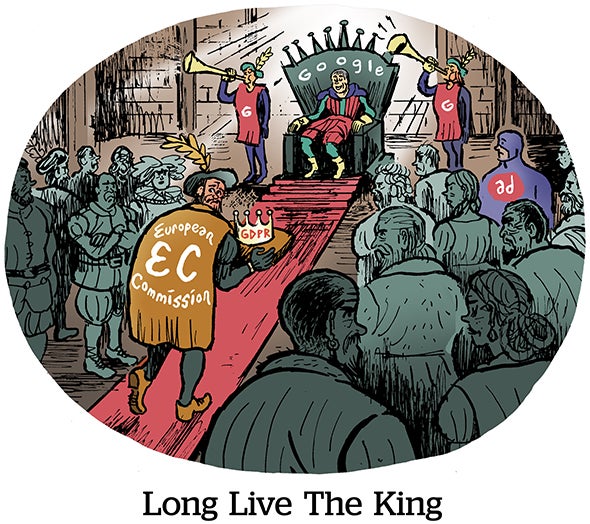
 Google is reversing its policy for its consent management platform (CMP) that initially capped at 12 the number of vendors a publisher can list in opt-in messages, following critical feedback from publishers and the ad tech industry.
The platform now has no limit.
“The change being made now is in line with our priority of this being a flexible framework for publishers,” said Vegard Johnsen, Google product manager for GDPR and sustainable advertising.
Google originally instituted the policy for its GDPR compliance feature because testing showed users opt in more frequently if fewer vendors are listed in the consent pop-up message. Opt-in rates were negligible with more than 12 vendors.
Google’s CMP, called Funding Choices, is still in beta and initially presented users with a “yes or no” option for consent when they arrived at a page. That yes-no option still exists, but opt-in notices now will also let users click through to specific vendor policy pages.
“What we’ve heard from publishers is they like to have more of a dialogue with readers,” Johnsen said, adding that the Funding Choices policy update is the best way to balance those priorities while effectively gathering consent.

The policy change, which is being communicated to publishers this week, also puts Google’s Funding Choices more squarely in line with CMPs that work through the IAB Europe’s Transparency and Consent Framework (TCF), which offers more granular controls to users.
Google is working on a solution to connect IAB-derived consent signals with consent gathered by publishers in its network and plans to join the IAB framework by the end of the summer.
But the inability for Funding Choices to work within the TCF, plus the original policy prohibiting more than a dozen vendors (11, really, considering Google is included by default) riled up publishers and ad tech executives who thought Google was accruing more power for itself and undermining the open ecosystem.
The Funding Choices policy reversal will alleviate part of those concerns, though there are still advantages to using Google’s pipeline of products.
Funding Choices users who are also DFP or AdSense customers will be able to automatically sync vendor or policy changes, Johnsen said.
Other CMP updates
Google is also expanding the consent and monetization options for publishers using Funding Choices.
Instead of defaulting to non-personalized ads if consumers don’t allow Google to show data-driven ads, publishers can now offer a choice between personalized ads and a payment system called Google Contributor that launched last year, where users can pay per article or page view.
Google Contributor, like Funding Choices, started as a solution to prevent revenue loss from ad blocking.
Ad blocking alternatives segue naturally into GDPR compliance, Johnsen said, since they hinge on the notion of starting a direct relationship with readers.








