

 33Across has introduced a cookieless targeting solution in an effort to help publishers and advertisers retain the value of programmatic without advertising IDs.
At the root of the cookie-free targeting product, called Lexicon, is a probabilistic identifier 33Across calls the Pub Token. The Pub Token combines contextual signals – such as the time of day, the site URL and the device being used – and data from 33Across’s Site Control tool, which offers content-sharing buttons that publishers can add to their site with the promise of free analytics if they share the data with 33Across.
Speaking with AdExchanger, 33Across founder and CEO Eric Wheeler said that unlike a third-party cookie, the Pub Token offers no assurance that the same user or device revisited your site. Rather it represents a high likelihood that a user fits general targeting parameters or was previously identified on a relevant site in 33Across’s network.
Another important difference is that third-party cookies can be used across the web and other platforms, whereas the 33Across Pub Tokens only work within the company’s ad exchange.
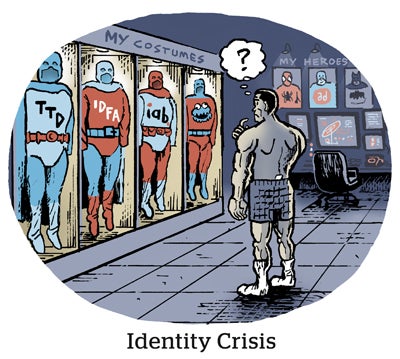
Programmatic companies have focused on recreating deterministic audience targeting without third-party cookies, Wheeler said, pointing to LiveRamp’s Authenticated Traffic Solution and The Trade Desk-backed Unified ID 2.0. But those IDs depend primarily on users submitting emails as a sign-on when they visit a site.
“Maybe 10% to 20% of users in the United States will be logged in to publisher inventory,” Wheeler said. “How are you going to monetize the other 80% of your supply that’s not authenticated or tied to any deterministic IDs?”

He said that publishers face an “addressability gap” on Safari and Firefox, browsers that already block most third-party trackers. Sixty percent of 33Across’s impressions currently include a cookie, but 97% of bids on the platform are for cookied inventory. In other words, programmatic companies need to figure out how to keep advertisers on their exchanges when they don’t have cookies to anchor campaigns.
Wheeler said advertisers have been in a holding pattern while Google Chrome irons out its new privacy policies, but that there will be a growing demand for cookieless targeting solutions that can demonstrate similar results. New walled garden players such as Amazon and other retailer-run ad platforms have their own first-party deterministic identifiers, but those platforms can charge up to 20% of the media plan to overlay a campaign with those IDs, he said.
Probabilistic targeting methods like Lexicon offer a way forward, but advertisers haven’t aggressively tested them yet, said Katie Pillich, The Daily Beast’s SVP of revenue and analytics, and a Lexicon pilot partner.
“I think towards the end of the year, the urgency will come for agencies in particular,” she said. So, it’s important for publishers to test and learn now, especially while Chrome third-party cookies are still available, and so can be used to test deterministic vs. probabilistic targeting results.
“It’s early to say, but I think probabilistic matching is stronger than the results we’ve seen with limited efforts (by advertisers so far),” Pillich said. “I’m eager to see how this will scale.”







