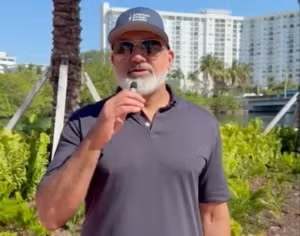
ROI for mobile ads was among a slew of topics covered at the one-day, 1000-strong, Minnesota Interactive Marketing Association’s MIMA Summit in Minneapolis yesterday.
Duncan McCall, CEO of location-based targeting platform PlaceIQ, presented alongside agency FRWD‘s Director of Shopper Marketing and Mobile, Matt Doherty, as they aimed to prove that data-driven, location-based mobile ads work. Mobile ads in this case meant smartphones and the like.
In a preamble to a case study, FRWD’s Doherty set the the stage by defining “hyperlocal targeting” in mobile: “It’s about identifying a specific audience in the real world, in real-time – and not just reaching them in proximity to a store but hitting at the right time with a more relevant message.” So, the same as any channel with location adding another layer of complexity in a mobile environment.

And that’s where location targeting platform PlaceIQ came in as McCall (AdExchanger Q&A from January) presented how his company’s data put the targeting over the top for a car care product company called Meguiar’s.
McCall admitted it’s still early days for the audience opportunity in mobile, but he thinks location-based data can do the trick. He better – he’s got venture capital nipping at his heels as PlaceIQ took $4.2 million a year ago.
McCall went through all the hyperlocal “tiles” that his company ingests (a billion in the U.S. he says!) – a “tile” is a dataset such as photos, event listings, mobile search, social content, place of interest and nearly a billion more. So, the pitch is… bringing an understanding of all those tiles together can deliver effective mobile ad targeting that profiles the user types (the demos) of locations, rather than particular, identifiable users themselves.
McCall offered up this meaty quote that he attributed to others: “Location may be the biggest indicator of intent since search.” Presumably bottom of the funnel opportunities lurk in location targeting.
As you would expect, the use case for Meguiar’s showed positive results as every dollar that was spent made the client a $1.31 in the first two months of the campaign. Both McCall and Doherty demurred on the cost of this campaign. But, given that mobile display is known to be inexpensive, it was likely cheaper than a comparable PC-based display campaign. FRWD’s Doherty stressed the methodology behind the campaign which included a control group that was not exposed to media through any digital channel.
An audience member wondered about how Orlando, Florida tourists could be removed from targeting Orlando, Florida car owners. McColl’s answer didn’t make it sound like there was any easy answer to that question.
McColl also pointed out the research side to his platform and that “mobile is a medium to learn” about what’s working – and for now, CTR is still the key metric which helps define audiences that perform. The click will never die!
He also stressed his company doesn’t do geo-fencing and that the question to the client at the beginning of an engagement is “What is the audience you are looking to target?” His company then goes and finds audience in that target market. The first question is not, “Where do you want to target?”
Overall, from the questions in the room, there was a lot of interest – it still feels like early days as education needs to spread. But, as with any channel, effective attribution metrics – proving strong results – could make it blow up fast.