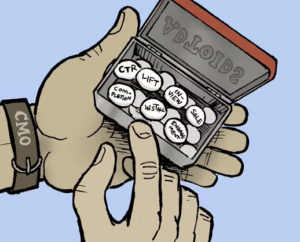
 AppNexus is hitting the market with its own version of mobile header bidding.
Announced Monday, the tool – dubbed PriceCheck – aims to help app developers and publishers maximize their yield by accessing as many sources of demand as possible and revealing what each impression is worth. Then the impressions are routed to the advertisers willing to shell out the most for them.
Mobile display inventory is generally available through the tool, and video ad units are in the alpha testing phase.
Beyond circumventing the waterfall, the solution also pre-caches ads to cut down on latency, which is an issue on desktop, where the first header bidding solutions were born, but an even bigger one on mobile, where data consumption and battery life are considerations.
The PriceCheck value prop is pretty straightforward, but the painpoint it’s addressing is fairly acute, said Tom Shields, head of publisher strategy at AppNexus.
“The idea behind header bidding is to create a level playing field by letting everyone put in their offer so the publisher can choose,” Shields said. “The problem with the mobile app ecosystem is that if you want to change the way you handle advertising, you also have to make changes to the whole app and then resubmit to the app stores.”
Shields is referring to software development kits (SDKs), which contain pieces of third-party code that developers integrate directly into their apps to perform specific functions, like QA testing, crash reporting, measurement and, of course, monetization.

But an advertising SDK only provides visibility into demand coming from the networks and exchanges it partners with, and that’s a somewhat limited view, Shields said.
“You’re stuck with the demand that those SDKs go after and, in many cases, you don’t know what the value of the impression will be at the time of serving – and most of the big mobile players are trying to lock in the demand they bring to the table, so they’re not open to all sources,” said Shields, making a dig at DoubleClick for Publishers and Twitter’s MoPub.
If publishers want more demand, they have to work with additional networks or exchanges, and that means integrating more SDKs, something most app developers are highly reluctant to do.
That’s why AppNexus decided to make its mobile header bidding solution available via an API, which takes a couple of hours to implement, rather than an SDK, said Shields.
“The idea is to make it open and light,” he said. “Effectively, it’s a line of code that calls to say, ‘Here’s my impression – what will you pay for it?’”
It all sounds quite a bit like ad mediation. Most developers work with more than one ad network at the same time, so there’s tech out there that allows publishers to send ad requests to multiple ad networks and centralize demand through a single SDK.
But Shields demurred: “One way to get access to demand is to go through a mediation platform, yes, but you have to hope they have the access you’re looking for and you’re also paying the platform a significant percentage for the privilege of serving the impression.”
AppNexus isn’t the first ad platform at the mobile header bidding party. Rubicon expanded its FastLane header bidding product in December to include in-app inventory in a test with 20 publishers. Rubicon is expected to release the tool, which requires mobile app publishers to implement the FastLane SDK, more widely this quarter.