It may look as if there hasn’t been much progress with alternative currencies – at least not commensurate with the hype.
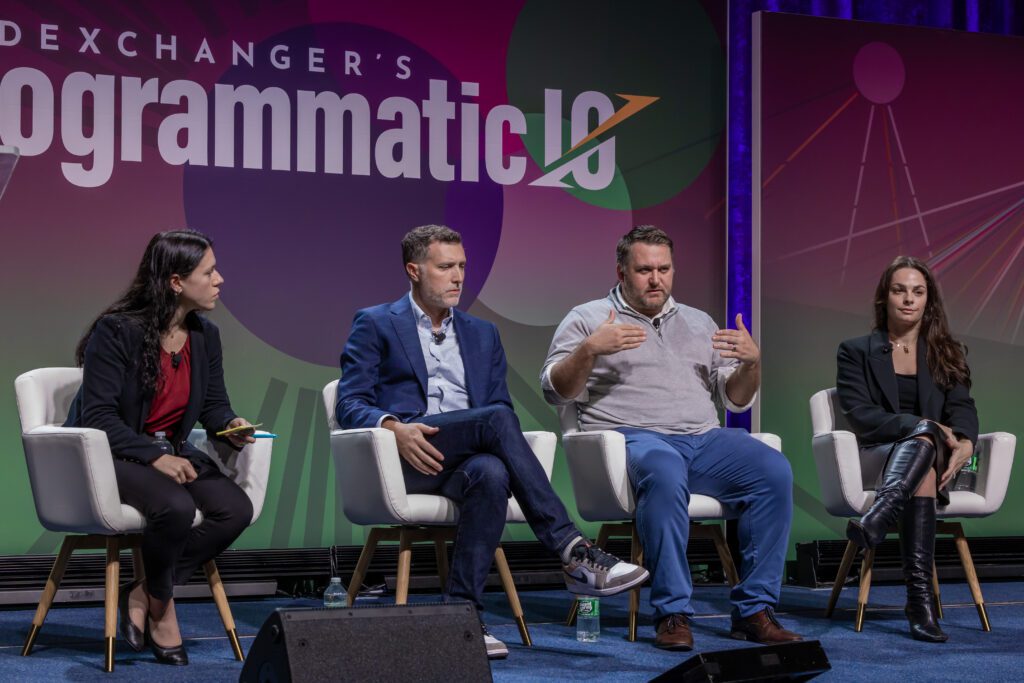
But just because alt currencies didn’t take over the upfronts this year doesn’t mean there hasn’t been movement, according to ad buyers on stage at AdExchanger’s Programmatic IO conference in New York on Tuesday.
In general, the conversations that buyers and broadcasters are having about using alternative currencies have become “more substantive,” said David Campanelli, EVP and chief investment officer at Horizon Media.
And it’s not all talk.

All in
Just last week, for example, the broadcaster-backed joint industry committee (JIC), which was formed in January to spur the creation of a cross-platform TV measurement standard, granted conditional certification to Comscore, iSpot and VideoAmp for audience measurement.
Meanwhile, dentsu is “all in” on advanced audience guarantees, said Brad Stockton, SVP of US national video innovation. The agency is also partners with iSpot and uses Comscore’s local TV currency.
And during the upfronts in May, Horizon negotiated more than $100 million in guarantees based on alternative currencies using VideoAmp for planning, measurement and analytics.
To be fair, $100 million is just a drop in the bucket. The TV upfront marketplace generates billions (and billions) of dollars every year. Also, despite their vocal dissatisfaction, most buyers and sellers still work with Nielsen as their primary TV measurement partner. It’s hard to move on from an incumbent.
But the shift toward cross-screen measurement and away from ratings based on GRPs and basic demos is a process.
If the past couple of years were about getting the plumbing in place – vetting partners, assessing methodologies and running tests – then the next step finds buyers focused on making sure alt currencies work at scale in the real world, Stockton said.
For an alternative currency to be viable, it has to function within the systems that agencies already use every day, Stockton said, like Mediaocean, for instance.
In August, Paramount and Omnicom Media Group announced a pilot test to transact on VideoAmp using Mediaocean to automate linear TV buys.
But nudging the industry toward alt currency adoption requires ticking a lot of different boxes.
Buyers, for example, need to make sure data is being ingested properly, and sellers need to make sure data is consistent. Otherwise, broadcasters can’t make accurate campaign projections for advertisers based on historical information.
Proving it
With the infrastructure in place, though, and the gears turning, advertisers can get closer to what they really need from TV measurement: the ability to drive outcomes, said Caroline Proto, director of global media at luxury eyewear maker EssilorLuxottica.
“As a brand, we’re always being tasked with outcomes,” Proto said. “At the end of the day, if we’re not driving actual outcomes, we’re not considered successful.”
Luxottica spent the past two years building measurement infrastructure with VideoAmp and started transacting some media on an alternative currency this year, with plans to add more scale over the year to come.
The ability to measure linear and CTV together also helps justify spending on TV, still one of the largest chunks of Luxottica’s overall media mix. You have to defend the spend, especially in an uncertain economy.
“If I can’t prove what I’m doing, I’m losing that investment,” Proto said. “But being able to [prove it] and move forward more informed – that’s why we’re doing this.”