 “Marketer’s Note” is a regular column informing marketers about the rapidly evolving, digital marketing technology ecosystem.
This week it is written by Melissa Parrish, Executive Director, AdExchanger Research.
Earlier this week there was an article in Ad Age about the “hidden” costs of programmatic. I don’t intend for the quotes to indicate that the fees don’t exist, just that they’re not actually hidden. To me, the spirit of the article is more evidence that many marketers are still exploring programmatic for the wrong reason.
We’ve already alluded to this a couple of times, including in the State of Programmatic research, but it’s worth recalling here that a fair amount of marketers in our annual study cited “lower CPMs” as a key benefit to programmatic.


We take this to mean that programmatic is now appealing to more than just early adopters in the marketing community, but it was still a little disappointing to see. Taken with the article about “hidden” costs of programmatic, I think it’s important to restate a couple of key concepts.
First, what we were happy to see in the data is that marketer respondents do see improved audience targeting and ROI as slightly greater benefits of programmatic than lower CPMs. This points to what drew early adopters to programmatic in the first place: efficiency. And, crucially, efficient does not equal cheap.
Conflating the idea of getting more for your money with just spending less is a logical explanation for why marketers may still think the costs of programmatic are hidden. (Yes, there’s a bit of a lingering misunderstanding in the marketplace that RTB is all about long-tail remnant inventory, but I think [naively?] that most marketers have moved beyond that now.) But an explanation isn’t an excuse. It’s time we got over the idea that programmatic is about cheaper campaigns. It’s about better, more effective ones.
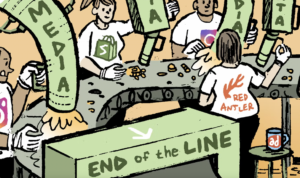
Second, the article shines a light on the idea that automation doesn’t mean a wholesale replacement of people in media. This is something we talk about a lot at AdExchanger Research – that the industrialization of advertising is similar to the industrialization of other industries through history. The first phase is amazement at what the machines can do. The second is abject terror that we’re all going to be replaced by computers. And the third is a realization that the shift to automation means there are brand new skills to learn, achievements to be made and – yes – fees to amass.
So while I think it’s borderline irresponsible for a marketer to go into programmatic without understanding what they’re paying for, I’m glad to see that we’re talking about both the hard and soft costs of increased media efficiency. Now we just need to shake the fear and we’ll be ready for the next wave of innovation.
Follow Melissa Parrish (@MelissaRParrish) and AdExchanger Research (@AdExchangerRsch) on Twitter.