 “Data-Driven Thinking” is written by members of the media community and contains fresh ideas on the digital revolution in media.
Today’s column is written by Victor Wong, co-founder and CEO of PaperG.
Native advertising may be the latest buzzword, but the idea of aligning advertising with the content’s purpose has been around for a while.
Google effectively monetized search with its humble text search ad unit. Facebook and Twitter began monetization with new social ad units meant to promote sharing. However, recent developments reveal that these native ad units aren’t making enough to keep either Madison Avenue or Wall Street happy.
Facebook introduced social ad units like Facebook Offers years ago, but they failed to generate as much as the company had hoped. As monetization pressure increased leading up to and after the IPO, Facebook added FBX to tap into RTB display ad dollars. Facebook also made its proprietary display formats easier to buy for the existing display ecosystem. Over time Facebook added huge display logout ads and expanded in-stream ads to include larger images combined with texts.

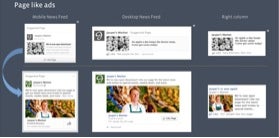
As search-ad revenue growth slows, meanwhile, Google has tested the addition of thumbnail images and richer content to search ads, and even had to go back on its 2005 pledge of having “… no banner ads on the Google homepage or Web search results page … ever,” when it unveiled it had been testing large banner ads in branded search results.
To top it off, Twitter, the last of tech’s current version of the Big Three, introduced a design change to its social stream to display images prominently by default, which is pretty hard not to notice.
Between its acquisition of MoPub to open the media-buying pipes and its new design change to open the creative, Twitter is clearly gearing up to make its native ad inventory available to display ad buyers. This will be far easier than convincing agencies and advertisers to set aside a separate budget for yet another publisher, while maintaining some uniqueness to its value proposition. As the quarters drag on after the IPO, don’t be surprised as they begin exporting these ads into traditional display inventory to increase revenue.
On the creative end, Twitter could export the text and images as an ad creative in standard display sizes, and dynamically swap out the creative based on what’s trending in the Twittersphere. By doing so, Twitter can automatically optimize for the highest CTR display creative for a brand. As the smallest of the Big Three in terms of audience, the company should link Twitter handles to advertiser IDs stored on its ad exchange. By doing so, and due to the lack of other viable options, it can easily sell interest and affinity targeting data across devices and instantly draw huge mobile display ad budgets onto its platform.
What these companies clearly aren’t doing is openly selling standard banner ads. They’ve let publishers keep those ad units. But even those publishers are beginning to experiment with more “native” formats, such as sponsored content or responsive Web-designed ads that integrate smoothly into multidevice-friendly layouts.
Display advertising is undergoing a renaissance, and everyone is lining up to tap the billions in display ad budgets already unleashed. While efforts are underway to streamline and automate the media buying and creative for all these formats, we’re only at the beginning of display advertising’s reinvention.
What the Big Three do with their ad units and how the ad-tech industry addresses these changes will reshape what the Web looks like and how it sustains itself.
Follow Victor Wong (@vkw), PaperG (@paperg) and AdExchanger (@adexchanger) on Twitter.