The Chilling Effect
ABC parent Disney announced that “Jimmy Kimmel Live!” will return from its brief suspension on Tuesday, according to The Hollywood Reporter.
Disney suspended the show “indefinitely” last Wednesday after Kimmel’s commentary about the murder of conservative organizer Charlie Kirk drew the Trump administration’s ire. Republican FCC Chair Brendan Carr threatened to review ABC’s broadcast license if Kimmel wasn’t held accountable.

Disney reversed course under pressure from celebrities, media personalities, politicians – including a few Republicans – and consumers threatening to cut their Disney+ and Hulu subscriptions, THR reports.
But it’s unclear to what extent advertisers pressured Disney, if at all.
Adweek reached out last week to several brands that have recently run ads on Kimmel’s show, but none opted to comment on the suspension.
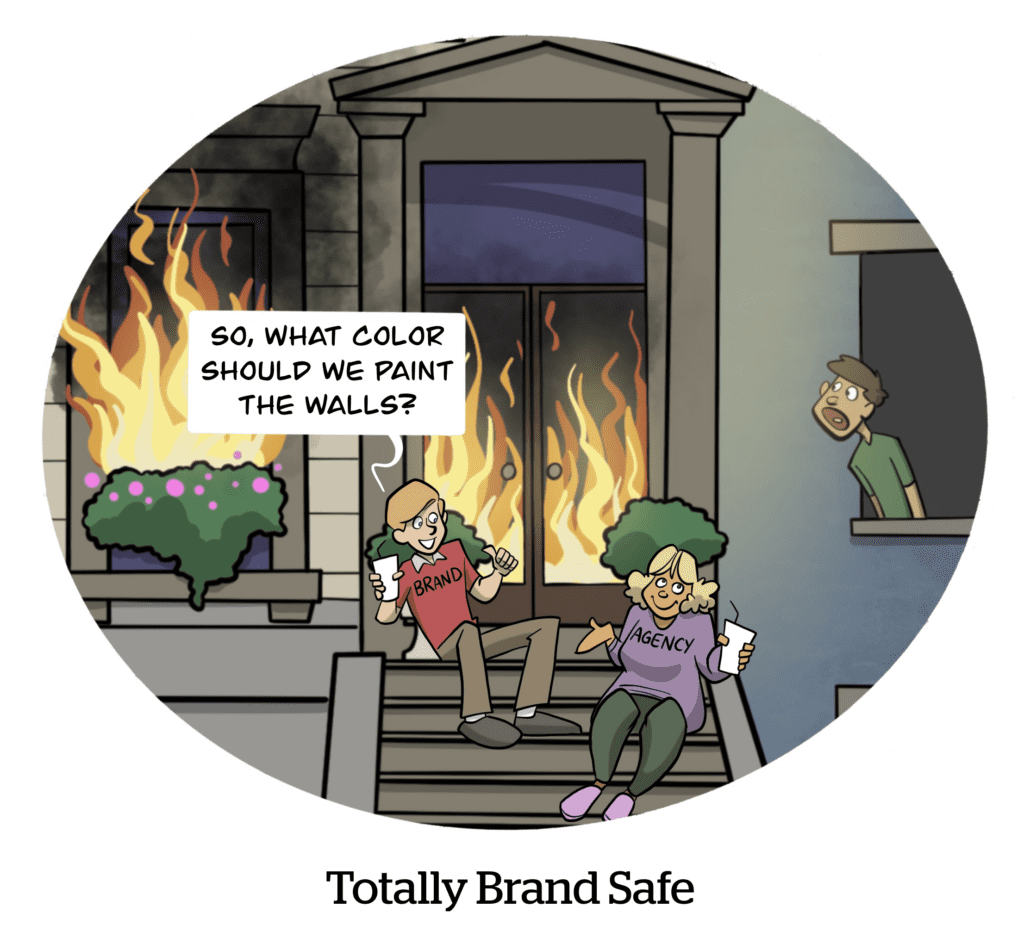
One CMO who requested anonymity told Adweek that brands are trying to stay politically neutral and are afraid to express values that “don’t align with the administration.”
It’s no wonder advertisers seem scared to throw their weight around. Brands, including Bud Light, Cracker Barrel and Jaguar Land Rover, have been attacked by conservative media and President Trump himself over marketing decisions they deem to be “woke.”
Plus, advertising has become increasingly scrutinized under Trump. In June, the Republican-controlled FTC approved the OMG/IPG merger on the condition that ad agencies prohibit blocking spend to publishers based on their politics. The FTC is also investigating ad agencies and various brand safety vendors for political bias.
Enshittipedia?
Over at Tech Policy Press, Robin Berjon, principal at Supramundane Agency, a consultancy that focuses on the governance of tech, makes an interesting case for how Wikipedia could “save the internet” by incorporating ads into its business.
Berjon’s primary argument is that Wikipedia has enough scale and cultural cachet to withstand the corruption that a reliance on ad revenue has led to at similar organizations, like Google. Furthermore, Wikipedia could use its power to enact positive change on the internet, perhaps by developing its own more scrupulous, privacy-safe ad tech platform.
But this hypothetical arrangement ignores a major problem: The people who actually run the website would hate it.
Part of the reason that Wikipedia hasn’t become a “slop machine,” in Berjon’s words, is due to a vast network of mostly volunteer contributors. Rather than the Wikimedia Foundation, it’s these contributors who shape Wikipedia’s content policies, as evidenced by the recent pushbacks against misleading fundraising ads in 2022 and AI-generated summaries in 2025.
Not surprisingly, this community has been debating whether there should be ads on Wikipedia on Wikipedia. There’s a Wiki dating back to 2009 called “Funding Wikipedia through advertisements” and the “Arguments against” section is roughly double the length of the “Arguments for” section.
As one anti-ad editor wrote on the site, “Contributor goodwill is Wikipedia’s main asset and should not be gambled with.”
Not-So-Prime Time
Google isn’t the only one in the courtroom this week.
On Monday, a civil trial kicked off in response to a 2023 FTC claim filed against Amazon. The FTC accused Amazon of tricking people into signing up for Prime “without their knowledge or consent, including by obscuring details about billing and the terms of free trials,” the Wall Street Journal reports.
And canceling Prime requires jumping through a whole bunch of hoops.
It’s a classic “dark patterns” case.
Earlier this year, the FTC almost adopted a “click-to-cancel” rule championed by former chair Lina Khan. The rule would have required companies to make canceling a membership or subscription as easy as signing up, but an appeals court struck it down days before it would have been implemented.
Even if the click-to-cancel rule had gone into effect, though, Amazon would still be claiming innocence.
A spokesperson for Amazon insisted to The Verge when the suit was filed in 2023 that “by design [Amazon makes] it clear and simple for customers to both sign up for or cancel their Prime membership.”
Maybe, maybe not. It’s in the hands of a jury now.
But Wait! There’s More!
Why in-app advertising is becoming core infrastructure for ecommerce ad ops. [AdMonsters]
What we do – and don’t – know about the US-China TikTok deal. [Bloomberg]
A primer on the billion-dollar infrastructure deals behind the generative AI boom. [TechCrunch]
How the Guardian is trying to bring in more American readers as AI search threatens its referral traffic. [WSJ]
Wired, meanwhile, is also wooing subscribers – by marketing its journalists as if they were influencers. [Adweek]
Bluesky is getting more aggressive about moderation, sparking concerns from marginalized communities about how these new guidelines will be enforced. [TechCrunch]
Neal Agarwal, a game developer known for parodying the experience of being online, launched a new game called “I’m Not a Robot” that aims to make Captcha bot-filtering tests fun. [The Verge]
You’re Hired!
T-Mobile names Srini Gopalan as its next CEO. [WSJ]
Doug Martin is leaving General Mills to take on his new role as CMO of Wawa. [AdAge]
Entertainment company OBB Media hires agency vet James Rowe as president of its branded content studio, Bolded. [MediaPost]