
A Not-So-Modest Proposal For A Sports-Specific CTV Viewing Guide
You’d think the United States Congress would have bigger things to worry about right now than figuring out where and when football games are airing… and yet.

You’d think the United States Congress would have bigger things to worry about right now than figuring out where and when football games are airing… and yet.
Will programmatic buying inevitably lead to a repeat on CTV of what happened with digital media publishers? We asked Roku, Tubi and NCBU that question on stage at our Programmatic IO event in Las Vegas.

Amid the glitz of TV upfront presentations, advertising executives take the stage to talk about things like new audience targeting capabilities or to ballyhoo new ad measurement partnerships. How, though, are we supposed to focus on brand lift statistics when we can all hear Lady Gaga belting a vocal warmup offstage?
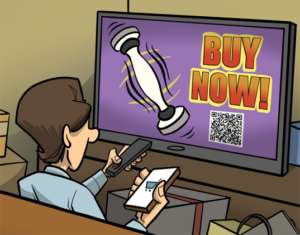
Instead of simply watching ads on the big screen, consumers are now being encouraged to interact with those ads – a shift in marketing that was particularly apparent at the 2025 NewFronts presentations in New York City this week.

Outcomes measurement company EDO is no stranger to large data sets. So I sat down with Kevin in March to learn how he thinks AI will continue to transform programmatic CTV advertising.

At VideoAmp’s “Vampfront” presentation on Tuesday, I couldn’t help but be reminded of my favorite pop culture vampire stories (in a good way).

A unit of attention doesn’t serve as a useful indicator of interest or resonance among consumers. So what does? Well, consistency certainly helps.

As the chief media officer and SVP of demand generation at Inspire Brands, Travis Freeman controls hundreds of millions of dollars of media spend every year – and he has a little request for anyone buying CTV.
TV programmers and streamers are sharing their financial report cards for last quarter – and the results are quite a mixed bag.

Since Connatix and JW Player first announced their merger in October, JWP Connatix – a temporary name for the newly joined companies – says things are going well at the six-month mark.
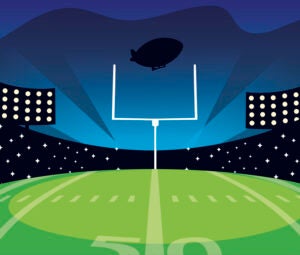
This year’s Super Bowl commercials relied on comic relief and highlighted noncontroversial topics, like streaming and entertainment. But a couple of commercials in the lineup still managed to stir some controversy.

This weekend, the rewards app Fetch is debuting its very first Super Bowl ad, which includes a live giveaway of $1.2 million.

Nielsen told ad buyers that it plans to drop panel-only ratings later this year. The decision signals an inflection point in media measurement that publishers and buyers have both been waiting for.

In light of T-Mobile’s plans to buy Vistar Media, Atmosphere TV’s business model shines a brighter spotlight on the grey area between connected TV and DOOH billboards.

CES is a popular destination for streaming TV publishers and video currency vendors to jumpstart the year’s dealmaking and, to some degree, prepare for the upfronts. Upfront planning seems to start earlier every year.

As the new year begins, expect CTV growth to continue blasting along with a vengeance. Experts are “bullish” on the channel and believe that many of 2024’s biggest CTV trends will continue well into 2025.

For all intents and purposes, 2024 is already over. Which means now is a fine time to see how far CTV advertising has come by looking back at some of this year’s most-read stories on AdExchanger.

The advertising industry is abuzz with the potential of shoppable television. But the concept of buying something directly from your television isn’t new; it began back in the ’80s with channels like QVC and HSN.

Now that ad-supported streaming models are becoming more profitable, Vevo’s Rob Christensen predicts that social video will be the next big frontier to cross – or, more specifically, where “social and television converge.”

With so many streaming apps and platforms available on the market, TVs need operating systems. And just like with early PCs, game consoles, mobile phones and streaming services, that means a battle for dominance is imminent.

Despite CEO Jeff Green’s denials, the rumors turned out to be true: The Trade Desk has spent the last three years quietly building its streaming OS, called Ventura, to compete with the likes of Roku, Amazon’s Fire TV and Google’s Android.
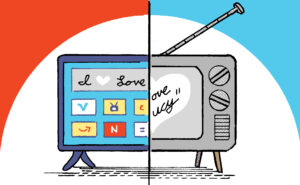
Change is hard for a company like Nielsen, which has been around so long it even predates the first publicly available television sets.

TV measurement is migrating from traditional sample-based systems to solutions built on big data. In other words, measuring TV audiences is becoming an incredibly complicated task, and almost no one knows that better than members of the Coalition for Innovative Media Measurement (CIMM).

Shelby Nichols was doing CTV before it was cool. And while CTV buying is a more complicated process than ever, it’s becoming easier for consumers to access more types of content – like live sports, for example.

The “set-jetting” phenomenon means TV advertising and, more specifically, CTV advertising is a natural fit for travel brand Expedia promote its service.

You probably didn’t need me to tell you that things aren’t looking super great for the local TV broadcast industry these days, financially speaking. But just in case you need quantitative proof, consider the fact that many of the largest broadcasting companies are considered a credit risk.

Despite their dependence on Nielsen, programmers love complaining about the TV ratings titan. But Paramount Global recently went beyond griping when it announced its contract with Nielsen had lapsed.
AdStorm launched an ad buying platform in August to let just about anyone put their own money behind real political TV ad campaigns.

How, exactly, do campaigns know what issues to focus on? Companies like contextual ad platform GumGum are trying to help political buyers answer that question.
Getting an approved CTV ad creative ready for delivery is still a mostly manual process. Which is why NBCU is launching a new product to centralize different quality assurance checks and creative ad tech partners.