Hardly a day goes by in CTV Ad Land without at least one mention of performance.
Netflix entered the fray last week when it unveiled its conversion API, which is “designed to help advertisers prove outcomes,” according to the company’s blog post.
But Netflix’s CAPI is not just another glitzy product announcement ahead of the upfront season; it reflects the rising importance of the performance advertising mindset when it comes to streaming media.

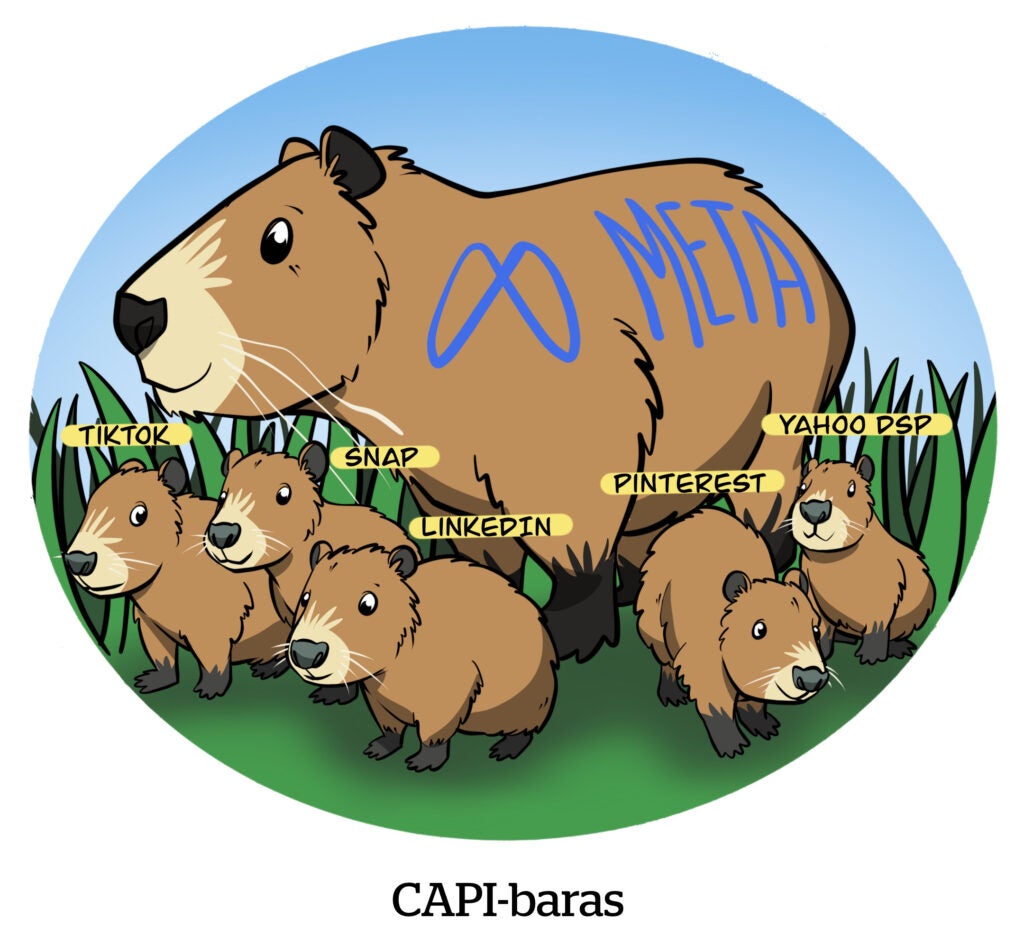
CAPIs are already a staple for digital ad channels, such as display, online video, search and social. Meta, Google, Snap and other platforms have CAPIs, which they use to more effectively inform buyers how their respective platform stands out within various media mixes. LinkedIn joined the CAPI club last year, too. It introduced its own CAPI to help advertisers retarget elsewhere – including on connected TV.
Now, CAPIs are entering streaming TV, as marketers are pressed to justify every media dollar. And Netflix isn’t the only streaming company touting a CAPI lately, either.
Roku also has a CAPI, which it says allows buyers to connect their own data for more precise audience targeting and measurement, according to a blog post published in February. Roku also has an Ads API, which it launched in November as part of its self-serve ad platform, mainly for smaller and midsize businesses. These developments follow the lead of other self-serve ad platforms, including Comcast’s Universal Ads, which launched last year and is meant to attract more spend from SMBs and ecommerce brands that have little to no history with a TV or streaming ad strategy.
In an ideal world, CAPIs could bridge the gap between advertisers’ demands for proof of performance and the realistic possibilities of CTV attribution, which is historically a tricky feat. There are historically no tracking pixels on TV screens, and even with the advent of streaming, people just don’t click around on TV devices the way they do on laptops or phones.
As a result, CAPIs have emerged as the shiny new toy for streamers to bring more certainty to TV ad measurement. The hope is that more advanced attribution will make marketers more comfortable setting up CTV campaigns as a must-have in their media investment allocations.
While Netflix’s blog post didn’t specify which types of outcomes marketers can track, general CAPI use cases and Netflix’s recent targeting upgrades help outline some possibilities.
For example, brands generally use a CAPI integration to connect their own first-party and conversion data to an ad platform that can optimize campaigns based on first-party data. By plugging into the brand’s server, an ad platform or media company can avoid many of the pitfalls originating in privacy restrictions and signal loss, including but not limited to threats of deprecating third-party browser cookies.
Netflix apparently hopes its new CAPI will address demands from its buy-side customers for improved targeting and measurement. On the same day Netflix unveiled a CAPI, it also announced new targeting capabilities for buyers via the Amazon DSP and Yahoo’s DSP.
That timing is a testament to the reality of targeting and measurement as two sides of the same coin. If brands are able to target more precisely, then the intended viewers are more likely to show up in attribution reports.
For marketers, the most important part of the equation is proving that those outcomes actually happened.
What I’m wondering is: Will CAPIs become the next phase of “performance TV”?
Let me know what you think. Hit me up at alyssa7080@yahoo.com.