
Programmatic media buying is expected to account for the majority of growth in the CTV market in 2026. This year alone, over 90% of CTV ad dollars were transacted through programmatic pipes. That data isn’t surprising. Programmatic has solved a real problem by helping brands reach TV viewers with targeted precision at much lower costs.
But precision isn’t the same as presence.
Programmatic optimizes who you reach; direct determines where and how your brand shows up.
Many programmatic buys are fractional by design. They’re just targeted slices that rarely add up to a single, unified national footprint. The beauty of TV has been and always will be its massive reach and scale. If you’re only buying via programmatic, you’re missing a huge piece of the pie.
Enter sports.
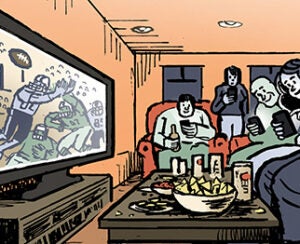
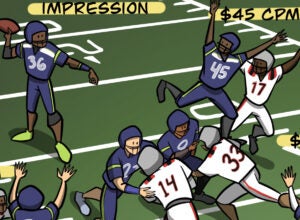
Live sports compresses huge, engaged audiences into predictable windows that are tailor-made for direct buying. The result is something programmatic vendors promote but seldom deliver in practice: true scale delivered fast, with context that amplifies awareness and engagement within reachable budgets.

Sports is more than a single game
One of the biggest misconceptions holding advertisers back from direct buying is the idea that sports always equals marquee, once-a-year tentpoles. In reality, however, the sports ecosystem is far broader and far more accessible.
Beyond the buzzworthy games that even casual fans watch, there’s a deep roster of sports inventory that can only be accessed through direct deals. Not only are there regional games, but there is also ancillary programming like sports talk shows, pregame and postgame coverage and premium streaming sports packages.
These environments still deliver live or near-live audiences, strong attention and cultural relevance without the price tag of the biggest national broadcasts. But that inventory can’t be accessed programmatically, and that’s where the real divide between available and impactful media begins.
Last fall, for example, MLB’s 7-game, extra-inning World Series extravaganza averaged 15 million viewers and was an immediate grand slam for advertisers that ran during the record-breaking series. But that required upfront negotiation and/or direct publisher relationships one can’t replicate in an open DSP.
For advertisers looking to break through the “programmatic ceiling” – the practical upper limit of what an advertiser can achieve through programmatic buying alone – sports programming is often the most practical entry point. It offers scale that quickly aggregates, brand-safe environments and moments that feel timely and relevant rather than fragmented.
How advertisers are buying sports direct without blowing budgets
But inventory is just one piece of the equation. Buying mechanics is another.
Direct buying today is far more flexible than many advertisers assume. Floaters, opportunistic placements and fire-sale inventory enable brands to access premium sports environments at discounted rates when networks need to clear supply. These options provide efficiency and access to high-attention moments without committing to rigid, upfront-heavy buys.
Sports works as an affordable entry point via direct because it offers three things that programmatic struggles to deliver together: predictability, concentration and context.
Schedules are fixed, making measurement cleaner. Viewership is concentrated, creating visible spikes in search, site traffic and installs. And the cultural context that comes with it – loyalty, conversation, appointment viewing – turns impressions into action. If advertisers want to know whether their creative truly scales beyond their core audience, sports is the fastest and clearest training ground.
Programmatic delivers audience signals. Direct delivers placement and context. Knowing an ad ran during the fourth quarter of a regional game and seeing the immediate impact provides a level of insight that fragmented impressions can’t replicate.
This isn’t a call to abandon programmatic. Far from it. Programmatic should remain the workhorse for precise activation and retargeting. But treating it as the only strategy is what creates the programmatic ceiling, a point where brands exhaust their ability to create national moments.
Direct buying, starting with sports, breaks that ceiling. It helps brands get the reach they need, collect clearer learnings and build a creative playbook that actually scales.
If marketers want to stop trading reach for precision, they must stop assuming that direct buying is only for those with mega budgets. Sports is the shortcut: predictable, measurable and surprisingly efficient. Before you know it, you could be thinking about your Super Bowl spot. Why not?