Infillion, an ad tech business built on M&A, is back with another acquisition. The latest move will help bring retail purchase data into its platform.
The company announced on Monday that it has acquired Catalina, a market research and shopper marketing company with roots in physical cash register machines. Catalina gets its retail sales data from cash registers themselves, as well as more modern data licensing agreements for online sales and loyalty program info.
Terms of the deal were not disclosed.

The Catalina’s outta the bag
Also known for its former joint venture with Nielsen (the one-time Nielsen Catalina Solutions, now part of the shopper data giant Circana), the Catalina company provides a data feed for CPG and retail marketers to analyze purchases of their products in stores and offer discounts to shoppers.
Infillion’s model has been to acquire third-party ad tech point solutions and merge them into one inextricable package of a platform. The Frankenstack includes the MediaMath DSP, as well as CTV ad tech TrueX, location data companies Gimbal and Fysical, then OOH platform InStadium, the Drawbridge US cross-device network and UberMedia managed service ad tech, to name a few.
“The idea here is that there is a force multiplier that comes from bringing these companies together,” Infillion COO Brian Kaminsky told AdExchanger.
Infillion is “not looking to blow anybody up,” Kaminsky said, meaning that Catalina clients who use another DSP or ad platform can continue to do so. But only for a spell. There will be a transition period, which isn’t set yet, he said. But the point is that Catalina data is eventually going to be exclusively available through the Infillion platform and not offered as a standalone business that outside ad platforms could buy or license.
Change in store
The acquisition of Catalina is another example of how the shopper data market has changed. Once upon a time, in-store deterministic purchase data would be separated from the ad-buying companies that coveted the data. Nielsen Catalina, for instance, did not serve ads itself; it just provided data and attribution. The CPG data seller SPINS made a similar change last month with the acquisition of MikMak, as a way to connect its retail purchase data set directly to ad targeting and activation.
Advertisers nowadays “have a number of different sources to triangulate and understand” how their campaigns perform, Kaminsky said. It’s now up to each platform to convey how its results and supply path perform relative to all the others in use by that CPG marketer.
For Infillion, this type of store purchase data is an “exotic component” to use for campaign planning, targeting and attribution, he said.
Perhaps this type of data would historically have been siloed from advertisers, just like it wouldn’t make sense for a referee to wear the home team’s jersey. But that logic has changed.
Kaminsky said retailers themselves have led the change by embracing retail media networks and extending their data into media and advertising businesses.
“Far from being a line that’s crossed, [this is] more enabling business strategies that they’ve already adopted,” he said.
The trend is also accelerated by the rise of walled garden platforms that have accrued most of the growth in all worldwide advertising in the past decade.
Advertisers often say that publishers and platforms shouldn’t ‘grade their own homework.’
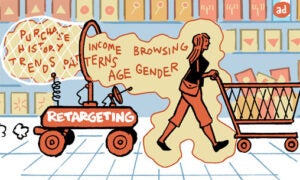
But actions speak louder than words. And the action right now is with ad platforms that use exclusive, deterministic data to run closed-loop attribution on their own campaigns and retarget known customers (or conquest known customers of a rival brand).
Infillion will be able to use the Catalina data “to produce a level of insight and reporting and reliability that looks remarkably like the walled gardens,” Kaminsky said. “Only it would be without the walls.”