
Senior Editor
James covers the intersection of commerce, media and advertising technology.

James covers the intersection of commerce, media and advertising technology.
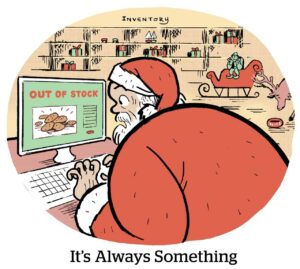
For many, the holidays start with the post-Thanksgiving shopping weekend. For me, holiday traditions begin in late October, when the Meta ad platform goes haywire.

Google’s Performance Max announced the public launch of its auto-generated creative content.

TAG TrustNet is publishing its first register of ad tech companies that share log-file data, don’t share log files and kinda sorta share log-level data.

A true epoch of ad tech has passed. Criteo’s retargeting revenue was less than half the company’s total earnings in Q3, a first for the company.

On Amazon’s earnings call last week, CEO Andy Jassy said the company has “barely scraped the surface” of its advertising business potential. Generating $12 billion in ad revenue last quarter doesn’t seem like “barely” scratching the surface. But Jassy’s right – Amazon Ads is just getting started.

On Monday, Omnicom entered the ecommerce marketplace services space in a big way with an $835 million deal to buy Flywheel Digital.

The growing popularity of platform-based custom bidders has helped normalize the idea of AI-based bidding, giving a boost to a small market of programmatic-focused non-platform customer bidding startups that existed before the walled garden versions.

Alphabet’s strong revenue numbers were “led by solid growth in the retail vertical” across search and YouTube, Google Chief Business Officer Philipp Schindler said during Alphabet’s earnings call.

NCSolutions, leader of the old guard of shopper marketing data suppliers, has revamped its go-to market model, culminating this year with a new clean room data product, Insights Stream, which takes the company’s in-store shopping receipts data to the cloud.

DTC brands bring sharpened audiences and keyword targeting to search-based grocery platforms. But can they beat the CPG giants at their own game?

As ecommerce grows – and advertisers become increasingly wary of proxy measurement – newer metrics are emerging to help buyers better understand how ad spend affects their bottom line.

Snowflake, The Trade Desk and Narrative are going to market with a new cloud-based data marketplace approach.

Programmatic retail media is stuck in a holding pattern until there are OpenRTB standards – the protocols for automated online advertising – that address sponsored listings.
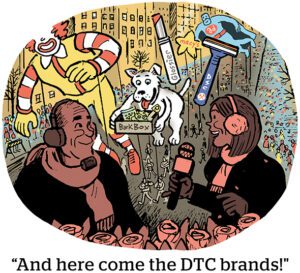
DTC brand operators and other ecommerce marketers are attracted to expertise coming from someone who can show how they made it work for themselves “with skin in the game,” says Barry Hott, a marketing consultant and new head of growth for the DTC candy brand Rotten.

By the middle of this year, MFA sites were gobbling up 30% of ad auctions, and this “gradual boil” now has the entire industry in a state of emergency, says Chris Kane, president and founder of Jounce Media.

Shopify Audiences debuted last year with only Google and Meta. In January, Pinterest was added to the mix. Now TikTok, Snap and, notably, Criteo will be able to plug into Shopify for modeled data.

Before the pandemic, the pace of programmatic had slowed, and people in the ad industry had a grasp of how things worked. But third-party deprecation, regulations and privacy policies, threw online advertising back in turmoil. “That’s the fun part for me,” says Sam Cox.

Some form of retail media standardization seems inevitable at this point. But retail media campaigns defy the notion of standardization.

Snowflake is “becoming infrastructure for businesses developing data-driven marketing applications,” CMO Denise Persson told AdExchanger.

How will gen-AI content resonate – or not – with consumers? That’s the big question, according to Todd Hassenfelt, Colgate-Palmolive’s ecommerce director.

Consent is becoming one of the most important requirements in online advertising – and InMobi wants to help publishers collect it.

Years ago, as the tide turned against top digital publishers like BuzzFeed, Vice and HuffPost, there was a minor renaissance of small or one-person publishers with a podcast and newsletter. Now comes the hard part: Proving it was the right move.

The Trade Desk continued its run of growth, reporting Q2 total revenue of $464 million, a 23% jump from last year.
Amazon crushed its quarterly earnings report on Thursday evening, increasing its market cap by more than $100 billion overnight – and it did so with a major assist from its advertising business.

In just two years, Triple Whale became a popular tool for Shopify merchants and social-based ecommerce sellers. But it did so by getting its data visualization and analytics service into people’s hands at ridiculously low rates.

Premium YouTube TV inventory, including tentpole live sports, is finding its way down to general DV360 CTV auction campaigns, and is clearing at major CPM discounts compared to the direct deal rates.

The aptly named Oddity Tech, an Israeli DTC brand operator, doesn’t fit neatly in one category. It’s a skincare and cosmetics seller, that aims to be a tech and data brand.
Amazon Web Services took another step in its development as a key ad tech integration hub on Wednesday, with the general launch of a product called Entity Resolution.

Investors on Alphabet’s Q2 earnings call appeared satisfied that YouTube and the ads business in general are back on track. Their attention, unsurprisingly, turned to the potential opportunities for generative AI.

This week, we’re digging into the DTC biz. Not the metrics or the paid media, exactly, but the information and personal support systems that have grown up as people in the industry experienced wild ups and downs of both business and personal well-being.