Here’s today’s AdExchanger.com news round-up… Want it by email? Sign up here.
Why Social Is Unaffiliated
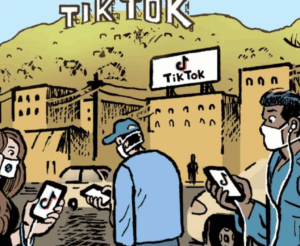
TikTok is beginning to cut US creators in on sales – aka affiliate commissions – through its on-platform shopping service, Shops.
The product is being tested by pilot brand advertisers and creators, Insider reports. Posts with the affiliate tag enabled are labeled “eligible for commission” so viewers know part of the sale goes to the creator’s account.
Social networks are hugely invested in on-platform ecommerce, and affiliate programs are a logical first step to incentivize creators to drive sales. However, Instagram actually folded its affiliate marketing program last year. TikTok is slow-rolling affiliate sales. Even Amazon dramatically cut back mobile affiliate sales.

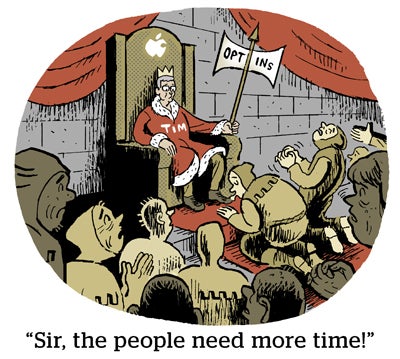
The unstated reason why social affiliate marketing in the US should work but doesn’t is the 30% Apple fee on in-app revenue. Even if TikTok or Instagram takes a 0% cut to help the affiliate program (and they’re not), there’s simply no fat left to trim.
Some brands, especially those that sell primarily online and want a presence on TikTok, might tolerate high affiliate commissions (10%-20%) for a spell. But when it comes to promoting, selling, warehousing and delivering products to users (and then processing inevitable returns), there’s no sustainable profit margin once Apple’s had its triple tithe.
Gaming The Algorithm
Last week, Twitter open-sourced much of its content recommendation algorithm. As it turns out, there are plenty of ways to exploit the algorithm for marketing purposes, according to Future Social.
Tweets get a 30x reach multiplier for each like and 20x per retweet. Replies are a mere 1x boost in the reco algo. Which means marketers should optimize for likes and shares rather than replies. That’s not so obvious, either, as many marketers are inclined to go for back-and-forth engagement.
Only about 12,000 of Twitter’s 420,000 legacy verified accounts have signed up for Twitter Blue, but paying for the blue check has good ROI. Blue subscribers get a 4x recommendation multiplier for accounts that follow them and doubled reach with accounts that don’t.
Adding images or video can also boost a tweet’s reach, but only by 2x.
And if a tweet contains misspelled words or words that aren’t recognized by common language interfaces, its reach could be severely penalized. That’s likely bad news for ad tech companies with nonsense words for names.
The Sub Text
Speaking of Twitter’s weirdness, yet another company threw its hat in the ring with its own version of a text-based news and info-sharing app.
This time, it’s Substack.
Hamish McKenzie, Substack co-founder and “chief writing officer,” says in an announcement (ironically, in a Twitter thread) that the new product, Substack Notes, will be a social feed where authors and subscribers can publish “short-form posts and recommend almost anything: quotes, links, images and comments.”
McKenzie says Notes’ core difference from other social networks is its goal to connect authors with potential readers or subscribers, not users and advertisers.
“It’s social media with a heart transplant,” he writes. “While attention is the lifeblood of ad-based social media, a subscription network’s lifeblood is the money that gets paid to writers and creators.”
On the other hand, brands will pay good money for attention and ask for more, whereas getting people to pay for news writers is arduous and usually fruitless.
But Wait, There’s More!
2023 will be a year of trial and error for streaming companies. [Variety]
How Netflix and Disney+ are both trying to raise their ad revenue per user with different pricing strategies. [Mobile Dev Memo]
Meanwhile, more canceled HBO shows make it onto The Roku Channel. [TechCrunch]
Yahoo’s Alice Beecroft predicts SVOD services will invest in FAST by the end of 2024. [VideoWeek]
Teen consumers are setting new trends – and spending more. [CNBC]
Netflix, Disney+ and the ad-supported streaming calculus. [Mobile Dev Memo]