Age Of Conquest
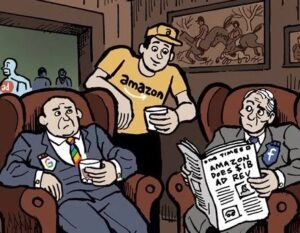
Search industry consultant and content creator Glenn Gabe kickstarted a discussion, amplified by Search Engine Roundtable, of how, if and when we will see AI search engines incorporate ad conquesting tactics. Conquesting meaning one brand deliberately targeting a rival company’s customers, like T-Mobile’s “Keep and Switch” promo for AT&T subscribers to rival brand name and keyword targeting on Google or Amazon.
The idea started with a ChatGPT ad placement for the burger chain Sonic, which came during a series of prompts by someone looking specifically for In-N-Out locations in California.
By the by, two advertisers from the food and QSR industry who participate in the ChatGPT ads pilot assure AdExchanger that ChatGPT’s platform doesn’t offer rival keyword targeting (yet). Nor does it offer targeting to loyal other-brand customers or in-category buyers who are new to your brand, like some grocers and retailer media networks.
Conquesting ads are low-hanging, super-lucrative fruit that the big platforms (Google, Amazon, Meta and Apple) gather relentlessly, but which grocers and retail chains, for one reason or another, are loath to take themselves.
ChatGPT Ads seems to prefer the high road, at least for now. For example, while ChatGPT Ads is working with Criteo, there is no retargeting.
Don’t Bet On It
News publishers are gamifying the news in the manner of “prediction markets” like Kalshi and Polymarket, which establish bets on news items.
Forbes, for one, rolled out a native widget called Forbes Predict that invites readers to bet on how the news stories they’re reading about might unfold over time. But it uses fake digital tokens, not real money.
There are many foreseeable pitfalls. Forbes fell into one this weekend, when the widget pressed readers to bet on the likelihood of Congress passing new gun control laws within coverage of a shooting in Shreveport, Louisiana, in which eight children were killed, Futurism reports.
The episode was described as “ghoulish” by cryptocurrency journalist and researcher Molly White, who flagged it on social media.
Especially considering the product isn’t monetized, the incident raises the question: What does Forbes really get out of this, other than the risk of bad publicity?
In addition to some additional engagement, Forbes says its prediction market is a valuable source of audience data for targeted advertising, Chief Innovation Officer Nina Gould tells Digiday.
As for how readers will be rewarded for sharing this data, no one, not even Forbes, can predict that.
Show Me The Money
Last year, Meta, ABC, Paramount and X all pledged to donate millions of dollars to Donald Trump’s presidential library fund as part of their respective settlements for defamation lawsuits related to news coverage of the 2024 election.
Except, the Donald J. Trump Presidential Library Fund was dissolved by Florida officials in September over a paperwork issue. So where did the money, including some $63 million from those four media companies, actually go?
The New Republic reports that all four companies recently confirmed to Senate Democrats that they pledged that money to Trump’s library. Of those, Meta and X refused to comment further, citing confidentiality agreements.
ABC suggests that its $15 million payment will divert to a separate entity, the Donald J. Trump Presidential Library Foundation, Inc., which the broadcaster says has been recognized by the IRS as a 501(c)(3) nonprofit organization.
The settlements from media businesses to President Trump’s library ultimately derive from advertisers, who bought ads with these companies to begin with. These donations join the many other advertisers and ad-supported businesses that officially sponsored the presidential inauguration, other presidential construction projects and far less transparent presidential slush funds.
But Wait! There’s More!
Apple CEO Tim Cook is stepping down. John Ternus, Apple’s SVP of hardware engineering, will take on the CEO role effective September 1. [blog]
Roku is getting in on the interactive TV gaming experience with its new “Roku City Dash.” [Variety]
Fox and Telemundo project $850 million in World Cup ad revenue, up from $384.3 million eight years ago. [Sportico]
Hang on, why is sauce brand Prego launching a listening device as a publicity stunt? [Wired]
X owner Elon Musk did not appear for a voluntary interview with French prosecutors Monday regarding the spread of child sexual abuse material and deepfakes on X. Former X CEO Linda Yaccarino was also summoned to appear. [Le Monde]
AI-driven traffic to retail sites converted 42% more often than non-AI traffic in March, according to Adobe. [Search Engine Land]
What brands make of Meta’s affiliate tool rollout. [Marketing Brew]
You’re Hired!
Comedian Tim Heidecker is the new creative director for Infowars, which has finally been taken over (kind of) by The Onion. [NYT]
NOVUS names Olivier Pepin as its first chief technology officer. [release]