 “The Sell Sider” is a column written for the sell side of the digital media community.
Today’s column is written by Jaclyn Stewart, senior director of publisher services at The 614 Group
Most publishers have no trouble defining the roles of their sales or ad trafficking teams. The job titles themselves practically say it all.
However, the sales support role across the industry varies dramatically from company to company. Some people call them sales planners, account managers, client services or campaign analysts.
While every business is unique and the role’s expectations naturally differ, one major mistake I see publishers make involves the pre- and post-sale “hybrid” support person. This person is usually fresh out of college and hastily trained before being thrust into managing hundreds of thousands – if not millions – of dollars in potential and running revenue.

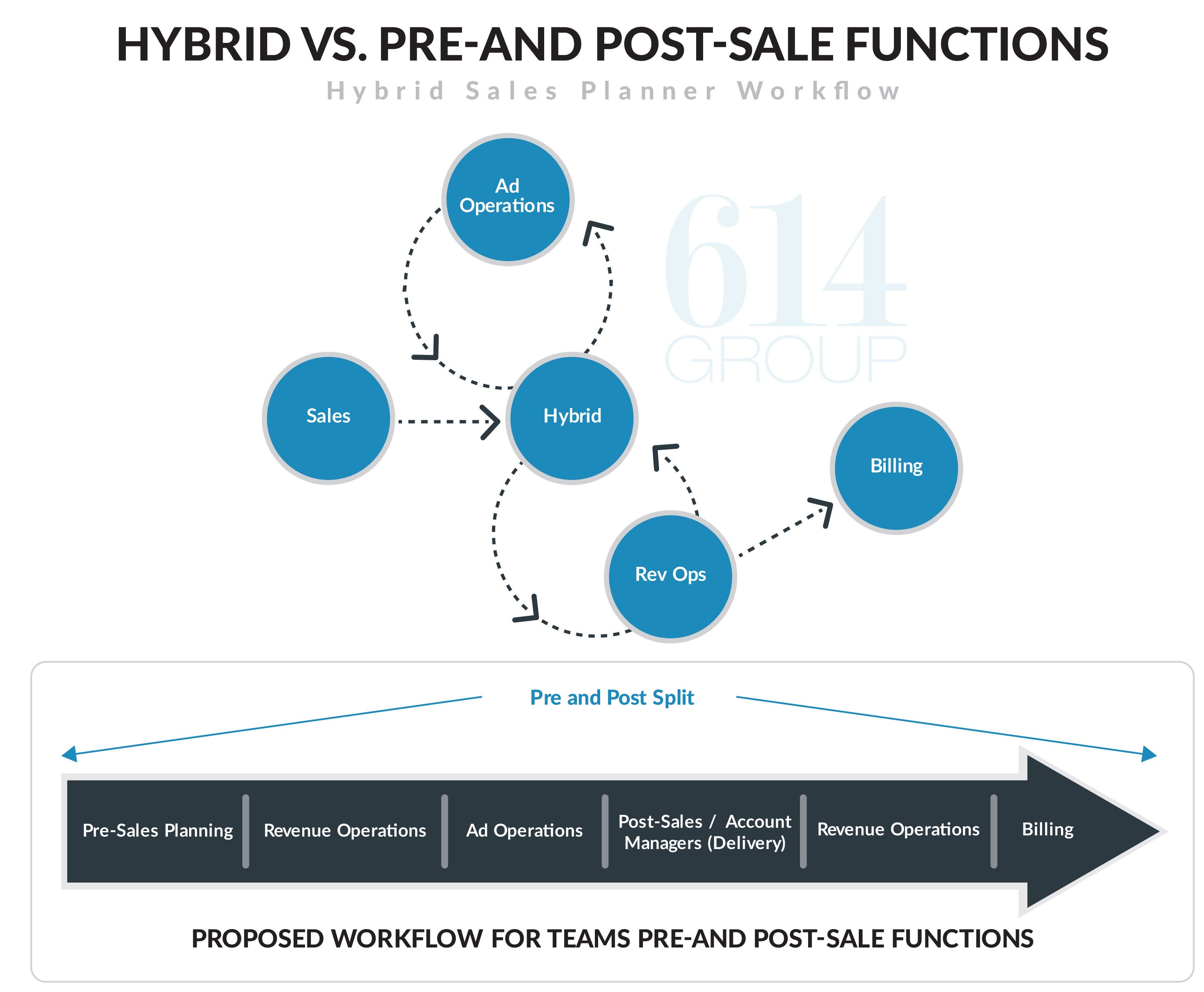
Hybrid sales support people usually shepherd digital campaigns through the entire campaign life cycle from planning to billing. They are expected to learn and think like salespeople, analysts and client services representatives.
By contrast, a pre- and post-sale support structure divvies the work up from the planning phase through IO approval. The pre-sale role may include media planning, creating pitch decks, entering campaigns into agency systems, providing ad specs to agencies and working with revenue operations on forecasting inventory for their plans.
In most cases, the campaign is passed to a campaign manager who will work with the agency, internal ad ops team and possibly a third-party creative vendor to collect creative and send for trafficking. They also track campaign data for performance, provide updates and optimization suggestions to their agency partners, work closely with revenue operations to ensure full campaign delivery and month-end billing and create campaign wrap reports once a campaign ends.
Given the breadth of responsibilities between the pre- and post-sale roles, you can see why the hybrid support role is a tall order for what is basically an entry-level position, and most stay in these roles no longer than a year or two. Some blame it on the so-called “millennial work ethic,” but publishers should consider whether they have designed a role that makes sense and provides these young professionals with the opportunity to focus on and hone particular skills. Are the role’s expectations rooted in reality?
I have run teams of sales support staff under both philosophies – hybrids and clearly defined pre- and post-sale delineated teams. I started my digital advertising career as a hybrid sales planner so I understand both sides of the argument. However, I argue that the pros of the pre- and post-sale outweigh the argument for a hybrid role.
Hybrids: The Good And The Bad
The typical rationale for a hybrid role is that if only one person touches the campaign from planning to billing, there is less room for error because one person knows everything needed to manage the campaign effectively. However, the notion that only one person has all the detailed information on a particular campaign is problematic. What happens when she or he is sick or quits unexpectedly? Suddenly no one fully understands the ins and outs of a campaign as intimately as they should to successfully manage or execute it.
Startups and smaller companies may also lean on the “We’re scrappy, and we wear many hats around here” attitude. While I appreciate that spirit and camaraderie, most people need clear roles, responsibilities and performance KPIs to do their jobs properly and assist and understand their coworkers’ roles and responsibilities. Teamwork based on clearly defined roles also builds camaraderie.
The most effective strategy when dealing with a smaller, scrappier team is to cross-train employees so that a campaign manager can lend a hand when the sales planner is overwhelmed with deadlines. Conversely, the planner can help track campaigns or assemble launch decks for their counterpart as needed.
Prioritization also becomes problematic in the hybrid position scenario. Consider this common “Sophie’s Choice” scenario: A hybrid sales planner has a $500,000, 150-line media plan that must be inputted into the agency’s system by the end of the day to be considered for the client’s final media plan. However, the planner also tracked an underperforming campaign that must be immediately optimized to deliver in full by week’s end. This requires putting together a plan, working with revenue operations to ensure enough inventory to deliver the optimization, presenting the optimization to the agency, securing approval and implementing the changes. It’s a no-win situation, with both tasks of equal importance to the business.
By separating the tasks and narrowing the scope of the role, publishers can create clear priorities, ownership and accountability for their support teams.
Delineated Teams
A benefit of separating the support role between pre- and post-sale functions is creating an opportunity for specialization in sales, implementation and execution within the teams. The skills and personality traits necessary to be a successful salesperson differ from those needed to be a successful project manager, and the same is true of sales planning and campaign management. A great sales planner who is valuable in brainstorms and understands clients’ KPIs and the product offerings needed for a winning media plan may not be the best at managing revenue and reporting and vice versa.
By creating space for specialization, publishers can create career paths and opportunities for personal development. If hybrid sales planners are freed from post-sale campaign management, they may have more time to accompany salespeople on client calls, assist with prospecting and potentially work on small accounts, thereby creating a pool of burgeoning sales talent within the publisher’s own organization. Campaign managers may have more time to service clients, optimize campaigns and take on higher-level operations projects to prepare themselves for roles in project management, revenue management or ad operations.
Lastly, dividing the team creates a clean, linear workflow that follows the campaign’s life cycle. A hybrid role’s circular workflow inevitably causes hybrid planners to run around in circles, trying to do two or more people’s jobs. With clear responsibilities and well-defined hand-off points in the campaign process, a campaign should flow through the funnel from sales planning to revenue operations, ad operations, campaign management and billing.
Publishers with dedicated support for each role enjoy the added benefit of being able to track at what point their campaigns encounter problems. This allows them to staff up and down accordingly, determine where additional training is needed and consider more granularly the best people to fill each role.
While cross training is an important aspect of a well-rounded sales ops team, clearly defined roles will ultimately give account analysts the best chance to succeed in the ever-evolving digital landscape. The transition from a hybrid sales support team to dedicated support for pre- and post-sales may seem daunting, but the end result will be a more streamlined process.
Follow Jaclyn Stewart (@614GroupJackie), The 614 Group (@614group) and AdExchanger (@adexchanger) on Twitter.