
Comic: Benchmarking
Enjoy this weekly comic strip from AdExchanger.com that highlights the digital advertising ecosystem …

Enjoy this weekly comic strip from AdExchanger.com that highlights the digital advertising ecosystem …
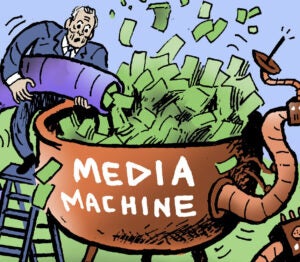
An upcoming paper from CIMM doesn’t just demonstrate that differences in media quality can be measured. It also argues that tying media value to short-term outcomes has perpetuated longstanding industry challenges.

Ad operations don’t always get easier when a publisher has a strong first-party data foundation to build on. In some cases, the strength of the underlying data can complicate monetization decisions. Ancestry can attest to that.

The generative AI trend generated endless hot takes this year, but the ad industry also had plenty to say about growing competition between DSPs and SSPs. Here are AdExchanger’s top 10 most popular guest columns of 2025 and why they resonated.

Our industry has done a terrible job rewarding publishers for monetization choices that align their supply to quality and outcomes vs. short-term yield bumps. But is it overly optimistic to think The Trade Desk’s recent moves prove that’s changing?

A recent Google DV360 Help Center update had some advertisers panicking that invalid impressions served through Google’s ad platform would soon double. But now Google says that’s not really the case.

As premium game prices skyrocket and paid subscriptions and cloud-based gaming services take off, marketers sense a chance to defray rising costs with ad revenue – perhaps dispelling some doubts about the value of more ads in games.

To fill digital audio’s viewability gap – or audibility gap – audio-focused DSP Audiohook is launching a new podcast measurement panel.

Google’s DV360 adding attention as optimization signal could finally help wean buyers and platforms off bidding on ad inventory based on viewability.

The Brand Safety Institute is expanding its publisher transparency initiative to include new media quality assessments, including data compliance.

To zero in on premium inventory, The Trade Desk is analyzing metadata signals about ad placements and pushing adoption of its alternative ID. It’s also betting the farm on CTV.

The Brand Safety Institute released a new tool that lets publishers check whether their site domains have been flagged as MFA by third-party verification vendors.

The industry’s sharpest minds claim we are entering the Outcomes Era of digital advertising. But we have been in the Outcomes Era for over a decade. It is high time to embrace the Quality Era, instead.

In response to shifting ad industry trends, A360 Media abandoned its made-for-advertising model four years ago and streamlined its site design to court programmatic demand.

Two perspectives have emerged on curation: The value argument highlights refined audience targeting, while the ad network argument emphasizes enabling smaller players to compete with scaled giants.

Where and how brands choose to advertise is perceived as a reflection of the brand itself. That means we’ve entered the era of responsible advertising.

Solutions that fundamentally address the issues curation attempts to solve already exist. The problem is that none of these solutions have been adopted by the buy side.
Current ad pricing often doesn’t correlate to a site’s attention score, which means there’s an arbitrage opportunity for buyers and resellers.

Enjoy this weekly comic strip from AdExchanger.com that highlights the digital advertising ecosystem …
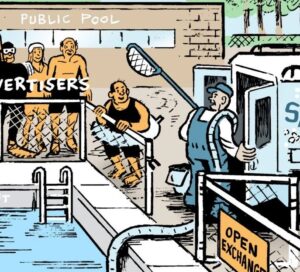
NCIS: Ad Tech takes off as Washington zeroes in on Adalytics reports; Kroger says attention has yet to prove correlation to performance; and inside California’s backroom deal with Google to fund journalism and AI.

By applying Adelaide’s Attention Unit scoring, buyers can target low-, medium- and high-attention inventory via TTD’s self-serve platform.

Albert Thompson, a buy-side veteran with 20+ years of experience, weighs in on attention metrics, the value of MFA sites, brand safety backlash and how publishers can improve their inventory.

If attention is treated like viewability 2.0, high or low attention could become a blanket requirement for a campaign and hinder performance.

The initiative will kick off this month, and the IAB and MRC expect to have draft accreditation guidelines open for public comment by Q1 2025.

Instead of erasing the idea of brand safety, we should be developing smarter, more nuanced solutions that protect both news publishers and advertisers.

In advertising, there are many small changes that can be transformative when it comes to improving environmental sustainability. And they don’t require massive shifts or huge investments – just a willingness to try something new.

Made-for-advertising (MFA) sites are roosting in reputable publishers’ subdomains. IDs are declared inconsistently. And the established third-party measurement companies are sitting on the sidelines.

Advertisers worried about MFA could take a cue from the mobile app ecosystem and focus on performance instead of viewability.

In today’s newsletter: Adalytics reveals Forbes was running a separate MFA sub-domain; The New York Times seeks to use attention benchmarking to validate its premium publisher status; and Google is reportedly looking to buy HubSpot.

Privacy Sandbox’s Protected Audiences API causes increased latency, decreasing viewability and yield. Given these issues, publishers simply cannot afford to test PAAPI at scale.