
The Privacy Sandbox May Be Dead, But The AdExchanger Comics Live On
Chrome kept cookies and killed the Privacy Sandbox, but at least we got some great comics out of it.

Chrome kept cookies and killed the Privacy Sandbox, but at least we got some great comics out of it.

Google’s aborted cookie crackdown ends with a quiet CMA sign-off and a sweeping phaseout of Privacy Sandbox technologies, from the Topics API to PAAPI.
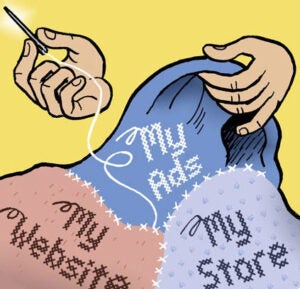
CAPI integrations have moved from a nice-to-have to a necessity for anyone operating within walled garden environments. Now they’re laying the groundwork for an outcomes-driven ad ecosystem.
Despite all the cookie drama, companies haven’t completely abandoned the Chrome Privacy Sandbox, and BU marketing professor Garrett Johnson has the receipts to prove it.
Enjoy this weekly comic from AdExchanger.com that highlights the digital advertising ecosystem …

We’re seeing the worst possible outcomes with the CPM-based buying approach. And Google’s recent decision to hang on to cookies indefinitely risks perpetuating the worst parts of the digital ad business.

Political advertisers, by necessity, have built precise, privacy-conscious targeting strategies that work without relying exclusively on third-party data like cookies.

DDM reported 1% Q1 revenue growth, citing traffic downturns Google’s AI search results and soft advertising demand due to tariff-induced uncertainty.
While some Privacy Sandbox testers lamented their seemingly wasted effort, they remain committed to post-cookie targeting and measurement – even if Google eventually abandons the Sandbox entirely.

Enjoy this weekly comic from AdExchanger.com that highlights the digital advertising ecosystem …

Erez Levin, a former Googler and current outspoken consultant, on why the digital ad industry should transact on media quality signals like attention instead of optimizing to outcomes and other flawed attribution models.

More competition between SSPs and ad servers should be a boon for publishers in the long term. But publishers will feel some growing pains if there is a sudden disruption in Google’s ad payouts or if their ad server fees increase.

Based on the way advertisers deal with publishers, you’d think they were sworn enemies. Our failure to prioritize collaboration on the open web and build a positive value chain has been our collective downfall.

PubMatic CEO Rajeev Goel dishes on sell-side curation, data fees, how the business model differs from buy-side curation and how publishers can control pricing for curated deals.

If we’re to leave behind the third-party cookie era, the rest of the ecosystem must reassert the role it plays in setting the agenda.

For publishers, digital advertising is a lot like playing craps, says Aditude’s Justin Wohl. It’s all about tuning out the noise while placing safe bets that work for your monetization strategy.
The industry’s sharpest minds claim we are entering the Outcomes Era of digital advertising. But we have been in the Outcomes Era for over a decade. It is high time to embrace the Quality Era, instead.

Every week, we publish an original comic creation inspired by trends in the online advertising industry. These are the stories – and the highly specific double entendres – behind AdExchanger’s top 10 comics of 2024.

2024’s most popular guest columns offer a snapshot of an industry in flux – and one that’s grown cynical due to repeated promises of unrealized change.

But cookies aside – and don’t forget to leave a few real ones out for Santa – there were lots of other big privacy developments in 2024. Here are some of the highlights.

The in-game advertising market’s stagnation is both unsurprising and frustrating. The onus is on the gaming industry to make gaming an essential channel for advertisers, rather than a nice-to-have.

Where and how brands choose to advertise is perceived as a reflection of the brand itself. That means we’ve entered the era of responsible advertising.

Curation is a reaction to programmatic’s worsening queries-per-second problem, says Permutive’s Joe Root. DSPs are biased toward impressions that have an identifier attached, so SSPs are using curated deal IDs as a stand-in for third-party cookies.

Enjoy this weekly comic strip from AdExchanger.com that highlights the digital advertising ecosystem …

Despite Chrome’s cookie deprecation turnaround, a comprehensive CAPI strategy remains crucial for brands advertising on Meta, LinkedIn and Snap – yet many advertisers are dragging their feet. Why the reluctance?

Dotdash Meredith’s Lindsay Van Kirk says the cookie-based buying tools she helped develop in her early career at AppNexus placed too much value on unreliable third-party audiences. But contextual tools like DDM’s D/Cipher, which she now oversees, can build a better ad ecosystem for buyers and sellers.

Competing agendas are limiting the tools publishers have at their disposal in ways that aren’t always primarily motivated by user privacy. Here are five things about privacy in digital media that should keep publishers up at night.
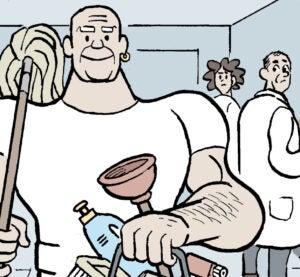
VIA Rail and The Globe and Mail are combining their first-party data sets to create bespoke ad targeting audiences in partnership with data clean room provider Optable.

ID bridging isn’t the problem. Buyers are objecting to unexpected, undisclosed manipulation of critical data in bid requests by sellers.

The publication still makes most of its on-site digital revenue from programmatic. But it’s doubling down on direct-sold custom content, especially when it comes to video and social media.