
Eyeo Names New CEO, Cuts 40% Of Staff And Refocuses The Business On Privacy
Eyeo has appointed a new CEO, Douglas de Jager, and is refocusing the company on privacy-first advertising tools while cutting 40% of its staff.

Eyeo has appointed a new CEO, Douglas de Jager, and is refocusing the company on privacy-first advertising tools while cutting 40% of its staff.

The UK’s Information Commissioner’s Office has three strategic priorities in 2025, and, you guessed it, online tracking is one of them.

Forget ramping up. Maybe it’s time for the online advertising industry to ramp down. That’s the idea behind a guerrilla marketing campaign by InfoSum, timed to coincide with LiveRamp’s RampUp event in San Francisco this week.

Google says it plans to stop restricting fingerprinting because of two shifts in the advertising ecosystem: the rise of connected TV and the rise of privacy-enhancing technologies.

Starting on February 16, Google said it will no longer prohibit fingerprinting for companies that use its advertising products. Oh, how times have changed.

But cookies aside – and don’t forget to leave a few real ones out for Santa – there were lots of other big privacy developments in 2024. Here are some of the highlights.

Forget cookieless. Now it’s time for ID-less solutions. No doubt you’ve heard someone drop that buzzword in a conversation recently. But what are they, exactly?
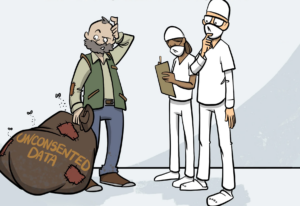
The Federal Trade Commission is warning companies that using a data clean room isn’t some kind of get-out-of-compliance-free card.

Serial ad tech entrepreneur Kamakshi Sivaramakrishnan founded two startups roughly a decade apart, both for a similar reason: making data available across the enterprise in a way that’s also respectful of the consumer.

Being able to share information about a group of people without compromising any individual person’s privacy kinda sounds like a form of wizardry. But it’s not. It’s just math.

SSP, meet PET. TrustX has been spun out of Digital Content Next and is now housed within a newly formed company called Symitri, which is developing privacy-enhancing technologies for programmatic advertising.

The purpose of ATOM 3.0 is to preserve addressability, but to do it in a way that passes the privacy sniff test.

Businesses will always need to find a compromise between privacy and utility, but it’s more than possible to strike a healthy balance, says Graham Mudd, president and chief product officer at privacy startup Anonym.

If you weren’t able to tune in to the FTC’s PrivacyCon event last week – it was a seven-hour affair, after all – then worry not. We gotchoo.

Rather than a competitor to data clean rooms, Amazon Web Services – which has a data clean room offering of its own – considers itself to be a facilitator of ad tech companies, says Adam Solomon, global head of biz dev and go-to-market for AWS Clean Rooms. Guess there are no competitors in ad tech, only frenemies.

There’s a misguided desire to find a third-party cookie replacement with as little disruption as possible, and confusion reigns about data collaboration alternatives, their capabilities and the differences between them.

Data clean room startup Samooha wants to make it easier for marketers who don’t have a data science background to securely access and share data regardless of where it sits. Because the dirty secret about clean rooms is they can be rather difficult for nontechnical people to use.

Advertisers need to do their due diligence on potential clean room partners before working together, including (and especially) finding out how secure the platform is.

Advantage+ didn’t come up during Meta’s Q4 earnings call on Wednesday, but it’s the ad product Chief Business Officer Marne Levine says she’s most excited about.

Data clean rooms are to 2022 what customer data platforms were to 2019: Everyone’s talking about them, but people don’t necessarily know what they’re talking about. One reason for the uncertainty is that there are no standards that define exactly what a clean room is or how it should operate. “There are a lot of […]

Here’s today’s AdExchanger.com news round-up… Want it by email? Sign up here. VideoLift Breaking into connected TV isn’t easy. It takes hard-earned partnerships with dominant distributors like Netflix or Disney. TripleLift has been attempting to shoulder its way into CTV for some time by insisting that native ad formats work in CTV despite being relatively new. […]

Does IAB Tech Lab CEO Tony Katsur have the toughest gig in ad tech? That’s an “accurate description,” Katsur says on this week’s episode. It’s his job, among many other things, to spearhead and speed up Project Rearc, an ambitious industry effort to press reset on how personalized advertising works online.

Graham Mudd, Meta’s VP of product marketing for ads and business products, is leaving the company to start his own PET project – literally. Mudd, whose last day at Meta will be in early March, is working on launching a startup focused on building privacy-enhancing technologies.

First there were birds, and now there are PETs. On Monday, the IAB Tech Lab took the wraps off a new working group focused on developing standards and best practices for deploying PETs, or “privacy-enhancing technologies.” The first meeting is on March 4.