
The ‘C’ In CTV Is For Cart; Held To Account
Samsung teases a shoppable TV integration with Amazon; hackers target AI search users for marketing account takeovers; and new research shows young news audiences are “social-first.”
Samsung teases a shoppable TV integration with Amazon; hackers target AI search users for marketing account takeovers; and new research shows young news audiences are “social-first.”

One web page now needs as much memory to run as an entire operating system did 30 years ago; not even advertisers understand the industry’s acronyms; and prediction markets want to sponsor individual journalists.

Google faces another antitrust investigation; Americans want free, ad-supported news; and the K-shaped economy dings mass-market manufacturers.

Publishers have been losing 20%, 30% and in some cases even as much as 90% of their traffic and revenue over the past year due to the rise of zero-click AI search.

Critics say the FTC’s deal with OMG/IPG prohibits agency practices that don’t exist. And it distracts from legitimate concerns about brand safety news blocking and principal media.
Despite publicly hyping AI, advertisers remain privately skeptical; AI aims to replace agencies, but tech complexity makes them more valuable partners; and Americans aren’t paying for news.

After a reenergizing week at the Cannes Lions festival, here are six observations on how our industry is changing to meet its new challenges.

AdExchanger spoke with DoubleVerify CEO Mark Zagorski just a few days after the company sued Adalytics alleging defamation over the latter’s recent report on bot detection.
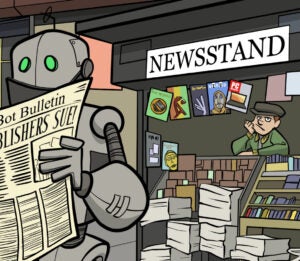
Enjoy this weekly comic from AdExchanger.com that highlights the digital advertising ecosystem …

Shopify checkout might be coming to ChatGPT; private equity builds a French ad tech stack; and how Meta turning off news in Canada is affecting news access ahead of this month’s election.

It’s important to have frank discussions with clients, explaining the need and value of brand safety. That way, marketers can make an educated decision on whether they truly need to pay for it.

Where and how brands choose to advertise is perceived as a reflection of the brand itself. That means we’ve entered the era of responsible advertising.

Dave Strauss, VP of revenue operations and strategy for North America, spoke with AdExchanger about The Guardian’s PMP priorities and how it’s tapping into other emerging revenue streams.

Political ad strategies evolved quickly this year, as campaigns moved beyond exclusivity, focusing on flexibility and reach. Here’s what this cycle taught us and how it will guide our business in the medium term.

While WaPo recently lost 250,000 subscribers due to concerns over its journalistic independence, NYT added 260,000 subscriptions in Q3 thanks largely to the popularity of its non-news offerings.

Brands have two options for avoiding election misinformation on YouTube: block all news, or only monetize credible news. But blocking all news restricts campaign reach and harms reliable journalists, just when we need them most.

Even brand safety companies think news blocking has gone too far. DV is exploring ways to help advertisers support legitimate news and just hired its first-ever head of news.
Prohaska Consulting debuted the ProNews Collective, a private marketplace of premium news publishers whose ad inventory will be exclusively available via Index Exchange.
Enjoy this weekly comic strip from AdExchanger.com that highlights the digital advertising ecosystem …
Enjoy this weekly comic strip from AdExchanger.com that highlights the digital advertising ecosystem …

With an approved list of sites and contextually segmented content, publishers don’t risk getting caught up in automated keyword blocklists, which consistently demonetize the news.

How big of a deal is The Trade Desk’s top 100 list? AdExchanger spoke to industry experts for their reactions and bounced some of their hot takes off The Trade Desk.

The company’s total revenue was down 1% YOY due to a decline in ad revenue across its News Media and Dow Jones publishing groups.

Gannett experienced its fourth consecutive quarter of growth in Q1 2024. It pointed to recent partnerships with non-news publishers as instrumental to growing its audience and ad revenue.

Appealing to advertisers’ better angels is never going to bring ads back to the news. But appealing to their bottom lines might.

In today’s newsletter: P&G boosts paid media budgets by 14%; why lower subscription prices aren’t enough to sustain the current rate of ad-supported streaming signups; and news publishers follow the NYT’s lead by using games to retain visitors.

If advertisers feel like they need to go out of their way to support journalism, that is proof the programmatic open marketplace is broken. Yet we can’t place all the responsibility on the buy-side; media owners need to develop effective strategies to support themselves.

Local advertisers are spending more on social media platforms today than three years ago, despite being unconvinced social media is the best place to reach their customers. What gives? Corey Elliott, Borrell’s EVP of local marketing intelligence, explains the story behind the numbers.

Here’s today’s AdExchanger.com news round-up… Want it by email? Sign up here. After A Fashion Criteo inked an exclusive deal with British online clothing retailer ASOS to be the ad tech pipes for its advertising business. “The ASOS vision is to become the go-to global destination for fashion-loving 20-somethings and we want to take brands […]

Don’t apologize for having to monetize, according to Lisa Howard, global head of advertising and marketing solutions at The New York Times. “[We’re] unapologetic about ads,” she says. But when it comes to digital advertising, less is more.