
OMD Shares Its Alternative ID Strategy At AdExchanger's Programmatic IO
OMD’s Emily Proctor outlined the criteria the ad agency uses to evaluate alt IDs. She also shared which five IDs OMD uses most often and why.

OMD’s Emily Proctor outlined the criteria the ad agency uses to evaluate alt IDs. She also shared which five IDs OMD uses most often and why.

Political advertisers, by necessity, have built precise, privacy-conscious targeting strategies that work without relying exclusively on third-party data like cookies.

CTV advertising has made great strides, but it still lags behind social platforms in one critical area: optimizing campaigns based on outcome data. Here’s how standardized conversion API integrations for CTV can help.

The hunger for first-party data is driving companies to demand our information more aggressively than ever. It’s hard to buy a coffee, magazine or sweater these days without someone demanding your name, number, email or home address.

Curation is a reaction to programmatic’s worsening queries-per-second problem, says Permutive’s Joe Root. DSPs are biased toward impressions that have an identifier attached, so SSPs are using curated deal IDs as a stand-in for third-party cookies.

Before first-party data can save us all from signal loss, advertisers need tools that make first-party data more accessible and easier to use, said fullthrottle.ai CPO Amol Waishampayan.
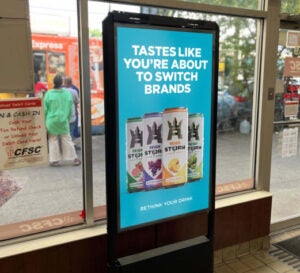
Western Union – which, fun fact, sent its first telegrams across the American frontier in the early 1850s – launched a media network last month that reaches 150 million people.

Forrester released its first SSP wave since 2014 last week, and there’s a surprise. The research firm ranked Google – whose sell-side ad tech platform is facing federal antitrust charges – as a mere challenger.
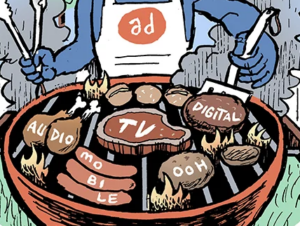
To court new programmatic buyers, SoundCloud is now selling its display and video ads via open auction and private marketplace deals that combine multiple types of inventory.

Historically, media buying has been all about scale, even if it meant outrageously false population counts on audience segments.

During a Covid-induced two-day binge watch of a recent streaming hit, advertisers consistently failed to serve the right ad. Where’s the accountability?

Competing agendas are limiting the tools publishers have at their disposal in ways that aren’t always primarily motivated by user privacy. Here are five things about privacy in digital media that should keep publishers up at night.

Oracle’s advertising and third-party data businesses are officially kaput; political pollsters are abandoning misleading online data; and AI-generated slop is already overtaking the internet.

As we lean heavily on AI tools to enhance content efficiency, we may have reached a tipping point where we are creating more content in service of media algorithms, rather than for the benefit of consumers and brands.
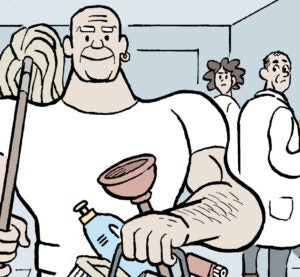
VIA Rail and The Globe and Mail are combining their first-party data sets to create bespoke ad targeting audiences in partnership with data clean room provider Optable.

The publication still makes most of its on-site digital revenue from programmatic. But it’s doubling down on direct-sold custom content, especially when it comes to video and social media.

An ex-Googler asks: Has the commitment to perfection over progress led to the current state of play for the Privacy Sandbox and harmed the industry’s opportunity to provide better consumer privacy?

The only way forward for the industry is to put consumer choice first. That means putting the cookie behind us and rebuilding our relationship with consumers.

Bacardi doesn’t have a digital marketing strategy, per se – because it’s all digital, says Laila Mignoni, the brand’s global VP of marketing and creative excellence.

Tech companies have developed AI solutions that shift budgets and strategies toward contextual. But the AI-driven transition to black-box optimization requires agencies to build and develop new skills, custom tools and processes.

The phaseout of third-party cookies kicked off the sell-side curation trend. But it’s also being driven by advertiser concerns about open web media quality and the need to enhance publisher contextual signals with audience data.

Curation’s shift to the sell side is giving DSPs less control over how advertisers curate audiences, which is creating new tensions in the programmatic ecosystem.

Business Insider released a new targeting tool called SAGA reACT that analyzes the emotional reactions its content produces to create actionable, emotion-driven audience segments.

There are two paths to transforming your business to capitalize on first-party-data-based advertising: mergers and acquisitions, or making nonrecurring investments. Here are the pros and cons of each.
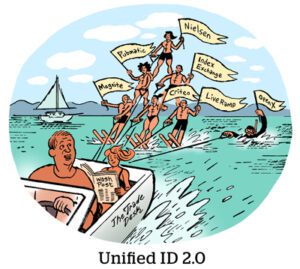
Bonbon gives users rewards – such as discounts or chances to win merchandise – for setting up email registrations with publishers. Now The Trade Desk’s OpenPass will include that same rewards functionality.

To build a first-party data strategy, the NY Post contracted Permutive and Prohaska Consulting for advice on monetizing its audience data and growing its addressable audience. The collaboration prompted Permutive and Prohaska to expand their combined services to all publishers.

Pour one out for third-party data. These days, AB InBev’s digital marketing strategy is built squarely on first-party data.

In March, Shirli Zelcer stepped in to lead Dentsu’s new data and technology group as the agency holding company’s first chief data and technology officer.

Enjoy this weekly comic strip from AdExchanger.com that highlights the digital advertising ecosystem …

It’s been more than a year since Bloomberg stopped running third-party programmatic display ads on its website – and it was the right move, says Christine Cook, Bloomberg Media’s global CRO.