


The sell-side curation craze is in full swing. In fact, the backlash has even begun.
SSPs are rushing to strike partnerships with DMPs that have embraced the supply side’s role in curation. For example, Permutive announced its curation partnership with Index Exchange during its Programmatic Summit in NYC last week.
But while tech companies are jumping on the curation bandwagon, publishers are left to navigate a new normal in programmatic advertising, where they often don’t have a say. And as the chorus of curation skeptics grows, some publishers are making their complaints known.
At Wednesday’s event, publishers offered tips for dealing with tech partners and protecting the value of their data as curation reshapes the programmatic supply chain.

Who controls curation?
Ironically, although curation is often pitched as a vehicle for publishers to reclaim the value of their first-party data, the breakneck pace at which SSPs are striking curation deals means pubs are sometimes added to curated private marketplaces (PMPs) without even knowing it.
“[With] a lot of partners, we just get automatically opted into these things,” said Amanda Gomez, SVP of revenue operations at The New York Post, during a fireside chat with Chao Liao, commercial strategy lead at Permutive. “You’re seeing this new line item coming in, or getting emails like, ‘Your rev share is changing because now we’re doing this thing on your behalf,’ but I didn’t ask them.”
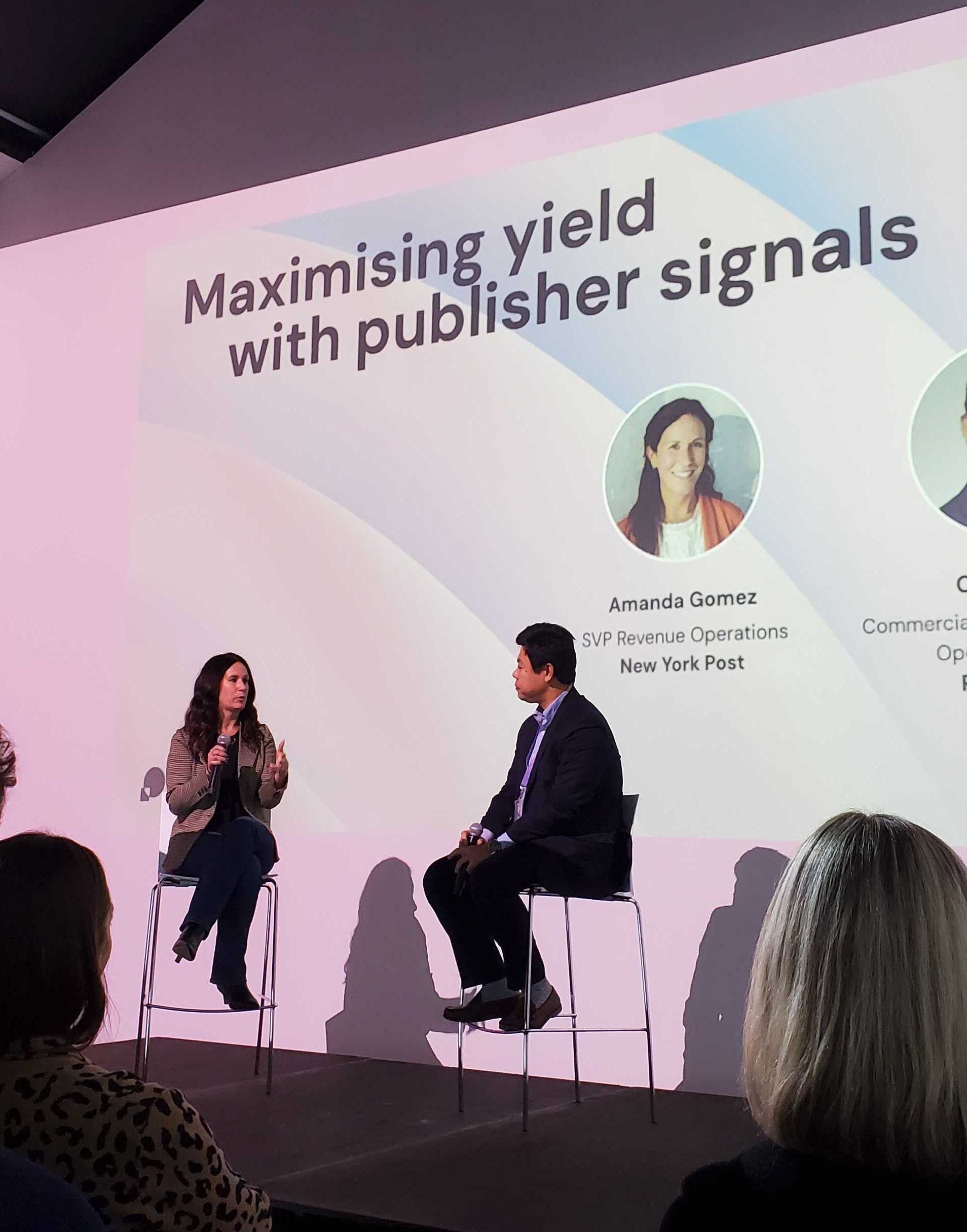
Publishers should always demand transparent reporting from SSPs and other curation partners, including what data they’ve used to build these deals and what curated audience segments pubs are being added to, Gomez said. “I would want to know that deal ID, who’s buying through there, how many impressions, what’s the CPM, and what’s the revenue?”
It’s particularly important to know which advertisers are buying curated PMP deals to avoid interfering with the publisher’s own direct sales efforts. “I might be going to that same advertiser, but now you’re selling them using my data,” Gomez said.
The pricing problem
Pubs also need pricing transparency, especially since some curation vendors don’t set effective pricing floors, Gomez said.
“I might be getting some revenue from it,” she said, “but at the same time, it’s dragging down my bottom line.”
Other publishers voiced concerns about the commercial aspects of curation.
Jeffrey Goldstein, global head of programmatic at Future, said during an audience Q&A with Gomez he’s worried that curation deals with favorable terms for publishers right now might be renegotiated once publishers have adopted and become reliant on the new revenue.
“I have this horrible fear that we’ll go all in [curation], agree to some transparent rate, and then we’ll get a letter that the rates are going up,” he said. Once the faucet is open on the revenue stream, publishers won’t want to turn it off, he added.
In a separate conversation with AdExchanger, Goldstein also said he’s afraid that, if publishers include some premium inventory in curated deals, programmatic bidding will ultimately drive down the CPMs compared to direct deals.
Goldstein’s line of questioning prompted Stephanie Layser, global head of publisher ad tech solutions at Amazon Web Services, to chime in from the crowd with her own misgivings about current pricing controls.
“[Curation] is an indirect channel, and the way you control indirect channels has typically been flooring mechanisms,” Layser said. But it would be “incredibly operationally onerous to set individual floors for individual pieces of data.”
And besides, she added, “the problem is that we all set our price floors in a system that limits the amount of price floors we can set,” referring to Google Ad Manager’s Unified Pricing Rules.
So, while it is early days for sell-side curation, publishers are clearly worried about another programmatic revolution that promises riches and control, while delivering neither.







