Traditionally, digital out-of-home (OOH) inventory is grouped by venue type.
But programmatic buyers want to know exactly what they’re bidding on – which is why generic categories like “retail” or “transit” just don’t cut it anymore.
Not to mention that when publishers and SSPs lump together media of varying quality, it undermines transparency and makes programmatic buyers think twice about OOH.
On Tuesday, the Out of Home Advertising Association of America (OAAA) introduced a fix: an updated version of its OpenOOH venue taxonomy, first launched in 2020.

As part of the release, OAAA is also folding its OpenOOH Taxonomy Working Group, which designed the new spec last year, into its OAAA Taxonomy Committee, which will develop and maintain the standard.
Becoming more programmatic-friendly
Programmatic advertisers need an easier way to use OOH inventory as an extension of their omnichannel campaigns, particularly for retail media and CTV buys, said Premesh Purayil, CTO at OOH publisher OUTFRONT Media.
By bringing OOH media classification more in line with programmatic buying, out-of-home publishers can capitalize on the recent explosion of programmatic CTV and retail media spend in recent years, said Anna Bager, president and CEO of the OAAA.
OOH has rebounded since the dark days of the COVID-19 pandemic, she said. The channel has seen 18 consecutive quarters of ad revenue growth, including a 4.5% year-over-year improvement in Q3, when advertisers spent a total of $2.13 billion – the most ever for third quarter, according to the OAAA.
Yet OOH remains a largely direct-sold channel. Open-auction programmatic accounts for only a fraction of OOH ad spend, Bager said, partly because the taxonomy for classifying OOH inventory hasn’t offered the precision programmatic advertisers expect.
New sub-categories
The new taxonomy introduces a “parent/children/grandchildren” schema that media owners can use to classify their inventory in OpenRTB bid requests.
A digital screen mounted on an airport baggage claim, for instance, can now be tagged as “transit/airports/baggage claim” instead of being bucketed into the broad category of “transit.”
To be fair, the old OOH taxonomy did allow media owners and SSPs to use OpenRTB’s venuetypestring – a free text field – to manually list more details about the exact venue in which an OOH screen is located, Purayil said.
But free text fields can be hard for programmatic systems to read accurately because they tend to be inconsistently applied across platforms.
Because the new standard eliminates that guesswork, the venuetypestring field is deprecated in the new taxonomy, Purayil noted.
AdExchanger reached out to the IAB Tech Lab to ask about its plans for incorporating the new OOH taxonomy into the OpenRTB spec and deprecating legacy fields, but did not hear back in time for publication.
Democratizing OOH
With more detailed categories, advertisers zero in on the OOH inventory they want to use for omnichannel audience extension, Purayil said.
CPG brands, for example, could target the types of stores their products are actually sold in, rather than targeting the broad “retail” category.
Advertisers also get more flexibility over where their ads appear inside venues. For instance, a potato chip brand might want to target street-facing displays mounted in the windows of bodegas, while a pharma brand prefers screens near pharmacy counters inside drug stores.
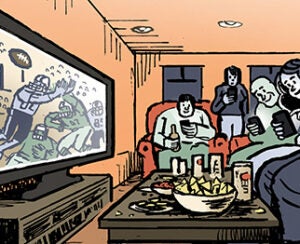
And more granular targeting also helps advertisers avoid buying “sorta CTV” OOH placements, like TVs mounted in bars, Purayil said.
A brand whose CTV creative depends on sound will likely prefer to skip those environments, he said, while a brand targeting sports fans with ad creative where the audio isn’t so important might deliberately target “sorta CTV” inventory to broaden its reach.
By specifying such distinctions, the taxonomy addresses both buy- and sell-side concerns about very different types of OOH inventory getting broadly lumped together, Purayil said. Advertisers get more relevant media, and publishers can demonstrate the real value of their inventory without having to worry that mismatched placements are harming performance.
Plus, the new taxonomy should help smaller, more niche OOH publishers compete, Purayil said.
Large OOH platforms like OUTFRONT have an advantage because they’re well known to specialist agencies and have established direct sales teams, he said. Agency buyers understand how these larger networks organize their inventory and can plan accordingly. Smaller OOH publishers, by contrast, don’t have that.
But smaller publishers that adopt the new taxonomy can make their OOH inventory easier to activate programmatically, Purayil said.
It also gives advertisers a more straightforward way to make OOH buys across a mix of large and small publishers and manage that curation within omnichannel programmatic buying flows, rather than relying on direct and private marketplace deals.
“The revenue is already flowing in heavily through the private marketplace side,” Purayil said. “But this could potentially move some of that revenue into the open marketplace, if it makes sense.”