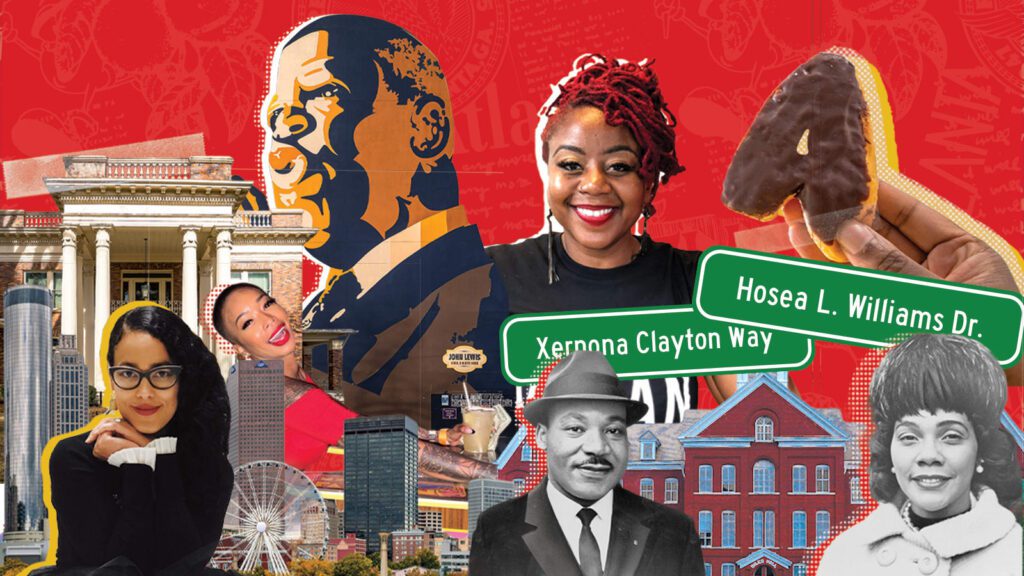
The Atlanta Convention & Visitors Bureau had a wide-ranging goal for its new campaign: to show the city as a welcoming, inclusive, diverse and creative urban center. The bureau tapped Orange142, a digital media company owned by Direct Digital Holdings, to get the job done.
Orange142, which has worked with the bureau before, focused on reaching people with an interest in the Black community in its recent campaign for ATL Unguided, Atlanta’s Black travel guide from the Atlanta Convention & Visitors Bureau (ACVB).
“This campaign wasn’t just for Black travelers,” said Sheretha Bell, SVP of marketing and brand strategy at the ACVB and Discover Atlanta. “It was for those who appreciate Black culture, history and the contributions of Black people to the city and our country as a whole,” which isn’t limited to any specific group.
The ATL Unguided website has content that could appeal to a broader audience. For instance, it contains information on Black-owned craft breweries, the Black LGBTQIA+ community and Black cultural events such as Black History Month, the Atlanta Caribbean Festival, Juneteenth and marching band events hosted by historically Black colleges and universities, like Battle of the Bands.

A cultural focus
Audiences are hungry for content that feels real and representative, and the bureau’s campaign reaffirms its commitment to “audience before content,” Bell said.
This ethos is at the heart of ACVB’s campaign, which was produced in collaboration with multiple agencies, Black travel writers, YouTubers and other creators, historians and locals to resonate with its target audience.
A “data-driven, culturally focused strategy” governed the campaign, said Brenton Maddox, Orange142’s VP of client success.
To execute that strategy, Orange142 targeted affinities, such as “Black history and civil rights” and “Black-owned businesses,” to “build an inclusive audience around brands and identities,” Maddox said.
To reach these audiences, Orange142 found suitable ad inventory through its sister company, Colossus SSP, which bundles supply from minority-owned publishers so advertisers can more easily find multicultural content to advertise against programmatically.
These ad placements appeared on culturally relevant websites and content, such as pieces on CBS about Charleston’s International African American Museum, the Obamas and civil rights activist Bayard Rustin. The campaign also targeted Black publishers, including Ebony, Essence and Jet, as well as content within underserved publisher networks.
Orange142’s methodology
Orange142 supported the campaign with paid search ads and contextual keywords, YouTube advertising to promote three videos that were part of the campaign and via programmatically targeted native or advertorial ad units.
With the editorial-style ad units, Orange142 targeted consumers who, based on their search history, appeared interested in a leisurely vacation, urban exploration, foodie travel and things to do in Atlanta.
The ad unit blended into the site for a less intrusive sponsored ad experience that closely resembled the look and feel of the surrounding website content in its font, color scheme and style.
To create audience segments, Orange142 used first- and third-party data from its own DSP and third-party data providers, including DoubleVerify, Epsilon and Comscore.
Throughout the campaign, the team continually adjusted the audience segments, ad placements and search keywords based on what was performing well, Maddox said. If, say, YouTube video view rates started to decline, Orange142 would move media to its editorial-style ads to improve reach.
Campaign results
The campaign exceeded the metrics ACVB set for it, including generating more page sessions, site traffic and engagement, Bell said. The engagement rate was 12.5% higher than that of a traditional campaign targeting a more general family traveler audience. And the average time spent on-site rose from 2 seconds to 25 seconds.
The overall clickthrough rate for the editorial-style ad units was 1.25%, and there were more than 30,000 completed views of the videos on YouTube with 47,000 impressions served, according to Maddox.
This campaign was only the latest collaboration between ACVB and Orange142.
Before it was acquired by Direct Digital Holdings three years ago, Orange142 (then called USDM Digital) worked on ACVB’s ad creative in 2004, built its website in 2009 and started doing paid search work for the tourism marketing agency in 2011.
Because of their long-standing relationship, Orange142 has a deep understanding of ACVB’s brand, Bell said.
“They know how to dig into the stories that we’re telling,” she said, “[and] how to make sure that they’re told authentically across all the channels and the audiences that we’re trying to reach.”