 A year after Twitter opened its self-serve Twitter Advertising system to businesses on an “invite-only” basis, the microblog’s Promoted Tweets and Promoted Accounts products will be open to anyone in the US. Read the release.
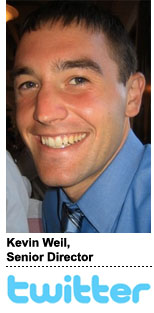
This news was mentioned as Kevin Weil, Senior Director of Product for Revenue at Twitter, participated on a panel with Google’s VP of Display Advertising Neal Mohan and Facebook’s Product Director of Ads Gokul Rajaram at the TechCrunch Disrupt conference in New York.
Weil said Twitter is mindful that the real money is still in TV, making a bid for Twitter’s place in alignment with old media rather than against it.
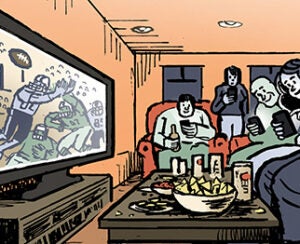
“Twitter is a bridge, not an island,” he said. “It can connect with all the market outreach an advertiser already does, especially across TV. About 95% of the social media commentary about TV happens on Twitter. During the last Super Bowl, about half of all the TV ads had hashtags. Our message to advertisers is that Twitter and TV…make each other stronger.”
The panel’s moderator, TechCrunch’s Anthony Ha, then led a broader discussion with the other panelists about the importance of mobile and how the three companies approach devices.
“I tell advertisers, ‘If you’re building for mobile, you’re building for the future,'” Mohan said. “Consumers don’t think of silos – they don’t think, ‘I’m on my desktop, I’m on my tablet, I’m on my phone’ – but they do have different mindsets. And we all have to embrace that concept. Advertisers need to be focused on consumer context, not devices.”

In February, Google introduced AdWords’ Enhanced Campaigns, integrating search ads across desktop and mobile. Mohan said it has racked up 1.5 million Enhanced Campaigns since then. “In the future, everything will be connected, including your watch, so devices will matter less to advertisers,” he said.
That brought out the first mild disagreement from Facebook’s Rajaram, who took the opportunity to plug Facebook Home, the social network’s first attempt at complete hardware integration on a Google Android-powered HTC phone.

“FB Home is predicated on experience, not apps,” Rajaram said, in a variation of McLuhan’s “medium is the message” concept. “Home is predicated on the people you interact with. There is going to be interesting ad experiences for Home. It’s still early, but we’ll do it in a way that is consistent with the user experience.”
Advertisers need to consider the device on which their ads appear, because that is what influences and reflects the consumer’s mindset, Rajaram said to Mohan. He pointed out that within six to nine months, mobile went from 0% to 23% of Facebook’s revenues.
“Since the mobile screen is much smaller, you have much less chance to make mistakes,” Rajaram said. “We have all the consumer product teams thinking of how advertising can be seamlessly added to our offerings without disrupting the user experience.”
Talk of cross-platform methods then kicked off a conversation about measurement. Mohan contended that a full one-third of all digital campaigns will be measured by something other than clicks – in other words, viewability will be one of the chief determinants behind ad spending. Mohan then took the opportunity to tout the Media Ratings Council’s accreditation of Google’s viewability metric, ActiveView, which is being built natively into all of the search giant’s products.
Rajaram also promoted Facebook’s work on viewability, but he said the metric doesn’t go far enough for marketers. He cited Facebook’s measurement deals with Nielsen’s Online Campaign Ratings and Datalogix.
“Reach and frequency and results – that’s what matters to advertisers, not whether an ad was seen or engaging by itself,” Rajaram said. “We are focused too much on engagement and clicks. There is no correlation to purchases. It’s most important to see what converts.”
Weil bristled slightly, saying that brand surveys show the line between engaging marketing messages and sales. “I guess that’s the difference between Twitter and Facebook,” he said stiffly.
Mohan looked to capture the middle ground. Since advertisers trade on clicks every day, engagement can be a good proxy for moving products off the shelf. “The other things brands care about once they find the right audience is sight, sound and motion,” Mohan said. “We have YouTube. Brands want to creative canvasses.”
Rajaram then took aim at the “last click model.” Facebook wants to value all the touchpoints that consumers see before they decide on a purchase. In other words, while a search engine – Rajarm turned to Mohan and said, “There are many search engines people can use, right?” – might credit the sponsored result that gets a click after a query, does that ad deserve the glory?
“That consumer would have never clicked if they hadn’t seen the ad elsewhere,” Rajaram said. “We value all the points. One of the reasons we bought Atlas was to move the industry to a more fair conversion model. Last click doesn’t work. All touchpoints need to be credited.”
Mohan shook his head. “Agencies and advertisers are sophisticated enough to know what’s good for their business,” he said. “They know what works for them.”