
For the ad exchange model, liquidity and scale are factors in determining price for media. And, of course, so is data.
Today, behavioral impressions are bought and sold, contextual impressions are bought and sold, etc. In the future, among several ways to trade advertising, including online display advertising, we suggest the “media profile” value.
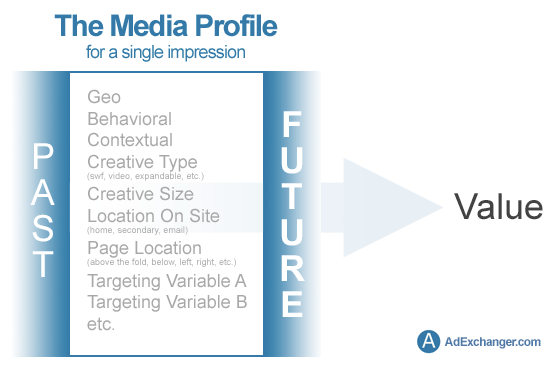
The data of the media profile offers buyers and sellers a way to understand value and overlays the auction much the way trading programs do in the stock exchange today. It isn’t something which sets or establishes a price on the exchange – but informs it.
Now, don’t worry Wenda-lovers, this doesn’t mean that media turns to pork bellies as creative will remain a critical wildcard in the process. Once again technology is a media buyers AND sellers best friend as it delivers intrinsic media value.
With the media profile, buyers and sellers can value a single impression according to a perceived value difference in a behavioral and contextual targeting opportunity, for example. Rather than bidding according to value for particular data streams, buyers will be offering pricing and sellers will be able to offer and set pricing using a more holistic approach that the real-time technology of the open exchange can enable.
Diggin’ into the Deets of the Media Profile
A Lookery or Exelate feed could inform the media profile using historical data regarding behavioral value using data from similar behavior media and predict future outcomes. Other filters such as demos, buying habits, could provide the buyer and seller additional ways to offer and set price, respectively.
For the contextual component, Lucid Media or Contextweb could offer a data feed to the Media Profile regarding historical performance for particular content categories – again with filters to look at ways to meet audience goals for the advertisers and yield goals for the publisher.
And so on.
Media profile is not a standard but a concept that through the evolution of the exchange will make sense as massive amounts of data can offer insight to advertisers, publishers and ad traders looking for inefficiencies in the marketplace.
Whether future (reserved) or spot inventory, buyers and sellers will be able to aggregate their own media profile through various data feed providers, or through one data provider who aggregates all the feed. Certain data streams will be proprietary, too, and allow exchange players to have advantage over others.
As the online advertising exchange evolves beyond scale and remnant inventory to the point where each impression can potentially be premium inventory, understanding the media profile will be critical.







