 Berlin-based RNTS Media group, which owns a portfolio of mobile technology companies, will acquire Israeli RTB mobile ad exchange Inneractive for an initial payment of $46 million, which could rise to $72 million if Inneractive hits incentivized targets.
This is the third in a string of acquisitions RNTS Media and its primary business property, the mobile SSP and in-app exchange Fyber, have made in the past year.
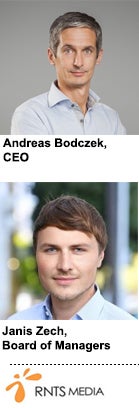
Unlike other companies RNTS and Fyber recently bought, Inneractive will remain independent within RNTS because there’s market demand for more agnostic solutions, said RNTS Media CEO Andreas Bodczek, and a full-scale integration would be costly and possibly counterproductive.
But Bodczek said he anticipates immediate synergies. For example, Inneractive will allow Fyber to extend its mobile ad serving to native, display and video channels, where Inneractive has been more focused.
RNTS Media also can tap into Inneractive’s 630 million monthly active users (MAUs), which overlap only fractionally with Fyber’s existing base of more than 500 million MAUs.
“Connecting the two exchanges so demand can see into the supply from either platform is a quick win for us,” said Bodczek. “We might not provide an integrated product, but there’s synergy on the demand side because we’re bundling volume.”

In the meantime, Inneractive benefits by getting access to RNTS’s scale. That scale, said Bodczek, is increasingly important for mobile players as Google, Facebook and Amazon consolidate power.
“Long term, when you look at the value chain, there are a lot of companies trying to provide a publisher infrastructure layer,” said Fyber co-founder and COO Janis Zech. And the more scale you can offer demand-side partners, the more budgets you can tap into.
Inneractive has been in business nine years and previously raised about $12 million, so it’s fair to call Thursday’s deal a successful exit, but there’s increasing pressure to find shelter under a media holding company or tech platform roof.
In the past year or so, Fyber and RNTS screened around 50 companies for potential deals, which led to its three purchases, said Zech.
Though Bodczek said not to expect another transaction in the near term. “For the foreseeable future, at least, I think we’ll have our heads down,” he said. “We need to make sure that 1+1+1+1 is greater than four.”