Trying to convince brands to advertise in games used to feel like talking into the wind.
But sentiment is starting to change in favor of games, said Alexandre Tan, VP of advertising and brand partnerships at French mobile game studio Gameloft, where he runs a division that functions like a media agency.
Gameloft Advertising Solutions houses a homegrown tech stack, including an ad server and supply-side platform, and a creative unit with more than 100 people focused on developing impactful ads for brand clients. Tan’s team has run campaigns for Lego, Coca-Cola, Mondelez, Unilever, Mercedes-Benz, McDonald’s and Nike, among others.
Yet reticence remains among some marketers, who question the transparency and brand safety of advertising in games. That’s why it’s up to publishers to evangelize the value of game media, said Tan, who’s worked at Gameloft for more than 14 years.
“Media budgets have been shifting over the past few years from traditional to digital,” he said. “Getting advertisers to understand all of the different levers they have available to them in the mobile app environment in particular is really important.”
AdExchanger spoke with Tan.

AdExchanger: Why was Gameloft Advertising Solutions created?
ALEXANDRE TAN: To understand the rationale, we have to go back in time. When our business moved from a premium model to a free-to-play model between 2010 and 2012, we saw huge revenue, but there were two main consequences.
First, the number of users engaging with our games skyrocketed when there was no longer a purchase barrier. Second was the realization that with a free-to-play model, only a small fraction of the users playing our games were becoming paying users.
The question became: How can we leverage the size of this nonpaying audience? Advertising was the best solution to do that. The first experiment was through third-party monetization partners, but around 2013, we realized that this was becoming a strategic pillar for us. In early 2014, we decided to internalize our advertising activity.
What’s in your ad stack?
It’s very much in Gameloft’s DNA to develop stuff. Back in 2014, when we decided to go big in advertising, one of the first things we did was build our own tech.
We built our own ad server, the intelligence that goes into enabling ads to be displayed inside our games. We had the back end sorted and realized we also needed a front end – a UI that ad ops can use to plan and optimize campaigns on behalf of clients. So, we built that, too. But around 2015, we saw that programmatic was becoming bigger and bigger, and we knew we needed to be in that space as well.
That’s when we started running direct integrations with programmatic partners by connecting ourselves to SSPs, like AppNexus, Rubicon and SpotX. That was good, but then we thought, “Wouldn’t it be great if Gameloft was able to build its own SSP and have direct connections with select DSPs?” And that is what we ended up doing. We now have a pretty complete and robust setup.
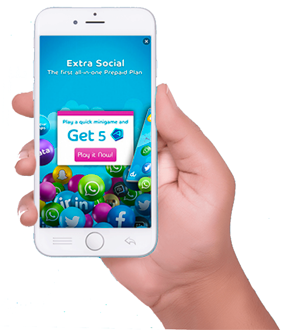 We also have a creative team made up of people who have worked with Gameloft for years and understand the mobile ecosystem.
What are advertisers asking you for?
The most popular formats that also perform the best are rewarded. The holy grail for us is to try to reconcile the gamer’s interests with the brand’s interests. The best way to do this is for a brand to become part of the content or to sponsor the game in a way that enriches the experience.
Brand advertisers are open to rewarded?
When rewarded video units were new, it was mostly games using them to promote other games. At the beginning, brands were reluctant, which came from the idea that players might only engage with the ad unit to get the reward and not take a look at the brand message.
We had to fix that idea, and so we came up with a format we created internally: interactive gamified video. We’re able to capture engagement data from our users and pass it back to advertisers, which is a good way to prove that, contrary to other traditional media, this format can deliver hard proof that there were human eyeballs and human fingers interacting with their brand message. Marketers are starting to pay attention.
But are premium brands really ready to advertise in games?
That’s a very valid question and one we get asked on many occasions, even by brands. “Why should we invest with you guys?”
Ninety percent of time spent by mobile users is in app, and if you drill down even further, you see that gaming is one of the top four categories. We have something very precious here. TV is not going to cut it anymore.
That’s why we decided from a very early stage that we would focus our market position on premium brands, but it is difficult. For example, some brands are more advanced and mature in their understanding of the mobile ecosystem and games than others, and that’s fine. We’re used to this.
How do you get brands on board?
Back in 2014, 2015, when we decided to become a player in this sector, we needed to make a name for ourselves, to get people to trust us with their media budgets. The answer was quality and transparency.
When you advertise in a Gameloft game, you advertise in a brand-safe environment and within a piece of entertainment that took months for many people to produce with a multimillion-dollar creation budget. And contrary to other players in the market, a brand can know exactly which of our titles it will be positioned against. Gameloft was also the first mobile game publisher to become Moat-certified for viewability, which was in November 2016.
What other challenges are you facing as a mobile game publisher looking for brand dollars?
When we ask brands what has prevented them from investing more of their budgets in app, the answer is still a lack of transparency.
Investing in mobile games is also often something that’s not even part of the recommendations made by their media agency. Media and creative agencies don’t necessarily have very good expertise in the app environment. It’s for us, the publishers, to help educate them and prove all of the great things that can be done.
This interview has been edited and condensed.