
One buzzword that everyone is sick of hearing and experiencing: siloes.
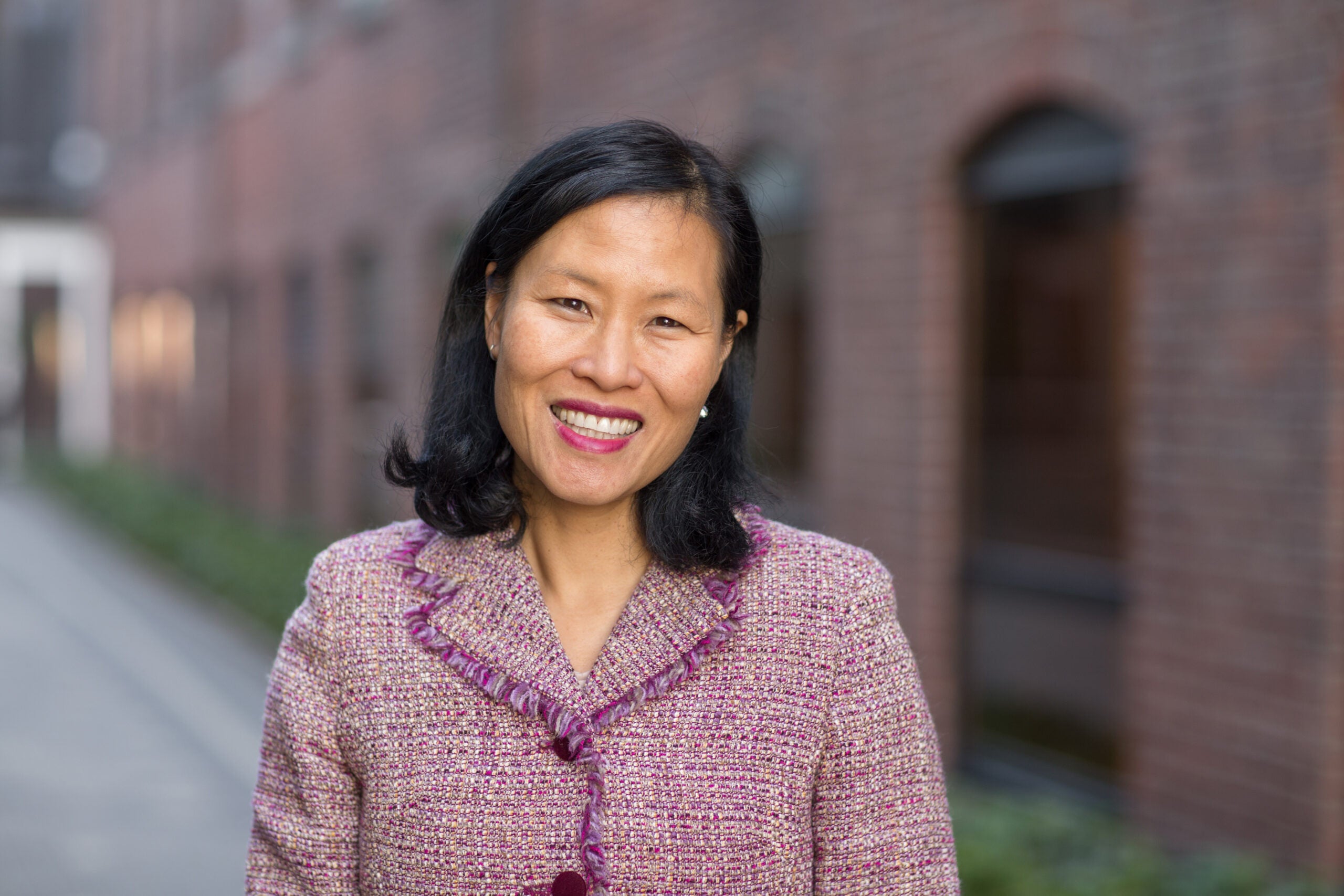
The Big Tech companies are motivated to continue developing their own infrastructures – and that develops siloes and a bias toward ad tech, Sonia Chung, chief strategy officer of marketing and comms agency Boathouse, told AdExchanger. What ends up lacking is an understanding of customer data.
Chung, who was appointed in March as Boathouse’s first ever CSO, said she looks forward to helping the industry grow less “dependent on the behemoths” and build out its data infrastructure.

Having spent her early career at marketing and tech agency Digitas before shifting to Google and Salesforce, Chung brings a blend of agency and tech experience to the role.
During her time at Google, she said, she realized that advertisers “can do a lot of things on [their] own” if they understand how the foundation works – which is exactly what she wants to help Boathouse’s clients with in this next chapter.
Agencies need to focus on expanding their capabilities and developing their own infrastructures, said Chung. Right now, agencies are in the early phases of “breaking the walls” and expanding their data capabilities, she said, and she’s “excited to be part” of evolving Boathouse’s agency model.
AdExchanger: What sparked your shift back to the agency side after you’d been at Google?
CHUNG: With everything going on with AI and so many platforms becoming so channel-focused, there’s an opportunity to disrupt and break apart so much force function on the platforms – the Googles, the Amazons, the Metas of the world – and think about data as more agnostic and less platform-oriented.
The brands are kind of dependent on what the platforms do, and the big platforms aren’t going to be building out their own data infrastructure. They’ll build out customer infrastructures, but they won’t connect paid, owned and earned. So I’m very excited to work for an agency that is moving in that direction and serving brands that want to leverage the full scope of what you can do in marketing.
AdExchanger: What do you think the future of measurement holds, especially as AI tools continue to evolve?
CHUNG: The measurement landscape is really, really interesting, because, on one hand, we have way more data than we can even analyze or use. It’s not a data-collection problem. What’s missing is connecting and activating on the data.
That connection is really, really hard, but it’s becoming more attainable because of the AI capabilities.
Measurement is going to get much more interesting, because we’re going to see signals from different areas that are now going to be connected. Before it was, like, “I know how email is doing, I know how social is doing, I know how search is doing, I know how programmatic is doing.” But there was never this horizontal view.
Everybody was optimizing their channels to death, but those channels each represent a piece of a much larger pie, and each piece of the pie wasn’t being handed off to the next channel.
What’s missing is that holistic view. We’re getting there. We’re getting very close. And there’s a lot of interesting vendors outside the big guys that are doing that, and I’m seeing some of that, but you can also do some of it potentially on your own by working with the right partners.
AdExchanger: How will advertisers be able to connect signals from these channels that have historically been so siloed?
CHUNG: The AI is so interesting because it can take structured and unstructured data that usually would take a good data scientist or data analyst a very long time to work through. There’s so much data to connect, and that’s really, really hard for any human being to do.
AI allows some of that to happen faster and can see through some of the complexities to connect those dots.
AdExchanger: How else is Boathouse using AI in its day-to-day workflow?
CHUNG: We have AI tools for our creative team for versioning and more efficient production. There are tools that drive us to do things in less than a day that might normally take two months.
We use AI in terms of versioning things, in terms of optimizing our media and targeting different customers. It’s used in different types of methodologies to get to the right customer, at the right time, at the right place, with the right promotions, etc.
I always talk about gen AI like it’s another person, in addition to our teams, to pressure-test certain ideas and strategies. We’re taking advantage of any gen AI tools for sure.
On the media side, it’s being used all the time. I joke that AI has already been used in media for the last 20 years.
AdExchanger: What do you mean by that?
CHUNG: Digital marketing was built on AI, in terms of machine learning. In the last couple of years since AI was launched, it’s more in the language that everyone’s using.
The capabilities have gotten so advanced so quickly in the last few years, and so we’re using that on top of what’s already been built.
What I’m getting at is that if you’ve been in the digital media business, anything that’s transferred digitally has some type of machine learning involved.
It’s already existed for years, but it’s now been supercharged.
This interview has been lightly edited and condensed.