

Disney bumped up its annual Tech & Data Showcase to January this year to prove it has what it takes to compete for streaming dollars during the upfronts with an ad-supported Disney+.
“Our highest priority this year is making significant advancements in measurement and programmatic,” said Rita Ferro, Disney’s president of ad sales, at the Tech & Data Showcase on Wednesday.
During the Showcase, the Mouse House named EDO a preferred partner for outcome-based measurement across its addressable inventory, expanded its partnership with Samba.TV for deduped reach and frequency, and hired a new VP of measurement transformation.
“Measurement has been really, really hard on the connected TV front,” said Dana McGraw, SVP of audience modeling and data science, at the Showcase.
So, the entertainment giant is focused on building out its own in-house ad tech stack to improve targeting, measurement and programmatic automation. Making the Disney audience graph and clean room tech interoperable with measurement vendors will help fill in those gaps, McGraw added.

Mouse In-House
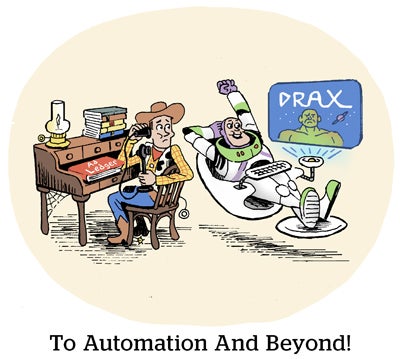
Disney started pitching its proprietary tech stack to advertisers in 2021, when it committed to automating half its ad sales business and rolled out an ID graph and programmatic exchange.
Along with the ad server, Disney now houses its ad tech under what it calls its Unified Ad Platform (UAP).
The idea for UAP is to thread together all of Disney’s addressable inventory to consolidate programmatic buys and bring ad targeting “parity” to Disney+, said Jeremy Helfand, EVP of ad platforms. In other words, Disney+ will have the same ad targeting capabilities as Hulu starting this summer.
Biddable programmatic will also be available to Disney+ buyers later this year, Helfand added.
Identity sells
But programmatic sophistication starts with first-party data.
Disney has spent years building out Disney Select, its ID graph, which the company says now consists of 235 million unique viewers, 110 million households and over 1,800 audience segments.
“Now, we’re taking that audience graph and making it interoperable industry-wide,” Ferro said.
On Wednesday, Disney also announced Unilever as the first advertiser partner to beta test Disney’s programmatic integration with UID2, The Trade Desk’s cookieless identifier.
Scaling its ID graph by making it available for programmatic bidding is Disney’s next step on the path toward automation.
“By 2024, Disney will be delivering 50% of its ad spend through automation,” said Lily Panchasarp, national programmatic sales director. Panchasarp said advertiser demand for biddable Disney inventory is currently up 150%, a rate of “double the growth we saw last year.”
The next phase on the automation roadmap, she added, is “all about interoperability.”
Which means Disney will need more than just one DSP partner.
“We’re already in talks with other DSPs,” Helfand said. “An in-house tech stack doesn’t have to mean a lack of interoperability.”
Cleaning up the set
Speaking of interoperability, when Disney first began flexing its ID graph and programmatic muscles, its data clean room was still in R&D.
Now, a proprietary clean room is the future of both Disney’s audience graph and measurement blueprint, said Lisa Valentino, EVP of client and brand solutions.
After boosting its clean room with TV viewership data from VideoAmp last month, Disney currently has roughly 70 advertiser clients, including all the major agency holding companies, Valentino said.
Even Disney is surprised by the rate of buy-side adoption.
“We thought our clean room would be in the planning and insights phase for a year,” Valentino said. “But within three months, the market was demanding pipes to activate and buy [audience matches] programmatically.”
Clean rooms are a hot topic throughout ad tech, but demand is ramping up even faster in the connected TV space because advertisers are desperate for targeting and deduped measurement.
From clean rooms and measurement to ID-backed targeting, Ferro said, “this is all part of delivering on an addressable, automated future with programmatic investments.”









